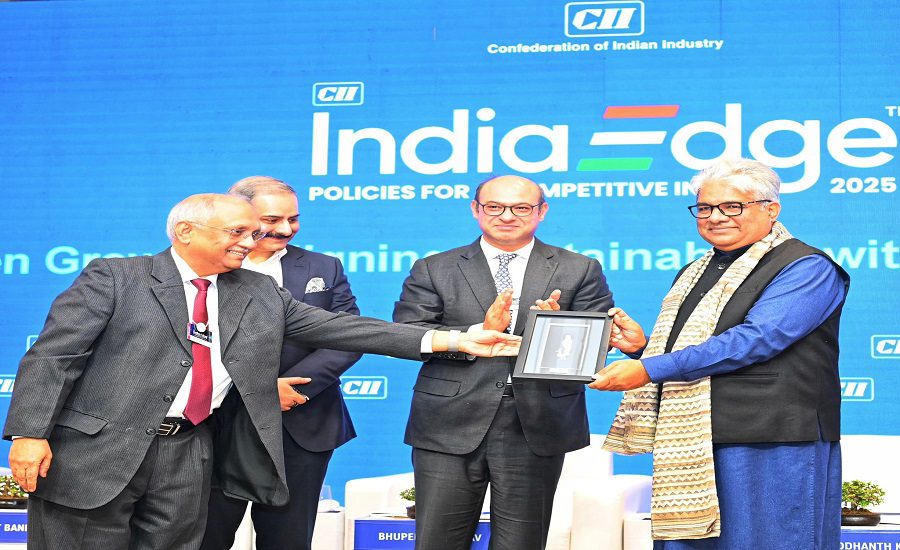
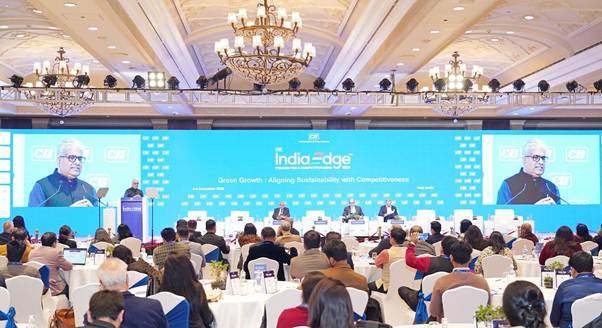
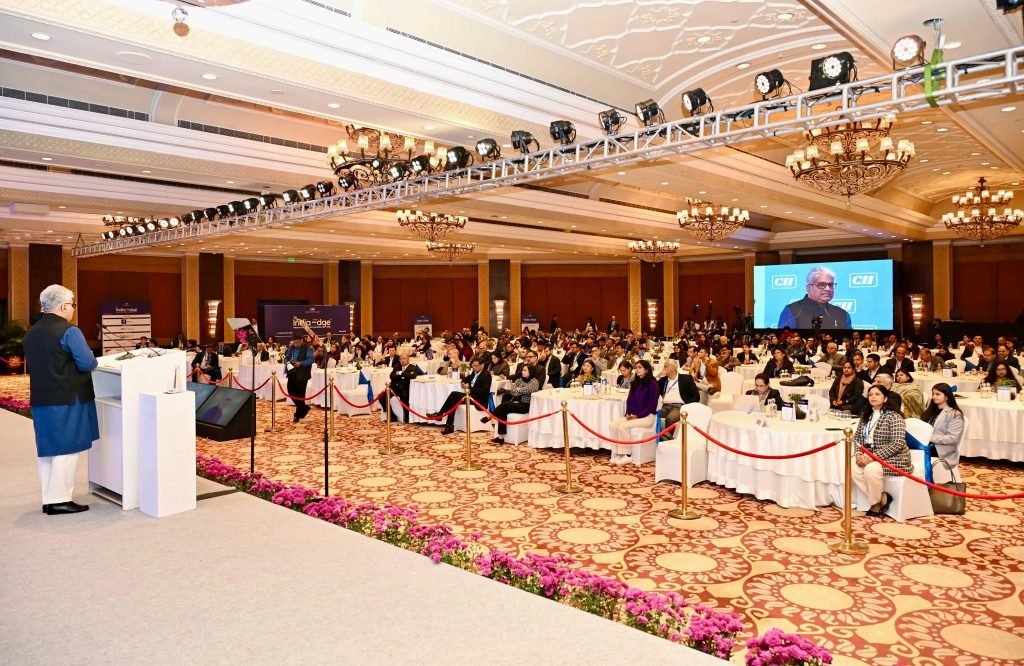
New Delhi: Union Minister for Environment, Forest and Climate Change, Mr. Bhupender Yadav, addressed the Special Plenary on ‘Green Growth: Aligning Sustainability with Competitiveness’ at the CII IndiaEdge 2025 event in New Delhi. The Minister emphasized that India’s journey toward sustainable development presents unique opportunities for economic expansion, innovation, and resilience.
Clean Industrialisation as a Catalyst for Growth
Mr. Yadav stated that clean industrialisation is not a constraint on growth but a catalyst for future prosperity. “Decarbonising our manufacturing sector is a strategic imperative to enhance India’s export competitiveness and preempt future carbon-related trade challenges,” he noted. Highlighting India’s robust economic fundamentals and rapid strides in sustainable development under the vision of Viksit Bharat@2047, the Minister underscored the importance of integrating sustainability into industrial practices while maintaining competitiveness.
Policy Reforms Driving Green Transformation
The Minister outlined several government initiatives and reforms supporting green industrialisation. He cited GST 2.0 reforms, which reduced tax rates from 12% to 5% on renewable energy equipment, biodegradable plastics, effluent treatment plants, and electric vehicles, creating incentives for industries to adopt eco-friendly practices. He also highlighted key programs such as the Scheme to Promote Manufacturing of Sintered Rare Earth Permanent Magnets (REPM), the National Critical Mineral Mission 2025, revised Green Credit Programme, and Environment Audit Rules 2025.
Mr. Yadav urged industries to actively engage with these policies to strengthen India’s sustainable ambitions while carving a global competitive edge. He further stressed the role of Circular Economy and Extended Producer Responsibility (EPR), noting that proper implementation can formalize informal workers, boost recycling revenues, and create 33 lakh new jobs in a green-skilled workforce.
Global Leadership and International Commitments
Returning from CoP30, the Minister noted that India successfully advanced its climate and sustainability priorities. He highlighted 29 consensus-based decisions addressing critical areas such as climate finance, technology transfer, unilateral trade measures, and just transition. Mr. Yadav also pointed to the establishment of the Technology Implementation Programme and frameworks for a just transition, reaffirming India’s commitment to global environmental leadership.
Industry Collaboration and Innovation
Mr. Yadav encouraged industry stakeholders to integrate sustainability with competitiveness through R&D, green manufacturing, and MSME collaboration. He emphasized that voluntary corporate initiatives, like output-based Circular Economy PLI programs and robust EPR systems, can accelerate recycling, reduce waste, and support Atmanirbhar Bharat objectives.
Concluding his address, the Minister highlighted the collective responsibility of government, industry, and society in shaping a sustainable, inclusive, and resilient industrial future. “India’s path to Viksit Bharat@2047 is about growth that is inclusive, resilient, and sustainable. Sustainability must be seen as an opportunity, not a constraint,” he said.
Dignitaries present on the dais included Mr. Chandrajit Banerjee, Director General of CII, Mr. Shiv Siddhant Narayan Kaul, Chairman of CII National Committee on Environment, and Mr. Masood Alam Mallick, Chairman of CII National Committee on Waste-to-Worth.