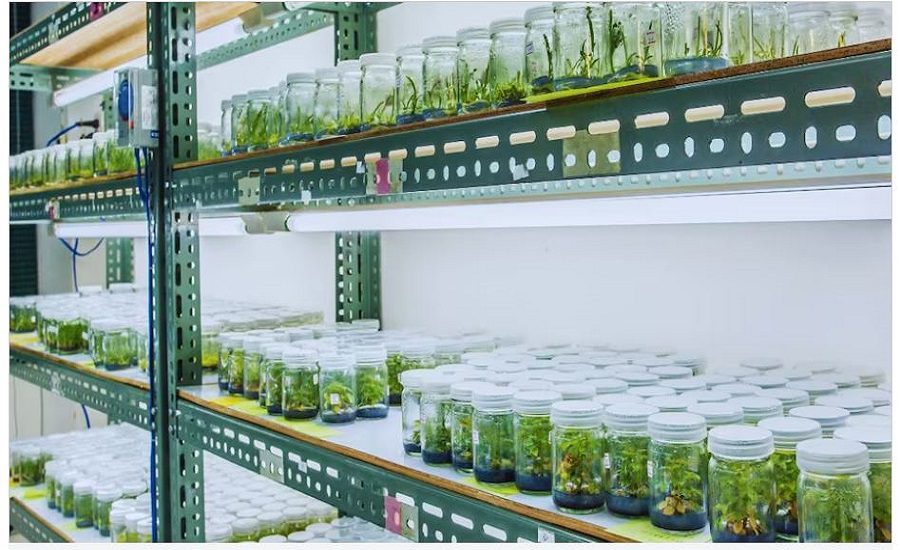
Patna: The Bihar Government is set to establish two advanced tissue culture laboratories in the state this year to boost horticulture production and provide farmers with high-quality, disease-free plants. The Agriculture Department has invited applications from interested individuals, offering a 50% subsidy for the cost of setting up the labs. Applications can be submitted online at horticulture.bihar.gov.in until January 31, 2026.
Boosting Horticulture through Tissue Culture Technology
Tissue culture technology allows the rapid production of superior, disease-free plants in a short period, significantly benefiting both farmers and entrepreneurs. By providing advanced plant materials, the initiative aims to increase productivity and reduce cultivation costs, thereby improving per-unit income for farmers.
The program will facilitate the establishment of both public and private sector labs. Selected beneficiaries in the private sector will receive up to 50% of the project cost, capped at Rs 2.425 crore per lab, while public sector labs will receive 100% funding up to Rs 4.85 crore per lab. Beneficiaries in the private sector will also need to provide a bank loan consent letter to avail the subsidy.
Eligibility and Infrastructure Requirements
To qualify, applicants must have at least two acres of elevated, waterlogged-free land, either owned or leased for a minimum of 25 years. The lab must be well-connected to main roads to ensure easy transportation of equipment and plant material. These measures are designed to ensure that the labs are functional, accessible, and capable of producing high-quality plant material for distribution.
A Step Towards Modernizing Agriculture in Bihar
The establishment of tissue culture labs is expected to revolutionize horticulture in Bihar, providing disease-free planting material for fruits, vegetables, and cash crops. This initiative will enhance agricultural productivity, reduce losses due to plant diseases, and support entrepreneurship in the agricultural sector. Farmers and agripreneurs adopting this technology are likely to see a significant increase in yield and income, strengthening the state’s overall horticultural growth.