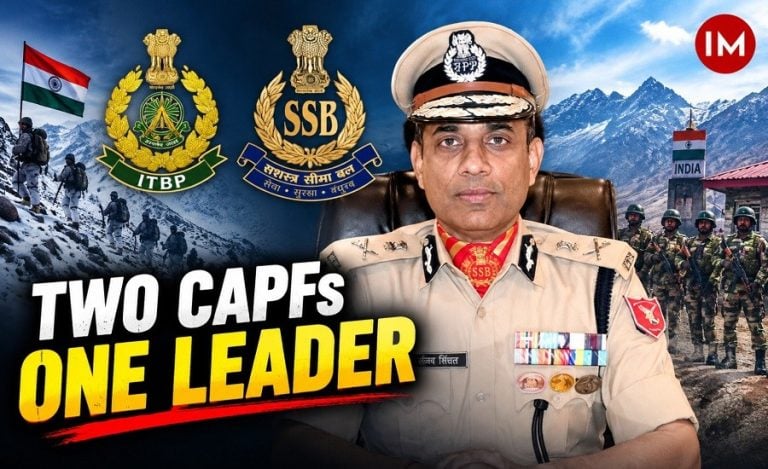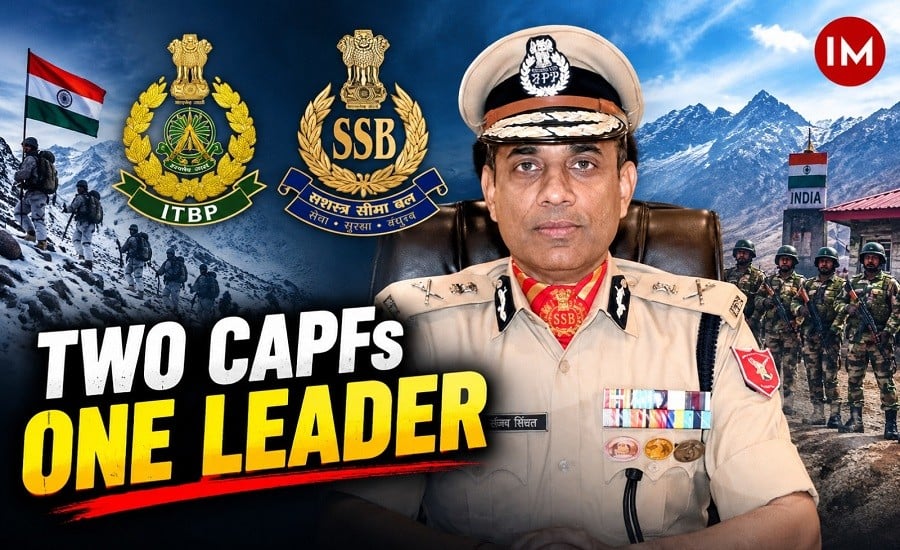
New Delhi: Senior Indian Police Service (IPS) officer Sanjay Singhal, a 1993-batch officer of the Uttar Pradesh cadre and currently Director General of the Sashastra Seema Bal (SSB), has been entrusted with the additional charge of Director General of the Indo-Tibetan Border Police (ITBP).
The Ministry of Home Affairs (MHA) has approved the arrangement, which will take effect following the superannuation of incumbent ITBP Director General Shatrujeet Singh Kapoor, a 1990-batch Haryana cadre IPS officer, on October 31, 2026.
Singhal will continue to head the SSB while overseeing the ITBP until a regular Director General is appointed or further orders are issued, whichever is earlier.
The decision places two strategically important Central Armed Police Forces (CAPFs) under his leadership on an interim basis. It also marks a return to the top leadership of an organisation where he previously served in senior positions.
Who Is IPS Sanjay Singhal?
Born on December 27, 1968, Sanjay Singhal hails from Ghaziabad in Uttar Pradesh. His father’s name is Surendra Singhal.
He holds a Bachelor of Engineering degree in Mechanical Engineering and a Postgraduate Diploma in Police Management.
Singhal joined the Indian Police Service on September 5, 1993, as a direct recruit through the UPSC Civil Services Examination. He was allotted the Uttar Pradesh cadre and was confirmed in the service on October 26, 1995.
With more than 33 years of service, he has held several important assignments in Uttar Pradesh Police and central security organisations, gaining experience in policing, personnel administration, organisational management and border security.
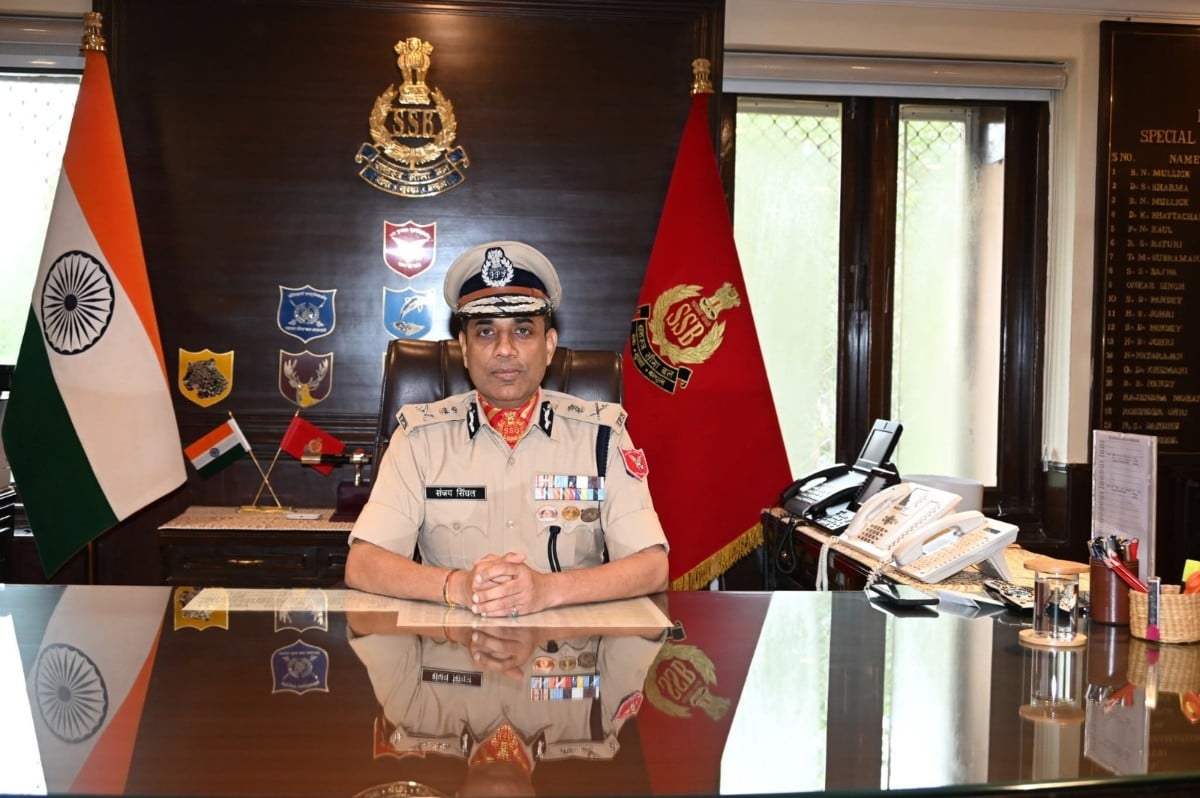
Career in Uttar Pradesh Police
During his service in Uttar Pradesh, Singhal held several field and administrative assignments, including postings as Superintendent of Police and Senior Superintendent of Police.
As he rose through the ranks, he served in senior positions associated with important branches of the state police, including Crime, Railways and Establishment.
One of his notable assignments was as Additional Director General at the Uttar Pradesh Police headquarters, where he headed the Establishment Board.
During this tenure, he was associated with reforms in service rules and measures aimed at improving administrative efficiency, particularly for non-gazetted police personnel.
His experience in personnel management and police administration subsequently complemented his assignments in central security forces.
Earlier Service in ITBP: A Return to a Familiar Force
Singhal’s new responsibility as ITBP Director General is particularly significant because he has previously served in the force.
Between 2008 and 2015, he held senior assignments in the ITBP, serving as Deputy Inspector General and later Inspector General.
These postings gave him experience in the functioning of a force responsible for guarding India’s border with China, particularly in difficult Himalayan terrain.
His earlier association with the ITBP is expected to provide institutional familiarity as he assumes additional charge of the organisation.
The ITBP plays a critical role in border security, high-altitude deployment, surveillance and operational preparedness along the India-China frontier.
Appointed Special DG of BSF in 2024
Before taking charge of the SSB, Singhal served in the Border Security Force (BSF), another major Central Armed Police Force.
In November 2024, he was appointed Special Director General of the BSF after serving in senior administrative positions in Uttar Pradesh Police.
The assignment gave him experience at the senior leadership level of the force responsible for guarding India’s borders with Pakistan and Bangladesh.
His service in the BSF, combined with his earlier experience in the ITBP, strengthened his exposure to the operational and administrative requirements of India’s border-guarding forces.
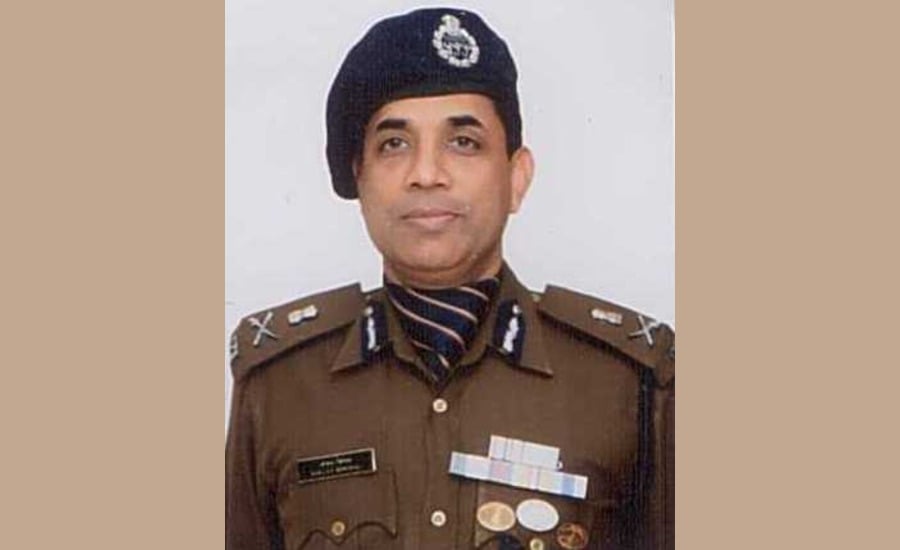
Became SSB Director General in September 2025
Singhal was appointed Director General of the Sashastra Seema Bal following approval by the Appointments Committee of the Cabinet.
He assumed charge on September 1, 2025, succeeding Amrit Mohan Prasad, a 1989-batch Odisha cadre IPS officer who retired on August 31, 2025.
Singhal became the 27th Director General of the SSB.
The appointment order provided for his tenure until his superannuation on December 31, 2028, or until further orders.
As SSB chief, he oversees a force entrusted with guarding India’s open borders with Nepal and Bhutan.
The SSB is responsible for security along approximately 1,751 kilometres of the India-Nepal border and 699 kilometres of the India-Bhutan border.
Its responsibilities include preventing trans-border crime, strengthening border surveillance, combating smuggling and supporting security coordination in sensitive frontier regions.
Promotions Through the IPS Ranks
Singhal’s career has been marked by successive promotions over more than three decades.
He was granted the Senior Scale on July 4, 1997, followed by Selection Grade on January 1, 2006.
He was promoted to Deputy Inspector General on February 5, 2009, and Inspector General on December 31, 2012.
His promotion to Additional Director General came on January 1, 2018.
He was elevated to the rank of Director General on June 11, 2025, ahead of assuming leadership of the SSB in September that year.
Awards, Police Medals and UN Peacekeeping Experience
Singhal has received several honours and decorations during his career in the police service.
He was awarded the Police Medal for Meritorious Service on January 26, 2009, followed by the President’s Police Medal for Distinguished Service on August 15, 2015.
His service record also includes a United Nations Peacekeeping Medal associated with his deployment during the UN mission in Kosovo.
Among his other recognitions are the Director General’s Commendation Disc (Silver) in 2017, Gold in 2018 and Platinum in 2019.
He has also received the Kathin Seva Medal and the ITBP Director General’s Silver and Gold Commendation Discs.
In 2025, he was honoured with the Maha Kumbh Sewa Medal by the Uttar Pradesh government.
These decorations reflect his contributions across state policing, central security organisations and international peacekeeping assignments.
Shatrujeet Singh Kapoor to Retire on October 31
Singhal’s additional charge follows the scheduled retirement of Shatrujeet Singh Kapoor, a 1990-batch IPS officer of the Haryana cadre, who currently heads the ITBP.
Kapoor is due to superannuate on October 31, 2026, creating a vacancy at the top of the force.
Rather than immediately appointing a regular successor, the Ministry of Home Affairs has decided to assign the additional responsibility to the serving SSB Director General.
The arrangement will remain operational until the appointment of a regular ITBP chief or until the government issues further instructions.
Why His New Responsibility Matters
The ITBP and SSB have different geographical responsibilities, but both are integral to India’s border security architecture.
While the ITBP guards the sensitive India-China frontier, the SSB is responsible for securing the borders with Nepal and Bhutan.
With experience in the ITBP, BSF and SSB, Singhal brings an unusually broad background in the country’s border-guarding forces to his new assignment.
His immediate responsibility will be to maintain continuity in the ITBP’s leadership while continuing to discharge his duties as SSB Director General.
The additional charge is an interim administrative arrangement, and the government has not yet announced a regular successor to Kapoor.
About ITBP
The Indo-Tibetan Border Police (ITBP) is an elite Central Armed Police Force raised on 24 October 1962 following the Sino-Indian Conflict, operating under the administrative authority of India’s Ministry of Home Affairs. Tasked with guarding the highly volatile 3,488-km long Indo-China border, its operations stretch across rugged terrain from Ladakh to Arunachal Pradesh. The personnel, affectionately nicknamed “Himveers” (Snow Braves), are deeply specialized in mountain warfare and cold-weather survival, maintaining high-altitude outposts situated between 9,000 and 18,750 feet where temperatures routinely drop below minus 40 degrees Celsius. Beyond protecting the northern frontier, the ITBP actively leads high-altitude search and rescue missions, secures the annual Kailash Mansarovar Yatra, and serves globally in United Nations Peacekeeping deployments.
About SSB
The Sashastra Seema Bal (SSB) is a crucial border-guarding force of India that was originally established in 1963 as the Special Service Bureau to foster national integration among frontier populations after the 1962 war. Under the Ministry of Home Affairs, its modern mandate is dedicated to guarding India’s open, friendly borders with Nepal (1,751 km) and Bhutan (699 km). Unlike the high-altitude combat focus of the ITBP, the SSB operates across plains, dense forests, and riverine terrains where its primary challenges involve combating human trafficking, counterfeit currency networks, and cross-border smuggling. Guided by its motto of “Service, Security, and Brotherhood,” the force maintains a strong emphasis on community policing and intelligence gathering while regularly deploying for internal security duties, anti-Naxal operations, and national election management.
Read also: Who Is Suhas L.Y.? UP Cadre IAS Officer Wins Bronze at 2026 Asian Para Games