New Delhi: The Centre for Development of Advanced Computing (C-DAC) and Bank of India (BOI) have signed an agreement to develop advanced technologies for banking. The partnership will focus on quantum technology, cybersecurity, artificial intelligence (AI), and blockchain to make India’s banking system more secure and future-ready.
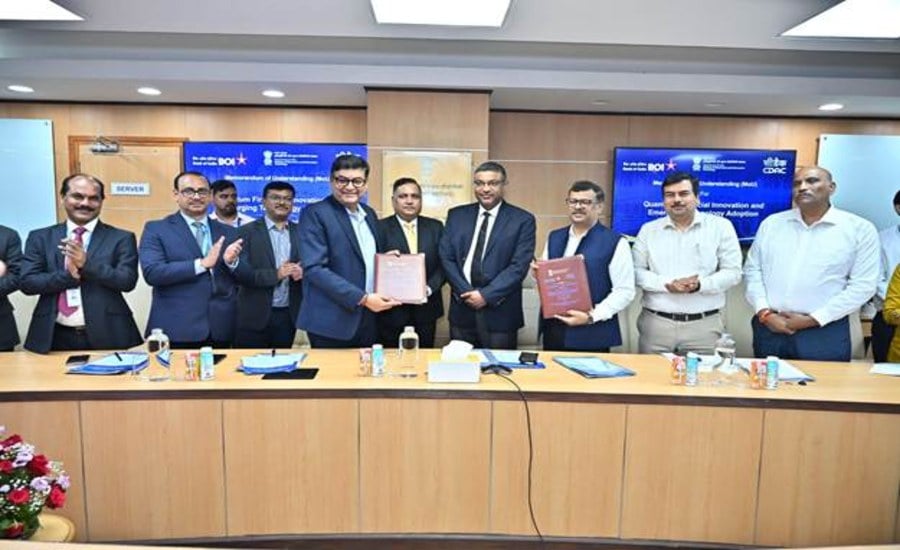
The Memorandum of Understanding (MoU) was signed on October 22, 2026, to support joint research, technology development, pilot projects, and training programmes.
Details of C-DAC Bank of India Partnership
The Centre for Development of Advanced Computing (C-DAC), an autonomous scientific society under the Ministry of Electronics and Information Technology (MeitY), has joined hands with Bank of India to explore new technologies for financial services.
Read also: Bank of India Unveils 12 Digital Innovations at Global FinTech Fest 2026 to Transform Banking
The agreement will help both organisations work together on research, technology demonstrations, pilot implementations, and capacity-building programmes. The partnership aims to convert India’s technology research into practical solutions for the banking sector.
What are the Key Focus Areas of C-DAC Bank of India Partnership
One of the main objectives of the agreement is to develop a Quantum Ecosystem For Financial Innovation. Quantum technology is an advanced field of science that uses the principles of quantum physics. It has the potential to improve computing, communication, and security systems.
The partnership will explore quantum-inspired and quantum-safe technologies to help banks prepare for future security challenges. These technologies could support stronger banking security, better resilience, and improved decision-making.
How Quantum Technology Can Improve Banking Security
Quantum technologies are becoming important for financial institutions because banking systems handle sensitive customer information and financial transactions.
The partnership will explore technologies that can help banks prepare for security risks linked to future quantum computing developments. The organisations will also study how quantum-based solutions can work with existing banking systems.
However, the agreement focuses on research and technology development. It does not mean that quantum technology has already been deployed across Bank of India’s banking services.
Joint Research And Pilot Projects Planned
C-DAC and Bank of India will identify important banking use cases where emerging technologies can provide practical benefits. The organisations will work on the following activities:
- Identify priority banking applications for emerging technologies.
- Conduct Proofs Of Concept (PoCs) in secure testing environments.
- Study the technical feasibility of proposed solutions.
- Evaluate the possible benefits for banking operations.
- Compare new technologies with existing systems.
- Prepare roadmaps for future development, pilot projects, and adoption.
These activities will help both organisations understand which technologies are suitable for real banking applications.
C-DAC Bank of India Partnership: AI And Blockchain Technologies Also Included
The agreement is not limited to quantum technology. C-DAC and Bank of India will also explore Artificial Intelligence, blockchain, and other emerging technologies that can support financial services.
Potential applications include intelligent document processing, customer assistance, employee assistance, fraud analysis, credit analytics, and financial analytics. The partnership will also examine secure AI platforms and responsible AI applications.
Other areas of interest include smart contracts, digital identity, and secure data sharing. These technologies could help improve banking operations, information security, and customer services.
C-DAC To Support Indigenous Technology Development
C-DAC brings expertise in High Performance Computing, Artificial Intelligence, quantum technologies, blockchain, cybersecurity, and indigenous technology development.
Bank of India will contribute its banking expertise, nationwide presence, and experience in managing a large technology environment.
The partnership will combine these capabilities to develop technology solutions suited to India’s banking and financial services sector.
The initiative also supports the broader goal of strengthening India’s domestic research and technology development capabilities.
Officials Highlight Importance Of Quantum Innovation
Shri S. Krishnan, Secretary, MeitY, congratulated Bank of India for its contribution to technological advancement.
He appreciated the collaboration with C-DAC and highlighted the importance of building a quantum-resilient financial ecosystem. He also stressed the need to prepare the banking sector for emerging cybersecurity risks and technological challenges. According to the officials, the partnership can help India prepare for both the opportunities and challenges of the quantum era.
C-DAC Aims To Build A Future-Ready Financial Ecosystem
Shri E. Magesh, Director General of C-DAC, said the collaboration would help bring India’s indigenous quantum and emerging technology capabilities into practical banking applications. He highlighted the importance of joint research, development, and capacity building. The initiative aims to support a secure, resilient, and future-ready financial ecosystem.
Bank Of India To Explore Next-Generation Banking Technologies
Shri Rajiv Mishra, Executive Director of Bank of India, said quantum technologies could influence several areas of banking.
These include cybersecurity and complex financial decision-making. The collaboration will allow the bank to study emerging technologies in a structured way.
It will also help develop the knowledge and technical capabilities needed for future banking applications.
Training And Skill Development To Be Part Of C-DAC Bank of India Partnership
The agreement also includes training and capacity-building programmes. The organisations will focus on developing skilled professionals in areas such as:
- Quantum Computing
- Quantum Security
- Artificial Intelligence
- Blockchain
- Emerging Digital Technologies
These programmes will help build a future-ready talent ecosystem for India’s financial technology sector.
MoU Signed In Presence Of Senior Officials
The MoU was formally exchanged by Shri Aditya Kumar Sinha, Executive Director, C-DAC Mumbai, and Shri Satyendra Singh, CGM IT and CIO, Bank of India.
The exchange took place in the presence of Shri S. Krishnan, Secretary, MeitY; Shri Rajiv Mishra, Executive Director, Bank of India; Shri Sudeep Shrivastava, Joint Secretary, MeitY; and Shri E. Magesh, Director General, C-DAC. Other senior officials from MeitY, Bank of India, and C-DAC also attended the event.
Read also: Central Bank of India Signs MoU with Indian Coast Guard to Manage Salary Accounts Nationwide
FAQs
C-DAC and Bank of India signed an MoU to collaborate on quantum technology, AI, blockchain, cybersecurity, and other emerging technologies for banking applications.
Quantum technology could help banks explore advanced security solutions, improve resilience, and prepare for future cybersecurity challenges.
The partnership will explore quantum technology, quantum security, artificial intelligence, blockchain, secure data sharing, fraud analysis, and other technologies relevant to banking.