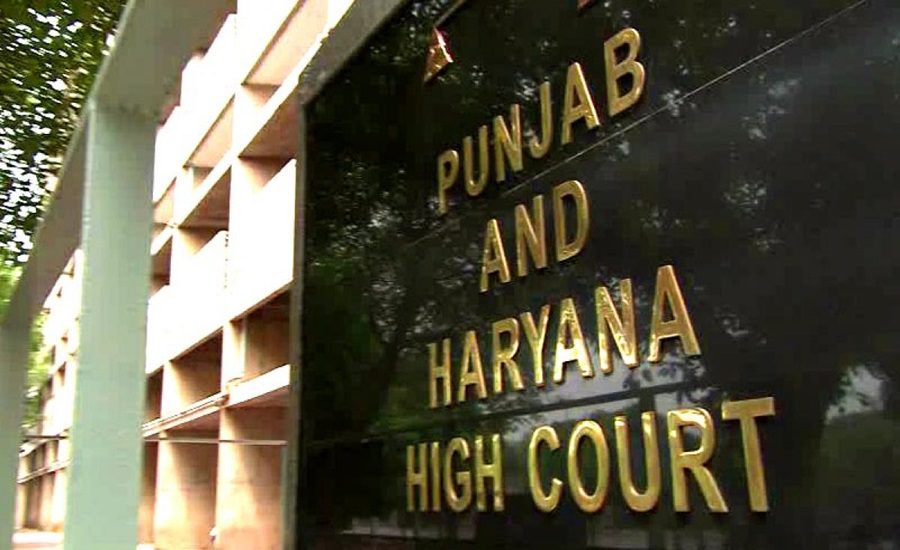
New Delhi: The Government of India has officially approved the appointment of two judicial officers as Additional Judges of the Punjab and Haryana High Court, marking a key development in efforts to strengthen the judiciary in one of India’s busiest high courts.
Union Minister of State for Law and Justice Arjun Ram Meghwal announced the appointments on social media platform X (formerly Twitter) on January 2, 2026, highlighting the Central government’s continued support to judicial infrastructure.
Who Are the Newly Appointed Judges?
The two judicial officers selected for elevation are:
- Ramesh Chander Dimri
- Neerja Kulwant Kalson
Both have been designated to serve as Additional Judges of the Punjab and Haryana High Court, one of the key constitutional courts in North India.
Their appointments stem from recommendations made by the Supreme Court Collegium during its meeting on December 16, 2025.
Under Article 224(1) of the Constitution of India, the President appoints Additional Judges — typically for a two-year term — to urgently bolster judicial capacity where caseloads are heavy.
What is the Role of Supreme Court Collegium in Judicial Appointments
The Supreme Court Collegium is the body responsible for recommending candidates for appointment as judges of the Supreme Court and the High Courts. It is headed by the Chief Justice of India (CJI) along with the two senior-most Supreme Court judges.
Once the Collegium selects candidates, the recommendations are sent to the Ministry of Law and Justice for vetting and final approval.
The Ministry then forwards them to the President of India, who issues the formal appointment notification.
The current appointments add to a broader pattern of judicial clearances under the present CJI’s Collegium, with reports noting that the Union Government has cleared more than 90% of the names recommended by the Collegium for various courts — a high acceptance rate compared with recent years.
Context: Judiciary Under Pressure
2025 has been a significant year for judicial administration in India. From discussions over appointment transparency to debates on judicial accountability, the courts have been in focus.
Recent reports highlight contentious issues such as the Lokpal’s jurisdiction over sitting High Court judges and concerns related to corruption inquiries within the subordinate judiciary.
Simultaneously, there has been a push to fill vacancies, with the Collegium recommending several judges for high courts and the Supreme Court itself.
For the Punjab and Haryana High Court, enhancing judicial strength is particularly crucial given the volume of constitutional and civil matters that traverse its benches from both states.
The appointments of Dimri and Kalson are expected to bolster the court’s capacity marginally, even as judicial stakeholders argue for sustained reinforcements.