Raipur: In a landmark step toward inclusive development, the Chhattisgarh government has signed an agreement with IIT Roorkee to conduct the first-ever comprehensive mapping of the Abujhmad region, a densely forested and previously inaccessible area spread across Narayanpur district, parts of south Bastar, and extending into Gadchiroli district of Maharashtra.
The initiative aims to bring long-neglected tribal and remote communities into the mainstream by enabling access to government welfare schemes, infrastructure projects, and administrative services.
Mapping 5,000 Sq Km of ‘Unknown Hills’
The mapping project will cover nearly 5,000 square kilometres of rugged terrain in Abujhmad, a name that translates to “unknown hills.” For decades, the region remained largely unmapped due to difficult terrain and prolonged Maoist insurgency.
Once completed, the project will provide detailed revenue and administrative maps for the first time since Independence. These maps are expected to help the government establish land records, plan development projects, and deliver welfare benefits to villages that have remained beyond the reach of basic facilities.
Survey to Cover Over 240 Villages
According to officials, the survey will span more than 240 villages over the next few years. A 70-member technical team has already been deployed and is expected to begin fieldwork shortly. The mapping will be carried out using geo-referencing techniques and high-resolution satellite imagery, ensuring accurate and detailed data collection.
The data generated will support infrastructure planning, road connectivity, health services, education facilities, and land ownership documentation in one of India’s most remote regions.
Improved Security Enables Development Push
The project has become possible following improved security conditions in the region. Over the past few years, security forces have established strategic bases in former Maoist strongholds such as Kutul, Kodnad, and Lanka, allowing administrative agencies to enter areas once dominated by insurgents.
With Maoist influence steadily declining due to targeted security operations, the state administration is now accelerating development initiatives and welfare outreach for local residents who have long been deprived of essential services.
CM Calls Project a Major Breakthrough
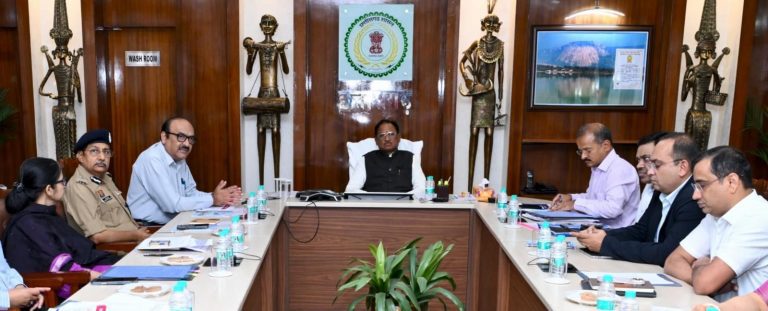
Chhattisgarh Chief Minister Vishnu Deo Sai described the mapping initiative as a major breakthrough for the region.
“There is no revenue map of this area. With Maoist dominance shrinking rapidly, it is now finally possible to conduct a proper survey. This will be a big step forward, as mapping will allow government schemes to reach the people living here,” the Chief Minister said.
Nationwide Push Against Maoist Insurgency
Security operations against Maoist groups across the country have seen significant success over the last two to three years. The campaign is expected to intensify further, with the Union government aiming for the complete elimination of Naxal insurgency by March, as announced earlier by Union Home Minister Amit Shah.
The Abujhmad mapping project is being seen as a crucial step in converting security gains into long-term development and stability in the region.