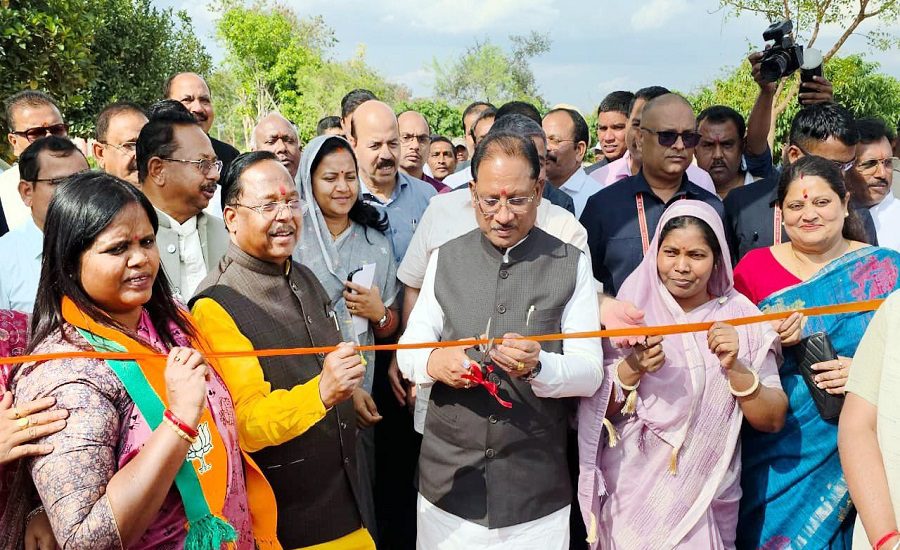
Raipur: Chhattisgarh Chief Minister Vishnu Deo Sai inaugurated the two-day State-Level Oilseed Farmers’ Fair at Rajmohini Devi Agricultural College and Research Centre in Ambikapur, Sarguja district. The event aims to promote modern agricultural techniques and boost oilseed production, while highlighting government initiatives to increase farmers’ income.
During the inauguration, CM Sai inspected various stalls set up by different departments, showcasing the latest agricultural technologies and initiatives to enhance oilseed cultivation.
Promoting Modern Agriculture and Increasing Farmers’ Income
CM Vishnu Deo Sai urged farmers to adopt scientific farming techniques to increase oilseed production and reduce dependence on imports. He highlighted that while India has achieved self-sufficiency in cereal production, it currently produces only 57% of the required oilseeds, importing the remaining 43%.
The Chief Minister emphasized that the state government is committed to increasing farmers’ income through:
- Incentive schemes, providing ₹11,000 per acre for oilseed cultivation under the Krishak Unnati Yojana
- Promoting ancillary activities like dairy, poultry, and fisheries
- Reducing the cost of agricultural machinery after GST reforms
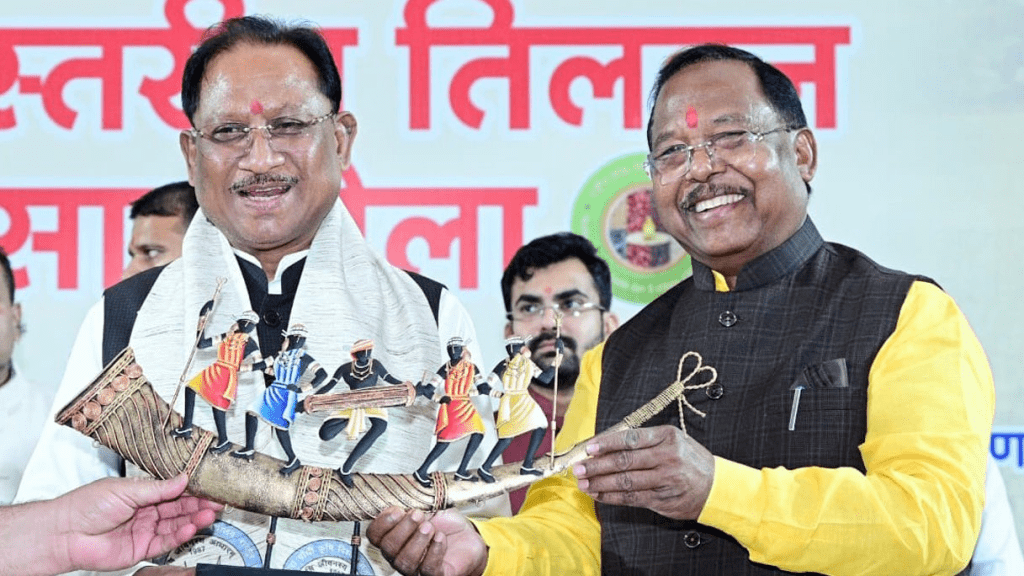
Environmental Initiative: ‘One Tree in Mother’s Name’
On the occasion of World Forestry Day, CM Sai planted a sal tree under the campaign “One Tree in Mother’s Name” at the college campus. He encouraged citizens to plant more trees and contribute to environmental protection.
Agriculture and State Economy
Chhattisgarh is a predominantly agriculture-driven state, with around 80% of the population dependent on farming. CM Sai highlighted the government’s efforts in procurement and support prices, stating that paddy is being purchased at 21 quintals per acre for ₹3,100, with the remaining amount paid promptly to farmers. He also reviewed the disbursement of payments and benefits under various schemes before Holi.
Focus on Oilseed Production and Self-Reliance
The Chief Minister stressed that increasing oilseed production is crucial for national self-reliance in edible oils. Farmers were encouraged to adopt suggestions from agricultural scientists to improve yield. Additionally, the government’s Krishak Unnati Yojana offers financial incentives to support oilseed cultivation and related activities.
Role of Agricultural Universities and Training Programs
Dr. Girish Chandel, Vice-Chancellor of Indira Gandhi Agricultural University, emphasized that advanced seeds and training are being provided to farmers under the oilseed development program. Each year, around 50,000 farmers are trained through 28 agricultural colleges, 27 Krishi Vigyan Kendras, and research institutions across the state.
Participation of Officials and Dignitaries
The event witnessed the presence of several political leaders and officials, including:
- Agriculture Minister Ram Vichar Netam
- Minister Laxmi Rajwade
- MP Chintamani Maharaj
- MLAs Prabodh Minz and Ramkumar Toppo
- Youth Commission Chairman Vishv Vijay Singh Tomar
- Ambikapur Mayor Manjusha Bhagat
The presence of these dignitaries highlighted the state government’s commitment to agriculture, farmer welfare, and sustainable development.
Driving Agricultural Growth in Chhattisgarh
The Tilhan Kisan Mela 2026 in Ambikapur showcased modern farming technologies, government incentives, and training programs aimed at enhancing oilseed production and farmers’ income. CM Vishnu Deo Sai’s call for scientific farming and environmental conservation reflects Chhattisgarh’s holistic approach to agricultural development and sustainability.
Read also: Chhattisgarh CM Vishnu Deo Sai Inaugurates Sarguja Olympics 2026 with ₹10 Crore Budget