New Delhi: DRDO 30kW Directed Energy Weapon has reached a major milestone as India’s Defence Research and Development Organisation (DRDO) prepares to select an industry partner for mass production. The indigenous laser-based weapon system has successfully completed key validation trials and is designed to destroy drones, UAVs, and other aerial threats at ranges of up to 5 kilometres.
The development marks a significant step in strengthening India’s air defence capabilities and reducing dependence on expensive interceptor missiles.
DRDO Prepares For Mass Production Of 30kW Laser Weapon
India’s Defence Research and Development Organisation (DRDO) is planning to issue an Expression of Interest (EoI) within the next six months to identify a manufacturing partner for its advanced 30kW Directed Energy Weapon (DEW).
The move comes after the successful validation of the core technology and the completion of critical testing phases. According to DRDO officials, the selected industry partner will help manufacture the First-of-Production Model (FoPM), paving the way for large-scale deployment.
What Is The 30kW Directed Energy Weapon
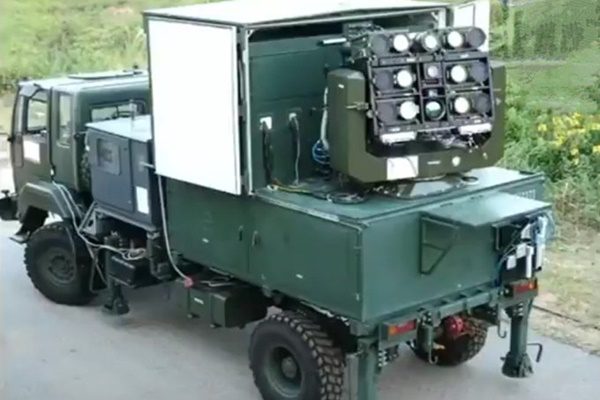
The 30kW Directed Energy Weapon is a high-power laser system mounted on a mobile truck platform. It uses concentrated energy beams that travel at the speed of light to neutralise threats. The system is specifically designed to destroy:
- Drone swarms
- Unmanned Aerial Vehicles (UAVs)
- Fixed-wing drones
- Enemy surveillance systems
- Sensitive electronic equipment
The weapon can reportedly engage targets at distances of up to 5 kilometres.
Why Is India Investing In DRDO 30kW Directed Energy Weapon
Modern battlefields are witnessing a rapid increase in drone warfare. Low-cost drones can be used for surveillance, attacks, and overwhelming air defence systems. Traditional interceptor missiles are effective but expensive. A single missile can cost significantly more than the drone it destroys. Directed Energy Weapons solve this problem by providing an extremely low “cost-per-shot” solution.
Once deployed, a laser weapon can engage multiple targets quickly without requiring expensive missile launches.
Operation Sindoor Highlighted The Need For DRDO 30kW Directed Energy Weapon
The importance of laser-based defence systems gained attention after Operation Sindoor in May 2025. During the cross-border military engagements, Indian forces reportedly encountered a large number of inexpensive drones.
These drones were used to probe air defence networks and force the use of costly interceptor missiles. The experience reinforced the need for cost-effective counter-drone solutions. As a result, development and deployment of directed energy weapons received greater urgency.
How Does A Directed DRDO 30kW Directed Energy Weapon Work
Unlike traditional missiles, a directed energy weapon does not rely on explosives. Instead, it focuses a powerful laser beam onto a target. The intense energy can:
- Burn through drone structures
- Damage sensors
- Disable electronics
- Neutralise targets almost instantly
Because the beam travels at the speed of light, there is virtually no delay between firing and impact.
India’s Growing Directed Energy Weapon Ecosystem
The 30kW system is part of a larger Indian laser weapon programme. DRDO has already transferred technology to private companies to expand manufacturing capabilities. Several smaller laser systems are already entering service.
2kW Directed Energy Weapon
The 2kW variant is already in production. Indian companies involved include:
- Adani Defence
- Astra Microwave
- Bharat Electronics Limited (BEL)
This system is designed for short-range engagements.
10kW Directed Energy Weapon
The 10kW version has already received Acceptance of Necessity (AoN), an important procurement approval. The armed forces have reportedly placed initial orders. BEL and Larsen & Toubro (L&T) are expected to play major roles in production and integration.
Modernising India’s Air Defence Network
The new laser systems are expected to integrate into India’s air defence architecture. They can work alongside:
- Radar systems
- Electro-optical sensors
- Acoustic monitoring systems
- Existing missile defence networks
This integration allows faster detection, tracking, and neutralisation of aerial threats. The result is a significantly shorter response time against hostile drones and UAVs.
Strategic Importance of DRDO 30kW Directed Energy Weapon For India
The successful deployment of the 30kW Directed Energy Weapon would place India among a small group of nations operating advanced laser weapons. Countries actively developing similar systems include:
- United States
- Russia
- China
- Israel
A successful indigenous programme would strengthen India’s defence manufacturing ecosystem and support the government’s Atmanirbhar Bharat initiative.
FAQs
The system is designed to engage aerial threats at distances of up to 5 kilometres.
It is an indigenous high-power laser weapon designed to destroy drones, UAVs, and electronic targets using concentrated energy beams.
They provide a low-cost and highly effective way to counter drone swarms and aerial threats without using expensive interceptor missiles.