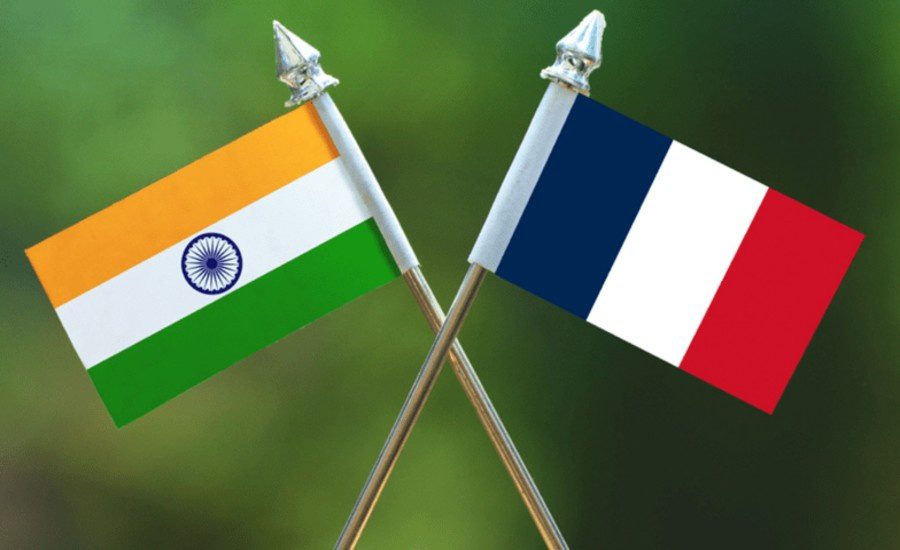
New Delhi: The Franco-Indian 6th-Gen fighter programme could expand with the addition of two new partner nations, according to reports citing sources familiar with ongoing discussions. The proposed expansion is linked to the development of a next-generation fighter aircraft under France’s Future Combat Air System (FCAS) framework. While no official announcement has been made, the move could help distribute the estimated $100 billion development cost and strengthen international defence cooperation in advanced military aviation.
Detailes of Franco-Indian 6th-Gen Fighter Programme
France and India are currently engaged in discussions on co-developing a sixth-generation fighter aircraft. According to reports, the programme may eventually include two additional countries as full partners.
Sources indicate that these potential partners would contribute significant funding to the project, although their direct role in research and development may be more limited compared to France and India. Officials have not formally confirmed the identities of the countries, and discussions remain at an early stage.
Background: Changes in the FCAS 6th-Gen Fighter Programme
The development comes after major changes in France’s FCAS programme. FCAS was originally launched in 2017 as a joint effort involving France, Germany, and Spain to build a sixth-generation combat aircraft. However, disagreements between key industrial partners over programme leadership and design responsibilities slowed progress for several years.
In June 2026, France and Germany reportedly ended their joint fighter development efforts, leading France to explore alternative partnerships.
India’s Growing Role in the Franco-Indian 6th-Gen Fighter Programme
India has emerged as a key partner in the proposed programme. According to India’s Ministry of Defence, discussions have been initiated regarding India’s participation in the French-led FCAS effort.
The development follows earlier high-level talks between Defence Minister Rajnath Singh and French Defence Minister Catherine Vautrin. India’s involvement aligns with its long-term objective of gaining access to advanced aerospace technologies and future air combat capabilities.
Manufacturing and Design Responsibilities
Under the reported structure, France would continue to lead the programme’s design and technology development. India would serve as a major manufacturing hub for the aircraft and its components. This role builds on the expanding defence-industrial cooperation between the two countries.
Indian companies are already involved in manufacturing components for platforms such as the Rafale fighter aircraft.
The two additional partner nations could also receive manufacturing responsibilities, although details have not yet been finalized.
Why Additional Partners Are Important in Franco-Indian 6th-Gen Fighter Programme
Developing a sixth-generation fighter aircraft is one of the most expensive defence projects in the world. Experts estimate that the overall programme could cost around $100 billion.
Bringing in additional countries could help reduce financial pressure on existing partners while ensuring long-term funding stability. Such cooperation may also expand industrial participation and strengthen the programme’s global supply chain.
Impact on India’s AMCA Programme
India’s participation in the FCAS effort is expected to complement, rather than replace, the indigenous Advanced Medium Combat Aircraft (AMCA) programme. The AMCA remains India’s flagship stealth fighter project.
Defence planners believe experience gained through international collaboration could support the development of future technologies, including advanced networking, artificial intelligence integration, unmanned teaming, and next-generation stealth systems.