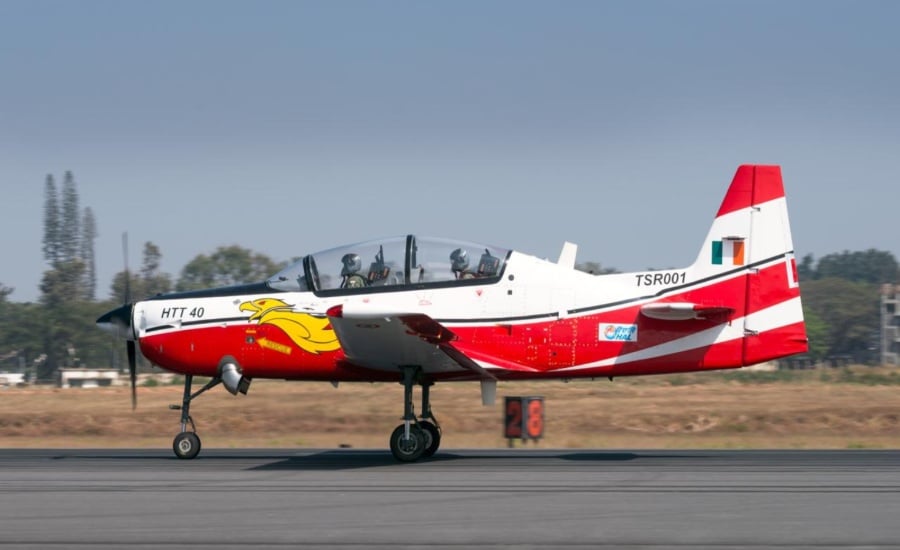
New Delhi: Hindustan Aeronautics Limited (HAL) has delivered the first three HTT-40 basic trainer aircraft to the Indian Air Force (IAF). The delivery marks an important step in India’s efforts to strengthen its indigenous defence manufacturing and pilot training capabilities. However, the HTT-40 training programme may take up to two years to become fully operational, as the Air Force needs more aircraft and trained flying instructors. The IAF plans to build a fleet of 25–30 aircraft before starting full-scale training at its Air Force Academy near Hyderabad.
IAF HAL HTT 40 Deal: Key Highlights
- Aircraft Delivered: First three HTT-40 basic trainer aircraft.
- Manufacturer: Hindustan Aeronautics Limited (HAL).
- Operator: Indian Air Force (IAF).
- Total Order: 70 aircraft.
- Contract Value: ₹6,838 crore.
- Full Training Timeline: Up to two years.
- Main Purpose: Basic flight training for new Air Force pilots.
- Engine: Honeywell TPE331-12B turboprop engine.
Details of IAF HAL HTT 40 Deal
HAL has handed over the first three HTT-40 basic trainer aircraft to the Indian Air Force. The delivery is an important milestone in India’s efforts to develop and manufacture more military aircraft within the country.
The first HTT-40 aircraft was delivered in Bengaluru on September 18, marking progress in the indigenous trainer aircraft programme. However, the delivery of the first three aircraft does not mean that full training operations will begin immediately. The Air Force needs to receive more aircraft and prepare enough instructors before it can launch the complete training programme.
Why Will Full HTT-40 Training Take Two Years
The Indian Air Force needs a fleet of around 25–30 HTT-40 aircraft before deploying them for basic pilot training at the Air Force Academy near Hyderabad.
The service must also train flying instructors who can teach new pilots how to operate the aircraft safely. These instructors will help establish the training system and prepare future batches of Air Force pilots. According to officials, the process of building the required fleet and preparing instructors could take up to two years.
HTT-40 Aircraft To Be Based In Chennai Initially
The HTT-40 aircraft will initially be stationed at the Flying Instructors’ School in Tambaram, near Chennai. At this location, experienced flying instructors will learn to operate the aircraft and develop the methods needed to train new pilots.
They will also prepare standard operating procedures, training syllabuses and performance standards. These preparations will help ensure that trainee pilots receive consistent and effective instruction.
Indian Air Force Ordered 70 HTT-40 Aircraft
The Indian Air Force placed an order for 70 HTT-40 basic trainer aircraft worth ₹6,838 crore around three years before the reported delivery.
The order aims to meet the Air Force’s growing need for pilot training aircraft. A reliable supply of basic trainers is important because every military pilot needs to develop fundamental flying skills before moving to more advanced aircraft. The HTT-40 is designed to support this early stage of training and help prepare pilots for the next steps in their careers.
IAF HAL HTT 40 Deal: HTT-40 Engine Supply And Production Plans
The HTT-40 is powered by the TPE331-12B turboprop engine manufactured by US-based Honeywell. However, engine supply delays caused by supply chain problems have affected the programme. Officials expect these difficulties to ease, which could support faster aircraft production.
Under a contract worth around $100 million signed four years ago, Honeywell agreed to supply 88 engines and engine kits. The arrangement includes the direct supply of 16 engines, while HAL will manufacture the remaining units under a technology transfer agreement. If engine supplies become stable, HAL could produce up to 20 HTT-40 aircraft annually at its facilities in Bengaluru and Nashik.
What are the HTT-40 Features
The HTT-40 is a tandem-seat basic trainer aircraft, meaning the instructor and trainee pilot sit one behind the other. It is designed to help rookie pilots develop essential flying skills before they move on to more advanced training aircraft or operational military aircraft. Its reported features include:
- Modern Avionics: Electronic systems that help pilots operate and monitor the aircraft.
- Hot Refuelling Capability: Allows refuelling with the engine running, subject to approved procedures.
- Zero-Zero Ejection Seats: Designed to support ejection in specified low-speed and low-altitude conditions.
- Indigenous Components: The aircraft currently has around 56% local content.
HAL aims to increase the indigenous content to more than 60% by bringing more major components and subsystems under domestic production.
How HTT-40 Fits Into Indian Air Force Pilot Training
The Indian Air Force follows different stages of flying training to prepare pilots for military aircraft.
Stage I: Basic Flying Training
New pilots begin with basic flying training on the Swiss-origin Pilatus PC-7 MkII aircraft. This stage helps them learn the fundamentals of flying.
Stage II: Advanced Flying Training
After basic training, pilots move into different training streams. Those selected for fighter aircraft training continue on the PC-7 MkII and the Kiran Mk-IA jet trainer.
Stage III: Training For Fighter Aircraft
Pilots selected for the fighter stream move to the British-origin Hawk advanced jet trainer. This stage prepares them for more demanding flying tasks before they progress to frontline fighter aircraft.
Pilots assigned to transport aircraft and helicopters follow their respective training paths. The HTT-40 is intended to strengthen the basic training stage by providing another Indian-developed aircraft for the Air Force.
Why Is The IAF HAL HTT 40 Deal Important For India
The HTT-40 programme is important because it supports India’s goal of increasing domestic defence manufacturing and reducing dependence on foreign equipment.
A locally manufactured basic trainer can help the Air Force meet its training requirements while supporting Indian aerospace companies and their supply chains.
The programme’s long-term progress will depend on timely engine supplies, steady aircraft production and the availability of qualified flying instructors. Once the required fleet is ready, the HTT-40 could become an important part of the Indian Air Force’s basic pilot training system.
Read also: IAF GSAT-7C Satellite Deal: 5 Ways It Could Strengthen the Indian Air Force
FAQs
HAL has delivered the first three HTT-40 basic trainer aircraft to the Indian Air Force. The Air Force has ordered a total of 70 aircraft under a contract worth ₹6,838 crore.
The HTT-40 is an indigenous basic trainer aircraft developed by Hindustan Aeronautics Limited for the Indian Air Force. It is designed to teach new pilots fundamental flying skills.
Full-scale HTT-40 training operations may take up to two years. The Indian Air Force needs a fleet of around 25–30 aircraft and enough trained flying instructors before beginning the programme at its Air Force Academy near Hyderabad.