New Delhi: India is moving ahead with a major military helicopter modernisation programme. The 200 Light Multi Role Helicopters (LMRH) procurement could create new opportunities for Indian defence manufacturers, including Hindustan Aeronautics Limited (HAL), Tata-Airbus and Adani-Leonardo.
The Defence Acquisition Council (DAC) granted initial approval for the helicopter procurement on October 26, 2026, as India looks to strengthen its military capabilities and replace ageing helicopters.
Defence Ministry Approves Major Helicopter Procurement Plan
The Defence Acquisition Council, chaired by Defence Minister Rajnath Singh, approved several defence procurement proposals worth approximately ₹2.12 lakh crore on October 26, 2026.
Read also: Why India is Prioritising Military Helicopter in the Missile and Drone Era
Among these proposals was the procurement of Light Multi Role Helicopters for the Indian Army and Indian Air Force (IAF).
According to the Ministry of Defence, these helicopters will support reconnaissance, surveillance, combat operations, search and rescue, and humanitarian assistance and disaster relief missions.
The approval is an important step towards modernising India’s military helicopter fleet. However, Acceptance of Necessity (AoN) is an initial approval and does not mean that a final purchase contract has been signed.
Helicopter Procurement Plan: What are the Key Companies in Focus
A research report by 360 ONE Capital Research has identified three major industrial groups that could benefit from the proposed helicopter programme.
These include India’s public-sector aerospace manufacturer HAL and two private-sector partnerships involving international helicopter manufacturers. The potential contenders include:
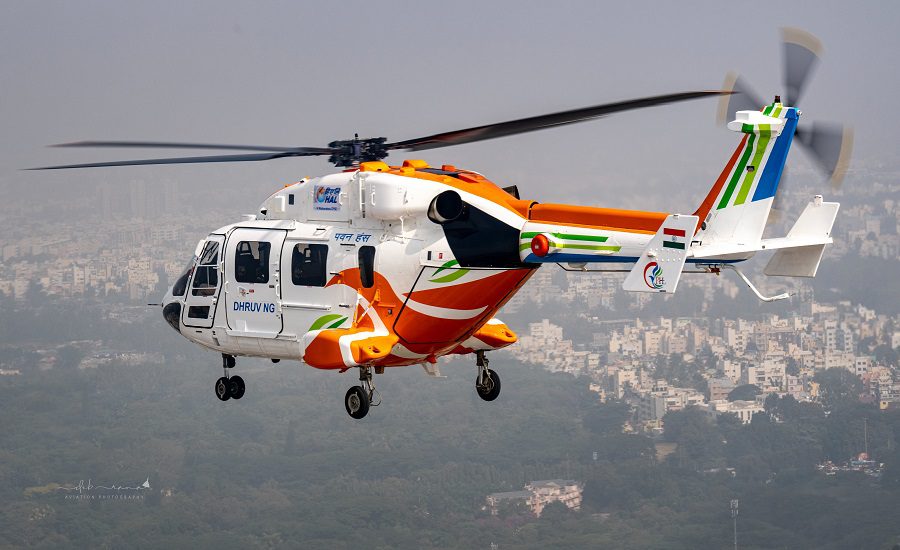
- Hindustan Aeronautics Limited (HAL): The company could offer its Light Utility Helicopter (LUH) and Advanced Light Helicopter (ALH).
- Tata-Airbus: The partnership could explore the Airbus H125 helicopter.
- Adani-Leonardo: The partnership could consider Leonardo’s AW109 helicopter.
The final selection will depend on the technical requirements, performance specifications and procurement conditions decided by the armed forces.
Importantly, these companies have been identified as potential contenders. The research report does not confirm that a formal bidding process has started or that a final list of bidders has been announced.
HAL’s LUH And ALH Could Strengthen India’s Position
HAL could play an important role in the proposed helicopter programme through its indigenous helicopter manufacturing capabilities.
Its Light Utility Helicopter (LUH) belongs to the three-tonne category and has been developed to meet military and civilian requirements, including operations in high-altitude regions.
According to official government information, the LUH has a maximum take-off weight of 3,150 kg, a maximum speed of approximately 235 kmph and a service ceiling of 6.5 km.
The helicopter also has a reported range of 350 km. Its design includes modern avionics and a glass cockpit with multi-function displays.
HAL’s Advanced Light Helicopter (ALH), meanwhile, belongs to the 5.5-tonne category and offers multi-role capabilities. These platforms could give HAL an advantage if the final military requirements match their technical capabilities.
Tata-Airbus And Adani-Leonardo Bring Private Sector Competition
The proposed programme could also create opportunities for private-sector defence manufacturing in India.
Tata-Airbus is one of the partnerships identified in the research report. The Airbus H125 has been mentioned as a possible helicopter offering for the requirement.
Similarly, Adani Defence’s partnership with Italian aerospace and defence company Leonardo could bring another international helicopter platform into consideration.
The Adani-Leonardo partnership was announced in February 2026 through a memorandum of understanding to develop a helicopter manufacturing ecosystem in India.
Leonardo’s AW109 has been identified in the research report as a potential platform for the programme. However, the final helicopter models will depend on the armed forces’ technical specifications and procurement decisions.
Helicopter Procurement Plan: Replacing India’s Ageing Chetak And Cheetah Helicopters
The proposed helicopter acquisition is part of India’s long-term plan to replace its ageing Chetak and Cheetah helicopter fleets.
These helicopters have served the Indian Armed Forces for several decades and are used for various military operations, including surveillance, transportation and high-altitude missions.
Their replacement is important for improving operational safety, reliability and mission capabilities.
Light helicopters are particularly important for operations in difficult geographical areas, including the Himalayan region and India’s northern and northeastern borders. The new platforms are expected to support several military requirements, including:
- Reconnaissance and surveillance operations.
- Transportation of military personnel and equipment.
- Combat support missions.
- Search and rescue operations.
- Humanitarian assistance and disaster relief.
Read also: From AI-Powered Drones to AODS System: Key Highlights of India’s 2.12 Lakh Crore Defence Procurement
FAQs
HAL, Tata-Airbus and Adani-Leonardo have been identified as potential contenders. However, the final list of bidders has not been officially confirmed.
India’s proposed Light Multi Role Helicopter programme involves approximately 200 helicopters for the Indian Army and Indian Air Force, according to the reported procurement plan.
India plans to replace its ageing Chetak and Cheetah helicopter fleets. New helicopters will support surveillance, reconnaissance, transportation, combat support, search and rescue, and high-altitude operations.