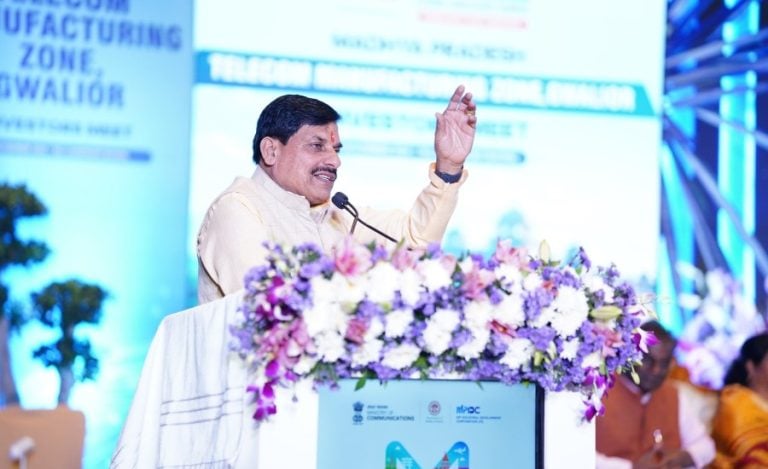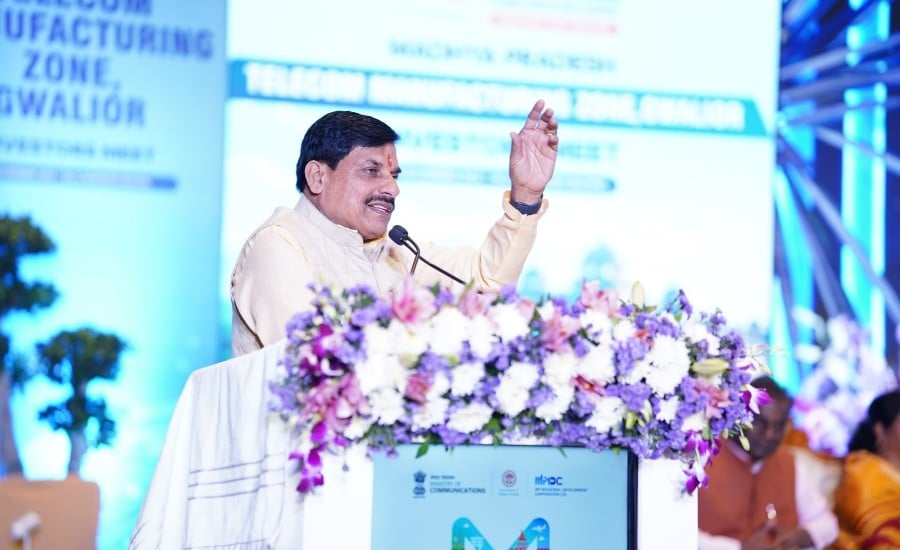
Bhopal: The Gwalior Telecom Manufacturing Zone (TMZ) project in Madhya Pradesh moved forward on November 19, 2026, with the state government receiving investment proposals worth ₹3,611 crore from 25 investors. The proposed investments are expected to generate more than 15,000 employment opportunities.
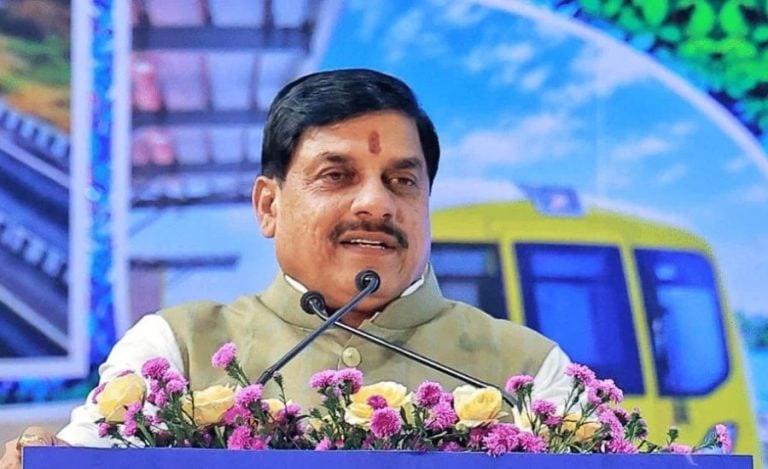
Chief Minister Dr. Mohan Yadav and Union Communications Minister Jyotiraditya Scindia jointly inaugurated the investor meet in Bhopal. During the event, the Chief Minister distributed allotment letters to 25 investors for the project’s first phase. The second phase, covering 450 acres, was also launched.
The initiative is being developed as an integrated telecom manufacturing cluster in Gwalior, with facilities intended to support manufacturing, research and development, and innovation in the telecommunications sector.
First Phase Spread Across 170 Acres
The first phase of the Gwalior TMZ is being developed across approximately 170 acres. According to the state government, the project has attracted investment proposals worth ₹3,611 crore from 25 investors.
The proposed investments are expected to create over 15,000 jobs. However, these figures represent investment proposals and projected employment, rather than completed investments or jobs already created.
Additional Chief Secretary Neeraj Mandloi (IAS: 1993: MP), said the first-phase investors received allotment letters during the event. He also presented details of the project’s development and the expansion planned under the second phase.
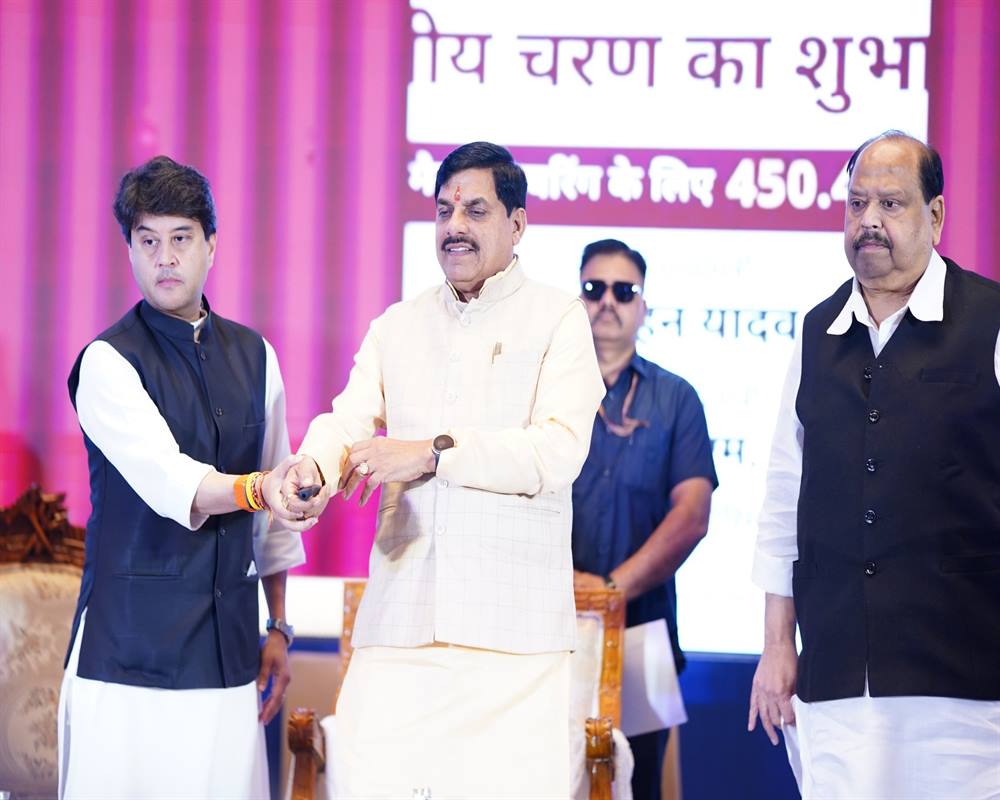
Second Phase to Cover 450 Acres
The state government has earmarked 450 acres for the second phase of the Telecom Manufacturing Zone in Gwalior.
The project is being implemented through a Special Purpose Vehicle (SPV), in which the Madhya Pradesh government holds a 51 per cent equity stake and the Department of Telecommunications holds the remaining 49 per cent.
The Central Government has committed ₹493 crore in financial support for the first phase. The Madhya Pradesh government has provided approximately 170 acres of land free of cost for the initial development, along with incentives for investors.
The zone is planned as a plug-and-play manufacturing cluster, with common infrastructure and facilities to support telecom equipment manufacturing, research and development, and technology innovation.
Focus on Telecom Equipment and 5G-6G Technologies
The proposed manufacturing ecosystem is intended to cover several segments of the telecommunications industry, including:
- Mobile devices and related components.
- Optical fibre manufacturing.
- Telecom equipment.
- Research and development facilities.
- Technologies associated with next-generation 5G and 6G networks.
- Innovation and technology partnerships.
The project is part of the Centre and Madhya Pradesh government’s efforts to strengthen domestic telecom manufacturing and reduce dependence on imported products.
Mohan Yadav Highlights Industrial Development and Investor Support
Addressing the gathering, Chief Minister Mohan Yadav said the state government was working to translate investment announcements into projects on the ground
He noted that the government had signed a memorandum of understanding with the Union Ministry of Communications in July 2026 for establishing the manufacturing zone. The first-phase allotments and launch of the second phase have followed within a few months.
The Chief Minister also highlighted the state’s efforts to simplify business regulations. He said Madhya Pradesh had removed around 27 unnecessary compliance requirements and 925 laws considered obstacles to business and industrial activity.
He further referred to the state’s focus on renewable energy and infrastructure to support industrial growth. Among the projects mentioned was the 2,000 MW pumped-storage hydropower project near Gandhi Sagar.
Yadav also said the state was offering land, electricity and water at affordable rates to attract industries. He added that eligible employment-generating industries would receive monthly assistance of ₹5,000 towards workers’ salaries.
Scindia Highlights India’s Telecom Sector Expansion
Union Minister Jyotiraditya Scindia said India’s telecommunications sector had expanded significantly over the past decade.
He cited the growth in broadband subscribers, which, according to him, had increased from around six crore in 2014 to approximately 102 crore. He also referred to the expansion of internet connections and the adoption of 4G and 5G services.
Scindia said Gwalior’s location and connectivity offered advantages for the manufacturing zone. He referred to the city’s airport and the developing Gwalior-Agra Expressway while discussing its connectivity.
He added that the country was working towards strengthening its position in the development of 6G technology.
Centre and State Share Responsibilities for TMZ
Additional Secretary in the Department of Telecommunications Shyamal Mishra said the Centre had provided ₹493 crore for the first phase of the Gwalior project.
He said the zone would follow a plug-and-play model and include facilities to support research and development.
Chief Secretary Ashok Barnwal (IAS: 1991: MP), said investors would be partners in the state’s development efforts. He also stated that the state’s Ease of Doing Business secretariat was expected to become fully operational in December, supported by an online portal intended to reduce the need for investors to visit government offices.