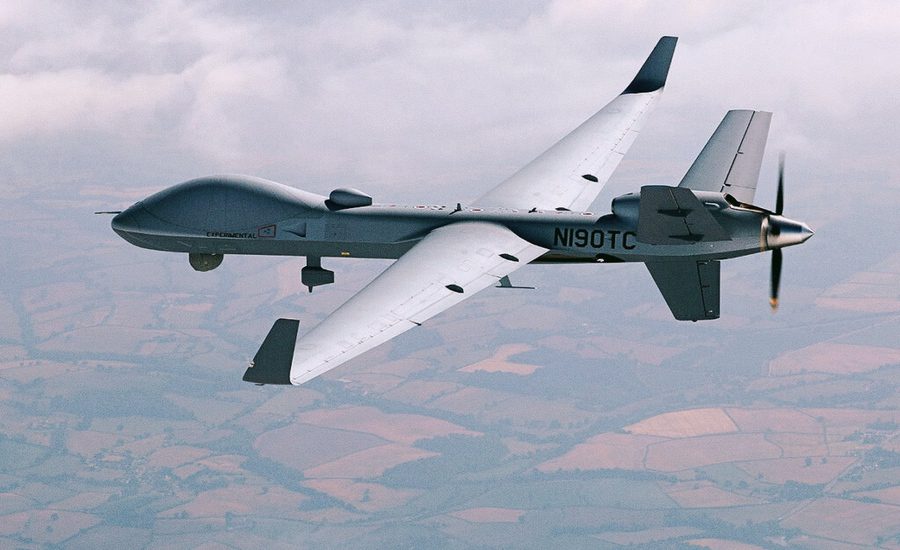
New Delhi: India’s ₹25,000 crore MALE UAV project is entering a crucial phase, as the Ministry of Defence prepares to move the program into the Request for Quote (RFQ) stage by mid-2026.
This major defence initiative aims to strengthen surveillance and combat capabilities across the Army, Navy, and Air Force.
What Is the MALE UAV Project?
The Medium Altitude Long Endurance (MALE) UAV project is one of India’s largest drone acquisition programs.
- Planned procurement: 87 UAVs
- Estimated cost: ₹25,000 crore
- Purpose: Surveillance, reconnaissance, and potential combat roles
- Services involved: Army, Navy, and Air Force
These drones are designed to operate for long durations at high altitudes, making them critical for border monitoring and strategic missions.
MALE UAV Project: Project Timeline and Current Status
The project was first launched in late 2025 under the Make in India framework.
Key Developments:
- RFP Stage Completed: Indian firms submitted initial proposals
- RFQ Stage Expected: By mid-2026
- Deadline Extended: Submission timeline pushed to May 2026
The extension was granted due to the complexity of forming international partnerships and finalizing technical agreements.
Indian Companies and Global Collaborations
To meet advanced technological requirements, Indian defence companies have partnered with global aerospace leaders.
Major Indian Players:
- Adani Defence
- Tata Advanced Systems
- Larsen & Toubro (L&T)
- Hindustan Aeronautics Limited (HAL)
Foreign Partners:
- Israeli Aerospace Industries (IAI)
- Elbit Systems
- General Atomics (USA)
These collaborations aim to combine global expertise with local manufacturing capabilities.
Why the Delay Happened
The delay in submission and evaluation is mainly due to:
- Geopolitical tensions in West Asia affecting supply chains
- Complex technology transfer agreements
- Joint venture negotiations between Indian and foreign firms
These factors slowed down coordination but ensured better-quality proposals.
MALE UAV Project: Key Technical Requirements
The Indian military has set strict performance benchmarks for these UAVs:
- Endurance: More than 30 hours
- Altitude: Above 35,000 feet
- Capabilities:
- Long-range surveillance
- Secure communication systems
- Payload flexibility
- Potential weaponization
The Indian Air Force is expected to take the lead in operational deployment.
Focus on Indigenous Manufacturing
A major highlight of the project is its strong push for local production.
Key Conditions:
- Minimum 60% indigenous content
- Local manufacturing of:
- Airframes
- Engines
- Sensors
- Long-term maintenance and support within India
The government will also verify that foreign partners transfer critical technologies, not just assemble systems.
MALE UAV Project: Evaluation Process in RFQ Stage
Once the RFQ phase begins, the process will become more stringent.
Evaluation Criteria:
- Pricing and cost efficiency
- Technical performance
- Indigenous content compliance
- Long-term sustainability
Drones will undergo detailed testing for endurance, payload capacity, and operational reliability.
Strategic Importance for India
This project is crucial for India’s defence modernization.
Key Benefits:
- Enhanced border surveillance
- Improved maritime security
- Reduced dependence on imports
- Strengthened domestic defence industry
It also aligns with India’s broader goal of becoming a global defence manufacturing hub.
What Happens Next?
- RFQ issuance expected by mid-2026
- Technical and commercial evaluation to follow
- Final contract likely after detailed trials
The project is progressing steadily despite challenges, showing strong commitment from both government and industry.