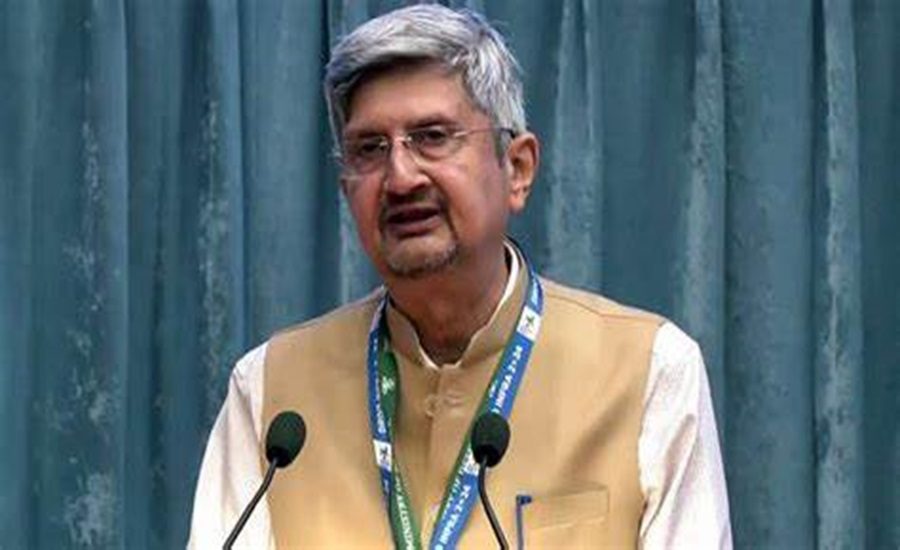
New Delhi: India air defence strategy is entering a critical transition phase, where manned fighter jets will remain the backbone of aerial combat for the next two decades before gradually shifting toward unmanned and drone-centric warfare. According to DRDO Chief Dr. Samir V. Kamat, India is adopting a balanced and phased approach instead of rushing into full automation.
This strategy ensures operational reliability, human decision-making in combat, and technological readiness while preparing for future warfare dominated by AI, drones, and Manned-Unmanned Teaming (MUMT).
India Air Defence Strategy: Why Manned Fighter Jets Still Matter
Despite rapid advances in artificial intelligence and autonomous weapons, manned fighter aircraft remain irreplaceable in complex combat situations.
Key Reasons:
- Human judgment in combat: Pilots can make split-second ethical and tactical decisions, especially in civilian-sensitive zones.
- Electronic warfare challenges: GPS jamming and communication disruption can severely affect drones.
- Situational awareness: Human pilots adapt better in unpredictable environments.
DRDO clearly states that AI cannot yet fully replicate human adaptability in high-risk air combat scenarios.
The Rise of MUMT: Future of Hybrid Warfare
India is not ignoring drone warfare—it is integrating it smartly through Manned-Unmanned Teaming (MUMT).
What is MUMT?
- A system where piloted fighter jets control and coordinate drones.
- Drones perform high-risk missions like deep strikes or surveillance.
- Human pilots act as “command nodes” in the sky.
Key Indian Programs:
- Ghatak UCAV: A stealth unmanned combat aerial vehicle under development.
- CATS Warrior: Loyal wingman drones supporting fighter jets.
This hybrid approach ensures maximum combat efficiency with minimum human risk.
India Air Defence Strategy: Fighter Jet Roadmap (2025–2045)
India’s air defence planning shows a clear timeline:
Short-Term (2025–2030)
- Induction of Tejas Mk2 fighter jets
- Progress on AMCA (5th generation stealth fighter)
- Continued reliance on Rafale and Su-30 fleets
Mid-Term (2030–2040)
- AMCA enters service as a “quarterback” platform
- Integration with drone swarms and UCAVs
- Expansion of indigenous fighter production
Long-Term (2040–2045)
- Increased deployment of autonomous combat drones
- Possible development of 6th-generation fighter systems
Why Full Drone Warfare Will Take Time
While drones are the future, several major challenges delay complete transition:
1. Technology Limitations
- High-thrust engines for UCAVs still under development
- AI decision-making not fully reliable in combat
2. Communication & Control Issues
- Secure satellite links are essential
- High risk of signal jamming in war zones
3. Regulatory & Safety Barriers
- Global certification standards for autonomous weapons are still evolving
4. Infrastructure Challenges
- Need for advanced data networks and battlefield integration
These factors make a gradual shift more practical and safer.
Why India Is Taking This Approach
India’s defence strategy is shaped by regional threats and operational realities:
- Need to counter China and Pakistan simultaneously
- Declining fighter squadron strength requires immediate capability retention
- Push for Atmanirbhar Bharat (self-reliance) in defence
India is also investing heavily in:
- Indigenous air defence systems like Project Kusha
- Advanced AWACS and surveillance systems
- Hypersonic and missile technologies
Expert Analysis of India Air Defence Strategy
Unlike some countries rushing into fully autonomous warfare, India’s approach is pragmatic and future-ready:
- Short-term stability: Maintain strong manned fleet
- Mid-term integration: Combine pilots with AI systems
- Long-term transformation: Gradual shift to autonomous warfare
This ensures:
- No sudden capability gaps
- Better technology maturation
- Safer operational transition