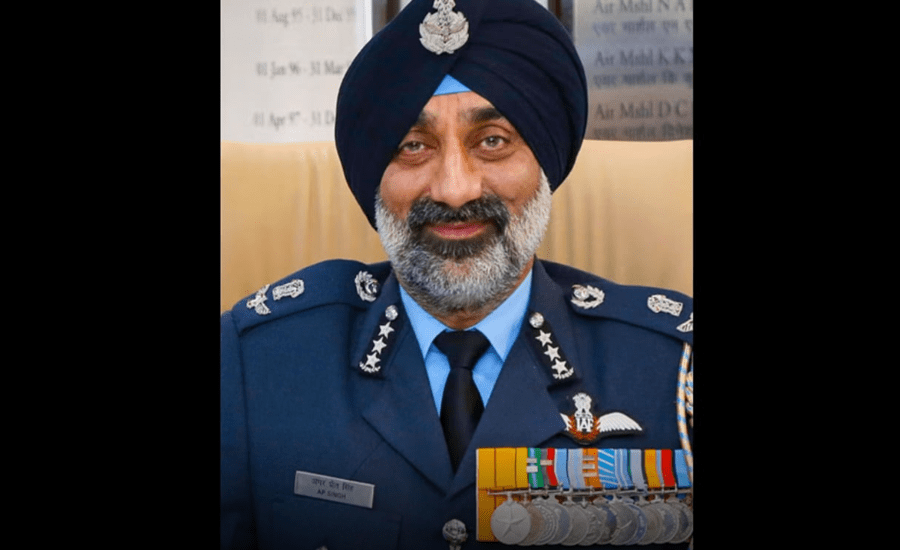
New Delhi: Operation Sindoor demonstrated the Indian Air Force’s (IAF) ability to conduct precision strikes across a wide area, according to Air Chief Marshal AP Singh.
The IAF Chief said the operation covered a front stretching 1,200 kilometres in width and 200 kilometres in depth. He described it as an important test of India’s air power, military technology and operational planning. Singh also stressed that India must continue improving its defence capabilities to respond to future security challenges.
Operation Sindoor Demonstrated India’s Air Power
Air Chief Marshal AP Singh said Operation Sindoor confirmed the importance of India’s capability-based military approach.
Read also: How India Used The S-400 To Hit A Pakistani Aircraft From 314 Km Away in Operation Sindoor
He explained that the Indian Air Force had moved beyond depending on individual aircraft or weapons. Instead, it now focuses on connecting aircraft, sensors, weapons and communication networks.
According to Singh, this integrated approach helps the IAF respond faster and more effectively during military operations. The operation also demonstrated the importance of precision, speed and flexibility in modern warfare.
Operation Sindoor Was Launched After Pahalgam Terror Attack
Operation Sindoor was launched in May 2025 following the Pahalgam terror attack. India carried out precision strikes against terrorist infrastructure in Pakistan and Pakistan-occupied territories.
The operation marked a major cross-border military action by India. Air Chief Marshal Singh said the operation demonstrated the Indian Air Force’s ability to respond to national security threats while maintaining operational control.
He also said the IAF would continue improving its capabilities to deliver faster and more precise responses in the future.
Indigenous Weapons Played An Important Role in Operation Sindoor
The IAF Chief said several Indian-made weapons performed exceptionally well during Operation Sindoor.
According to him, these systems delivered powerful strikes deep inside enemy territory. Singh also highlighted India’s commitment to avoiding civilian casualties during the operation.
He said the IAF maintained its commitment to zero collateral damage throughout the mission. The operation highlighted the growing importance of India’s domestic defence industry and the development of advanced weapons systems.
Integrated Military Systems Improved Operational Effectiveness
Air Chief Marshal Singh said the operation’s success did not depend on a single aircraft, weapon or military platform. Instead, it resulted from the combined effectiveness of several military capabilities. These included:
- Accurate intelligence and surveillance.
- Network-based military operations.
- Precision and stand-off weapons.
- Electronic warfare systems.
- Layered air defence.
- Counter-drone capabilities.
According to Singh, these systems worked together to improve India’s operational effectiveness. He also said India’s networked air defence systems successfully countered a large number of drones and stand-off weapons launched by Pakistan’s military.
Operation Sindoor Highlighted The Importance Of Multi-Domain Warfare
The IAF Chief said Operation Sindoor demonstrated the importance of coordination between different military domains. Modern military operations require cooperation between air, land, maritime, space, cyber and electromagnetic capabilities.
According to Singh, combining these areas helps military forces make faster decisions and improve operational performance.
He explained that this integrated approach is becoming increasingly important as military technology continues to develop. The operation also highlighted the need for better communication networks and advanced intelligence systems.
IAF Plans To Strengthen Future Defence Capabilities
Air Chief Marshal AP Singh said the Indian Air Force must continue improving its military capabilities after Operation Sindoor. He identified several important areas for future development. These include:
- Increasing combat strength.
- Improving intelligence, surveillance and reconnaissance (ISR).
- Strengthening electronic warfare.
- Expanding counter-drone capabilities.
- Developing reliable communication networks.
- Using artificial intelligence for military decision-making.
Singh said these improvements would help the IAF respond more effectively to changing security challenges. He also stressed that military preparedness must continue even after successful operations.
IAF Vision 2047 Focuses On Advanced Military Technology
Air Chief Marshal AP Singh said the Indian Air Force’s long-term vision is connected with the national goal of Viksit Bharat 2047. The goal is to develop a secure, technologically advanced and economically stronger India.
The IAF plans to become a multi-domain aerospace force capable of protecting India’s strategic and economic interests. Its Capability Perspective Plan-2047 provides long-term direction for military development. The plan also supports shorter-term defence planning that is updated regularly.
Space Vision 2047 And Artificial Intelligence
The IAF Chief said India’s future military development will include advanced aerospace technologies and space capabilities. The IAF Space Vision 2047 provides direction for developing capabilities in the space domain. Singh highlighted several important areas:
- Artificial intelligence.
- Autonomous military systems.
- Space technology.
- Cyber capabilities.
- Precision weapons.
- Reliable communication networks.
He said India must also develop the industrial ecosystem needed to support these technologies.
Read also: How Does Operation Sindoor Boost the Brahmos Missile Export
FAQs
The IAF Chief said Indian-made weapons performed exceptionally during the operation. He also highlighted the importance of domestic defence technology and India’s commitment to avoiding civilian casualties.
Operation Sindoor demonstrated the Indian Air Force’s ability to conduct precision strikes, coordinate military systems and respond to security threats, according to Air Chief Marshal AP Singh.
The IAF Vision 2047 aims to develop a technologically advanced, integrated and self-reliant aerospace force. It focuses on modern military technology, artificial intelligence, space capabilities and domestic defence production.