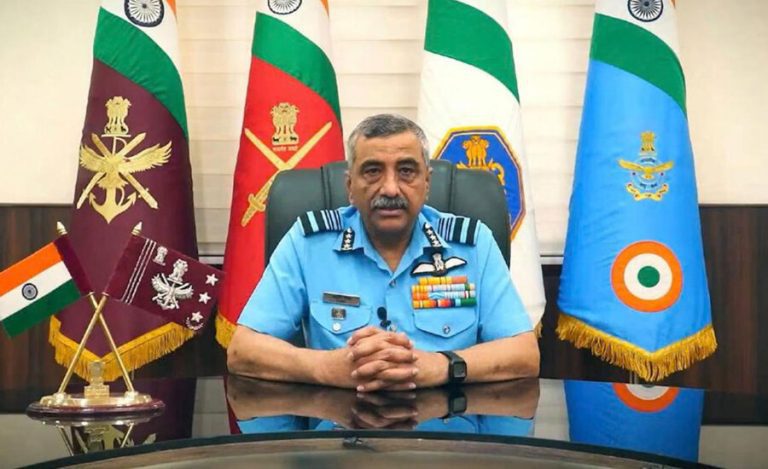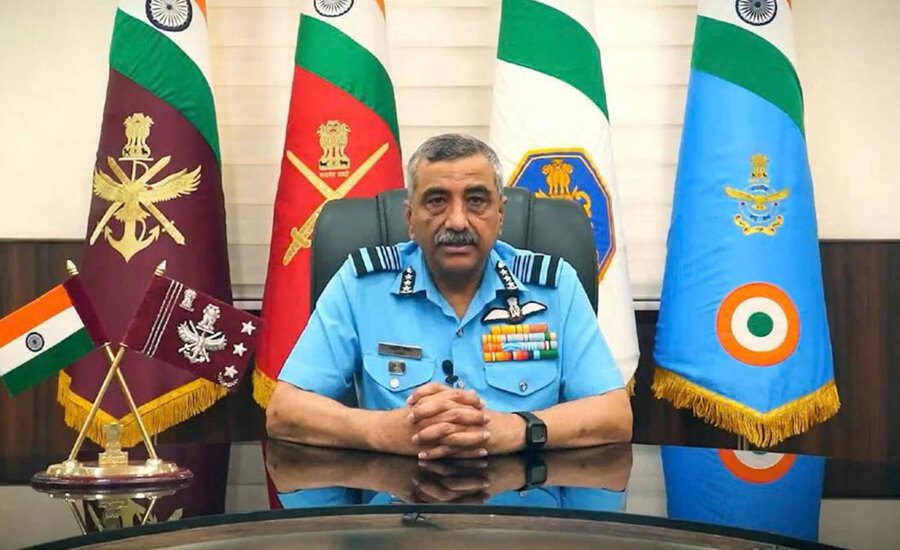
New Delhi: India’s VAYU framework for combat readiness is placing self-reliance at the centre of the Indian Air Force’s (IAF) future warfare strategy. Air Chief Marshal Ashutosh Dixit has warned that India cannot depend on foreign countries for critical military technology, software, engines, weapons and spare parts during a war.
Speaking at the ANI National Security Summit 3.0 in New Delhi on November 16, 2026, he said that true self-reliance is not just about manufacturing equipment in India. It also means having complete control over the technology needed to operate and maintain military systems.
VAYU Framework: Air Chief Explains Why Defence Self-Reliance Matters
Air Chief Marshal Ashutosh Dixit said that self-reliance, or Aatmanirbharta, is directly connected to India’s combat readiness. He explained that the Indian Air Force must have independent access to critical systems, including software, source code, spare parts, ammunition and data links.
Read also: What Is Vayu Uttam? How It Is Helping India Build A Safer And Smarter Drone Ecosystem
According to him, foreign countries should not have the power to affect India’s military capabilities during an international crisis or war. He stressed that a technology which another country can switch off during a crisis cannot be considered a truly independent capability.
VAYU Framework: Three Key Tests For India’s Future Combat Readiness
Air Chief Marshal Dixit identified three important factors that will decide India’s preparedness for future wars.
1. Control Over Military Technology
India must have control over the design, source code, algorithms and data of its defence systems.
This will help the armed forces operate independently without depending on foreign technology providers.
2. Ability To Sustain A Long War
Modern wars consume large quantities of missiles, drones, ammunition and air defence interceptors. Therefore, India needs strong domestic production facilities, reliable supply chains and sufficient military stockpiles to continue operations during a prolonged conflict.
He also highlighted the importance of involving Micro, Small and Medium Enterprises (MSMEs) in defence manufacturing.
3. Faster Technological Adaptation
Future wars will require armed forces to adopt new technologies and tactics quickly.
Dixit explained that India must be able to improve its military systems faster than its adversaries, particularly in areas such as drones, artificial intelligence and electronic warfare.
Operation Sindoor Highlights Importance Of Indigenous Weapons
The Air Chief also referred to Operation Sindoor while explaining the importance of indigenous defence technology and joint military operations. He said the operation demonstrated the benefits of coordination between India’s three armed services.
During the operation, the Indian Air Force’s Integrated Air Command and Control System (IACCS) and the Indian Army’s Akashteer air defence network worked together to create a common air picture.
He also highlighted the performance of indigenous systems such as the Akash air defence system and BrahMos missile. According to him, India’s future military strength cannot depend on borrowed capabilities.
IAF Preparing For Four Major Areas Of Future Warfare
Dixit explained that the Indian Air Force is preparing for future challenges through four major areas.
1. Operational Readiness: Every squadron, radar and air defence unit must remain prepared to respond at short notice.
2. Defence Production: India needs stronger production capacity for long-range precision weapons, drones and air defence systems. The IAF is also developing layered air defence and counter-drone capabilities.
3. Faster Decision-Making: The force is moving towards network-based, Artificial Intelligence (AI)-enabled command and control systems. It is also preparing for operations in space and near-space.
4. Joint Military Operations: Better coordination between the Army, Navy, Air Force and national agencies will be important for future military operations.
He also warned that future conflicts may begin in cyberspace, the electromagnetic spectrum or space before traditional military operations start.
Tejas Fighter Programme Shows The Importance Of Indigenous Technology
The Air Chief used India’s Tejas Light Combat Aircraft (LCA) programme as an example of the importance of technological self-reliance. He recalled the challenges faced by India after the 1998 Pokhran-II nuclear tests and the sanctions that followed.
The Tejas fighter depends on a fly-by-wire flight control system to maintain stable flight. Indian scientists developed the required control laws despite the restrictions on foreign support.
Scientists from the Aeronautical Development Agency (ADA), Aeronautical Development Establishment (ADE) and National Aerospace Laboratories (NAL) played important roles in this achievement.
The aircraft completed its maiden flight in January 2001. However, Dixit also acknowledged that India still faces challenges in developing some critical defence technologies.
The Tejas Mk1A and HTT-40 basic trainer programmes have faced delays linked to imported engines. He identified engines, missile seekers, radars and semiconductor chips as important areas where India needs to strengthen its domestic capabilities.
India’s Defence Production Reaches ₹1.78 Lakh Crore
Air Chief Marshal Dixit also highlighted India’s growing defence manufacturing sector.
According to the figures presented in his address, India’s defence production crossed ₹1.78 lakh crore in the financial year 2025–26. This represented a growth of 15.5% compared with the previous financial year.
Defence exports also reached a record ₹38,424 crore, with Indian defence products serving in more than 80 countries.
The private sector’s contribution to standalone defence production reached around 24%. He also highlighted several important defence programmes, including:
- An order for 180 Tejas fighter aircraft.
- Production of 12 additional Su-30MKI aircraft at Nashik.
- Astra missile firing trials on the Tejas Mk1A.
- Delivery of indigenous HTT-40 basic trainer aircraft, named Ankur.
- The first flight of a privately manufactured Indian C-295 aircraft.
- A contract for 66 Light Combat Helicopters (LCH).
These programmes reflect India’s growing efforts to strengthen its domestic defence manufacturing capabilities.
What Is The VAYU Framework Of The Indian Air Force
The VAYU framework is the guiding vision introduced by Air Chief Marshal Ashutosh Dixit after taking charge as the 29th Chief of the Air Staff on November 1, 2026. According to the Ministry of Defence, VAYU has four main pillars:
- V – Vigilance, Victory And Readiness: Maintaining operational preparedness and restoring the IAF’s combat strength.
- A – Aatmanirbharta: Developing indigenous aircraft, weapons, sensors and technologies.
- Y – Yukti: Promoting innovation, AI-enabled systems and new operational capabilities.
- U – Unity Of Effort: Strengthening coordination with the Army, Navy and national agencies.
The framework aims to build a technologically advanced, self-reliant and combat-ready Indian Air Force.
Read also: Why India’s Military Chiefs Want Stronger Indigenous Defence Capabilities
FAQs
Air Chief Marshal Ashutosh Dixit is the 29th Chief of the Air Staff of the Indian Air Force. He assumed charge on November 1, 2026.
The VAYU framework is the guiding vision of the Indian Air Force introduced by Air Chief Marshal Ashutosh Dixit. It focuses on Vigilance, Victory and Readiness, Aatmanirbharta, Yukti and Unity of Effort.
Aatmanirbharta is important because it reduces dependence on foreign countries for military technology, engines, software, spare parts and ammunition. It also helps India maintain military operations during prolonged conflicts.