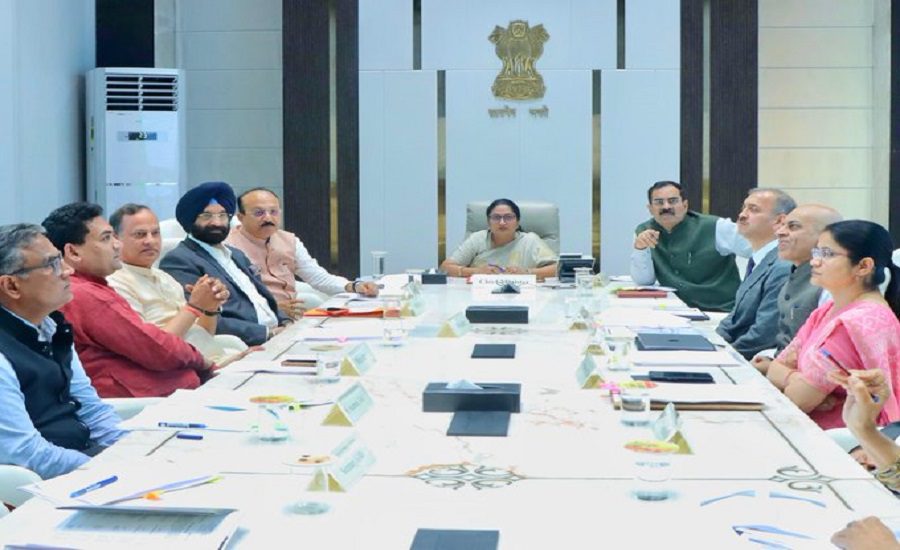
New Delhi: A series of major decisions aimed at improving housing, welfare services, and urban infrastructure were taken in the 35th board meeting of the Delhi Urban Shelter Improvement Board (DUSIB), chaired by Chief Minister Rekha Gupta at the Delhi Secretariat.
The meeting focused on rehabilitation of slum dwellers, welfare measures for gig workers and labourers, and expansion of basic urban facilities for the city’s economically weaker sections.
Focus on Dignified Housing and Urban Welfare
Chief Minister Rekha Gupta stated that the government’s priority is to ensure dignified housing, improved living standards, and better basic amenities for every needy citizen in Delhi. She added that the administration aims to build a comprehensive urban support system that makes life easier for workers and vulnerable communities.
Read also: Delhi CM Rekha Gupta Orders Drain Cleaning by June 30 to Prevent Monsoon Waterlogging Across Capital
Resting Centres and Atal Canteens for Gig Workers
In a key decision for gig workers and labourers, the Chief Minister directed the development of resting centres and public utility hubs across Delhi. These centres will be integrated with Atal Canteens to provide:
- Affordable food
- Resting facilities
- Essential services at one location
Several canteens will also include urinal facilities for gig workers. DUSIB has been instructed to identify suitable locations for setting up these facilities.
Officials noted that the idea of resting centres was originally suggested by gig workers during a direct interaction with the Chief Minister.
Expansion and Reform of Atal Canteen Scheme
The Atal Canteen scheme has been restructured to improve efficiency and accessibility. Key changes include:
- Reorganization of 100 canteens and distribution centres
- Plan to establish 100 new Atal Canteens
- Revised operating hours:
- Lunch: 10:30 AM to 2:00 PM
- Dinner: 6:00 PM to 9:30 PM
To streamline operations, agencies will receive additional user access credentials, and facial recognition data will now be retained for a maximum of one month.
Housing Allocation for 717 Slum Dwellers
The board approved the allocation of EWS flats in Sawda-Ghevra to 717 slum dwellers. This includes:
- 528 eligible beneficiaries
- 189 ineligible cases identified among a broader group
Additionally, 221 beneficiaries from previously cleared settlements such as Indira Camp (Kalyanpuri), G-Point (Gol Market), New Sanjay Camp (Okhla), and Rajiv Camp (Mandawali) will also be allotted flats.
Each eligible beneficiary will receive financial assistance of ₹1,12,000 from the Ministry of Housing and Urban Affairs, while ₹30,000 must be deposited by beneficiaries for maintenance within three months.
Major Infrastructure Upgrades Approved
To improve livability in resettlement colonies, several infrastructure projects were approved, including:
- Repair of 1,060 EWS flats in Sultanpuri (Site A-3)
- Making 2,004 flats in Dwarka Sector 16-B habitable
- Development of roads, parks, sewer systems, and pathways for 7,400 flats in Bhalswa (Jahangirpuri Pocket-II)
These upgrades aim to improve living conditions in large housing clusters across the city.
Administrative Powers of DUSIB CEO Enhanced
In an important administrative reform, the financial approval limit of the DUSIB CEO has been increased from ₹3 crore to ₹10 crore. This move is expected to speed up project execution and improve efficiency.
The tenure of agencies managing shelter homes has also been extended until 31 May 2026 or until new agencies take charge under existing conditions.
Vision for Inclusive Urban Development
The Chief Minister emphasized that these initiatives reflect the government’s commitment to inclusive urban development, ensuring that slum dwellers, workers, and low-income families receive improved housing, better services, and enhanced dignity in urban life.