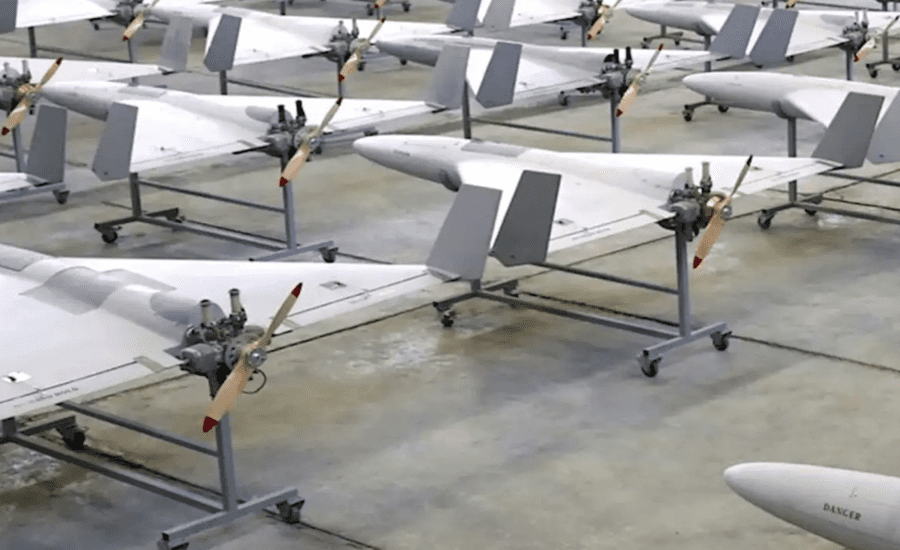
New Delhi: Indian drone revolution is rapidly transforming the battlefield capabilities of the Indian Army. Over the past few years, India has made major progress in developing FPV (First Person View) drones and kamikaze drones, thanks to innovation from domestic startups. These indigenous systems are not only cost-effective but also highly adaptable to modern warfare needs.
According to multiple official defence developments and insights, India is steadily gaining an advantage in tactical drone warfare compared to regional rivals, especially in surveillance, precision strikes, and battlefield intelligence.
Details of Indian Drone Revolution
India’s push for Aatmanirbhar Bharat (self-reliance in defence) has encouraged startups to actively participate in military innovation.
Read also: Inside the Indian Army’s ‘Bhairav’ Force: How 100,000 Drone Warriors Are Transforming Modern Warfare
These startups are working closely with:
- Indian Army
- Defence Research organisations
- Private defence manufacturers
They are developing:
- Tactical FPV drones
- Loitering munitions (kamikaze drones)
- AI-enabled surveillance drones
This ecosystem has drastically reduced dependence on foreign imports and increased rapid deployment capabilities.
What Are FPV and Kamikaze Drones?
FPV (First Person View) Drones
FPV drones are controlled in real-time using live video feed.
What are the Features of FPV Drones
- High-speed maneuverability
- Real-time targeting
- Precision attack capability
- Low cost and easy deployment
These drones are especially useful in:
- Border operations
- Counter-terror missions
- Urban warfare scenarios
Kamikaze (Loitering Munition) Drones
These drones hover over a target area and strike when a target is identified.
Key Features of Kamikaze (Loitering Munition) Drones
- “Fire and forget” capability
- High precision strikes
- Reduced risk to soldiers
- Ability to destroy high-value targets
They act as a combination of a drone and a missile.
Speciality of Indian Drone Revolution
Indian defence startups are focusing on unique strengths that make these drones highly effective:
1. Cost Efficiency
Indian drones are significantly cheaper compared to Western systems, allowing large-scale deployment.
2. Indigenous Technology
Built using locally sourced components, ensuring supply chain security.
3. Customization for Indian Terrain
Designed specifically for:
- High-altitude areas like Ladakh
- Desert conditions
- Dense forest operations
4. Rapid Innovation Cycle
Startups can quickly modify drones based on battlefield feedback.
5. Swarm Capability
Some systems are being developed to operate in coordinated groups, overwhelming enemy defenses.
How India Is Gaining an Edge
Faster Adoption by Indian Army
The Indian Army has been actively inducting drones for:
- Surveillance along borders
- Target acquisition
- Tactical strikes
Combat Lessons Integration
Global conflicts have shown the effectiveness of drones. India is quickly adapting these lessons into its own systems.
Private Sector Participation
Unlike traditional defence systems, startups are bringing agility and innovation into military development.
Indian Drone Revolution: Comparison with Regional Rivals
While neighboring countries have access to imported drone technology, India’s advantage lies in:
- Indigenous production capability
- Scalability
- Lower operational costs
- Better adaptability to local conditions
This gives India a long-term strategic advantage in tactical drone warfare.
Key Challenges Ahead
Despite rapid growth, some challenges remain:
- Need for advanced semiconductor components
- Electronic warfare countermeasures
- Scaling production for mass deployment
- Integration with existing military systems
However, ongoing government support and defence policies are addressing these issues.
Future Outlook
India is expected to become a major hub for tactical drone technology. Future developments may include:
- AI-powered autonomous drones
- Advanced swarm warfare systems
- Integration with satellites and battlefield networks
- Export of indigenous drone systems
This positions India as a rising global player in defence innovation.
Read also: HAL Giant Drone Project Explained: How India’s AI UAV Will Transform Modern Warfare