New Delhi: In a landmark financial reform, the Delhi Government on Monday signed a Memorandum of Understanding (MoU) with the Reserve Bank of India (RBI), aimed at rejuvenating the Yamuna, enhancing water supply, and accelerating infrastructure development across the capital. The MoU formalizes the RBI’s role as Delhi’s banker, debt manager, and financial agent, marking a major step toward fiscal prudence and institutional discipline.
Professional Cash Management and Low-Cost Borrowings
Under the agreement, the RBI will facilitate market borrowings through State Development Loans, enable automatic investment of surplus funds, and provide access to low-cost liquidity facilities as per the framework set by the Government of India and the RBI Act.
Delhi Chief Minister Rekha Gupta, who also holds the finance portfolio, stated that all funds raised through market borrowings will be exclusively allocated to capital expenditure. Priority areas include Yamuna rejuvenation, drinking water supply, health infrastructure, public transport, roads, and flyovers.
The MoU ensures that surplus funds of the Delhi government will be automatically invested daily, while access to Ways and Means Advances and Special Drawing Facilities will help manage temporary cash flow mismatches. Borrowings through State Development Loans are expected to come at competitive interest rates of around 7 percent, replacing earlier high-cost borrowings at 12–13 percent.
Read also: HUDCO Donates ₹2.37 Crore to Himachal Pradesh for Waste Management and Sustainable Urban Development
A Transformational Milestone
Describing the agreement as a “transformational milestone”, CM Gupta said the MoU represents a decisive break from past practices, ushering Delhi into a new era of fiscal discipline, transparency, and infrastructure-led economic growth.
“This agreement marks a historic correction in Delhi’s financial governance. Despite being the nation’s capital, Delhi was previously denied structured RBI banking and cost-efficient market borrowing mechanisms,” she said. Gupta emphasized that past administrations failed to invest surplus funds effectively, leaving public money idle and undertaking high-cost borrowings that burdened public finances.
Integration with RBI Banking System
With this MoU, Delhi will be fully integrated with the RBI banking system, benefiting from professional banking, cash management, and debt management systems. The reform follows sustained engagement with the Union government and a meeting between CM Gupta and Union Finance Minister Nirmala Sitharaman in December 2025.
CM Gupta expressed gratitude to Prime Minister Narendra Modi for enabling Delhi to establish an independent and transparent banking framework, aligned with national fiscal norms. A central government notification dated January 2, effective from January 9, separated Delhi’s public accounts from the Government of India, providing the capital with an independent banking and borrowing structure for the first time.
Long-Term Impact
“This MoU is not merely an administrative arrangement. It is a historic financial reform that Delhi will benefit from for decades,” Gupta said. By combining professional financial management, low-cost borrowing, and efficient use of surplus funds, the agreement is expected to significantly enhance infrastructure development, water supply management, and environmental restoration projects in the capital.
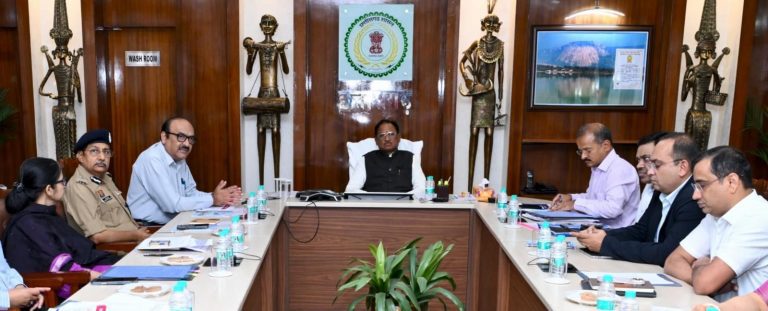
The signing of the MoU at the Delhi Secretariat was attended by senior officials from both the Delhi government and RBI, including Additional Chief Secretary (Finance) Bipul Pathak and Chief Secretary Rajiv Verma.
Read also: NBCC Organises ‘Skill Shakti’ Workshop on Waste Management and Sustainability Under Project Prakriya