Gandhinagar: The governments of Gujarat and Scotland have signed Memorandums of Understanding (MoUs) to expand cooperation in renewable energy, trade and investment, education, skill development, sports, research and cultural exchange.
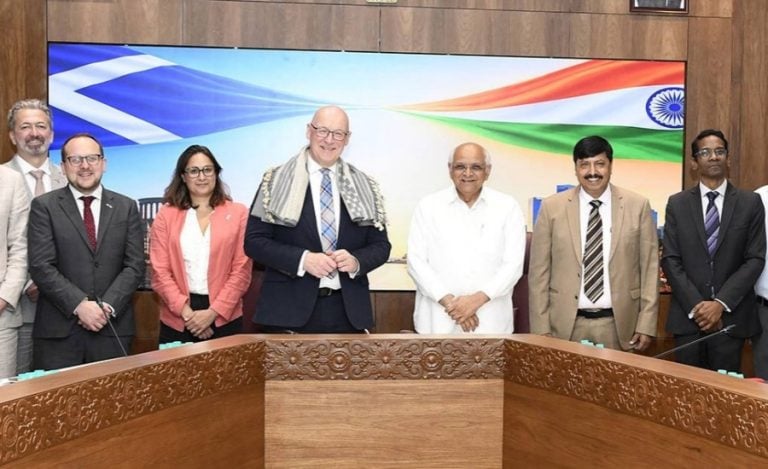
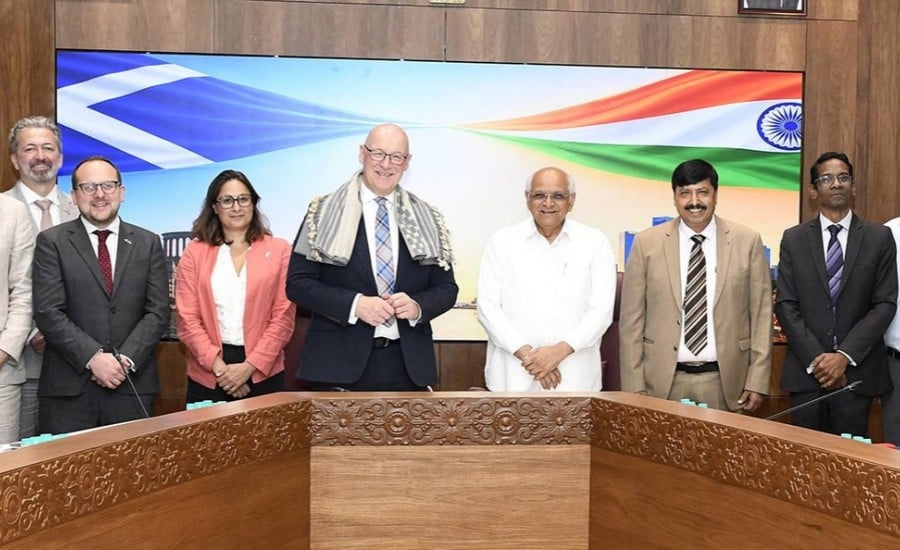
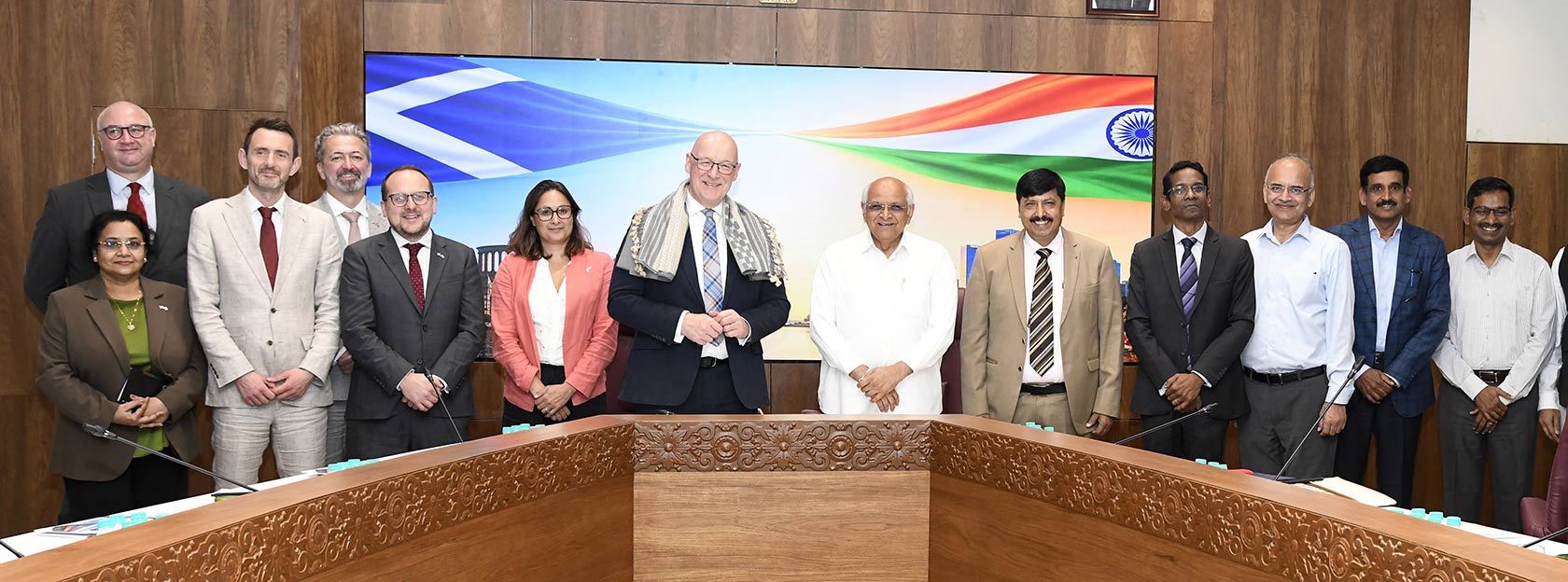
The agreements were exchanged in Gandhinagar in the presence of Gujarat Chief Minister Bhupendra Patel and Scotland’s First Minister John Swinney during the latter’s visit to the state.
The partnership aims to strengthen economic and institutional ties, promote people-to-people connections and facilitate the sharing of expertise in areas where both sides have relevant experience.
Renewable Energy and Offshore Energy Cooperation
Renewable energy emerged as a key area of cooperation, with Gujarat looking to draw on Scotland’s experience in offshore energy.
Read Also: Gujarat Steps Up Japan Outreach Ahead of 75 Years of India-Japan Diplomatic Ties
Chief Minister Bhupendra Patel said Gujarat had established a strong position in India’s renewable energy sector and had considerable potential to explore offshore energy development because of its extensive coastline.
During the meeting, Patel proposed that a delegation from Gujarat visit Scotland to study its expertise and learn from its experience in the sector.
Scotland’s First Minister John Swinney expressed interest in sharing Scottish expertise in offshore energy and said the agreements could open up further opportunities for collaboration in renewable energy and life sciences.
Key areas of proposed cooperation include:
- Sharing technical knowledge and experience in offshore energy.
- Exploring opportunities in renewable energy and sustainability.
- Encouraging innovation and partnerships between relevant institutions.
- Supporting the transition towards a more sustainable economy.
Gujarat to Draw on Scotland’s Commonwealth Games Experience
The agreements also have significance for Gujarat as it prepares to host the 2030 Commonwealth Games.
Scotland hosted the 2026 Commonwealth Games in Glasgow, providing experience that Gujarat could draw on in areas such as sports infrastructure, event management and the promotion of physical activity.
The proposed cooperation is expected to support the exchange of knowledge and best practices related to organising major sporting events and developing a broader sporting culture.
The partnership also identifies sports and physical activity as areas in which both sides can strengthen institutional and people-to-people links.
Trade, Investment and Business Partnerships
The MoUs seek to expand economic relations between Gujarat and Scotland by encouraging trade, investment and cooperation between businesses and institutions.
The two sides intend to explore opportunities based on their respective strengths and specialised capabilities, while facilitating the exchange of knowledge in innovation, entrepreneurship and sustainable development.
The agreements are also intended to connect businesses, experts and institutions to develop professional relationships and identify areas for practical collaboration.
Rather than being limited to government-level engagement, the proposed framework seeks to encourage wider participation from the business and institutional sectors.
Education, Research and Skill Development
Education and research form another important part of the cooperation framework.
The MoUs envisage stronger links between universities, colleges and research institutions in Gujarat and Scotland. These connections could facilitate academic collaboration and exchanges involving students, researchers and faculty members.
The proposed areas of cooperation include:
- Academic and research partnerships.
- Skill development and knowledge-sharing.
- Professional and institutional exchanges.
- Innovation and entrepreneurship.
- Collaboration in life sciences and other areas of shared interest.
The objective is to strengthen institutional relationships and create opportunities for the exchange of expertise and best practices.
Cultural Exchange and People-to-People Ties
The agreements also seek to deepen mutual understanding through cooperation in culture, heritage and creative industries.
Officials said the framework would encourage stronger connections between people and institutions in Gujarat and Scotland, supporting longer-term relationships alongside economic and professional partnerships.
Chief Secretary M. K. Das (IAS: 1990: GJ), welcomed the Scottish delegation and highlighted opportunities for cooperation in sports, renewable energy, economic partnerships and cultural exchange.
Rajiv Topno (IAS: 1996: GJ), Additional Chief Secretary of the Industries Department, also expressed confidence that the agreements would encourage dialogue and meaningful partnerships in education, skill development, sports and energy.
The meeting was attended by senior officials from Gujarat’s Industries, Urban Development and Education departments, along with other representatives of the state government.
The agreements provide a framework for Gujarat and Scotland to pursue cooperation across several sectors, with renewable energy, economic engagement, education and sports emerging as key areas for future collaboration.
Read Also: GMDC Presents ₹223.54 Crore Dividend Cheque to Gujarat CM Bhupendra Patel for FY 2025-26