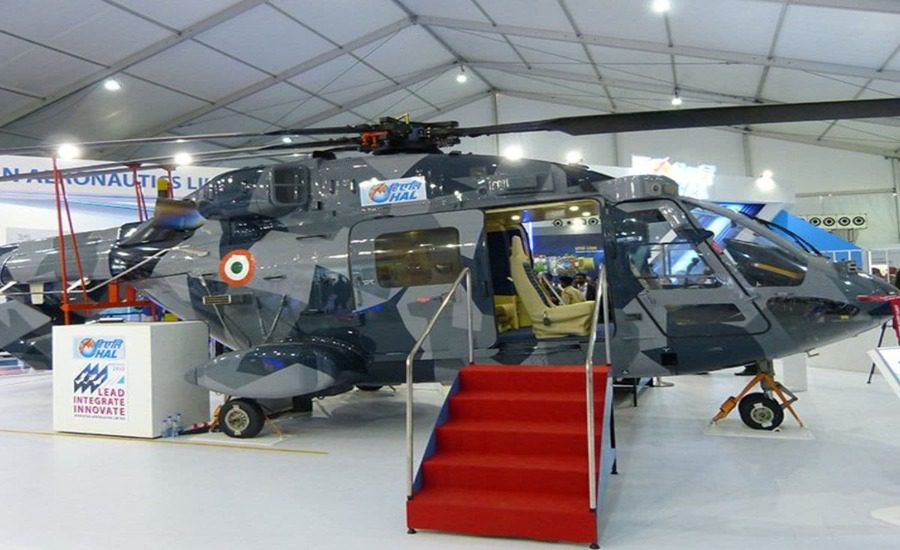
New Delhi: The HAL UHM Naval Utility Helicopter-Marine is poised to transform India’s naval aviation landscape with its first deliveries expected by 2027. Designed specifically for maritime roles, this twin-engine helicopter aligns with India’s push for indigenous defence capabilities and will replace ageing platforms with a safer, mission-ready, sea-adapted rotorcraft.
Why India Needs a Naval Utility Helicopter
The Indian Navy has long relied on older utility helicopters, particularly the HAL Chetak, which has served for decades but faces obsolescence. These helicopters were designed in an earlier era and lack the modern capabilities needed for today’s maritime challenges.
Read also: Rafale F4 Upgrade Approved: How 35 Indian Air Force Jets Will Gain an Edge Over Regional Rivals
The Navy’s operational demands include troop transport, cargo delivery, search-and-rescue (SAR) missions, casualty evacuation (CASEVAC) and limited combat support. All these roles require a robust platform with redundancy and modern systems – especially for operations over deep waters.
What is HAL Naval UHM Utility Helicopter-Marine
One of the most crucial requirements from the Indian Navy was a twin-engine configuration. Single-engine helicopters pose significant risks during over-ocean missions since any technical fault can endanger the crew and mission success.
The HAL Naval Utility Helicopter-Marine addresses this safety gap. The twin-engine design ensures better reliability, especially during long flights over open waters and during critical operations like SAR and troop movement.
Key Features of the HAL Naval UHM Utility Helicopter-Marine
The UH-M isn’t just a powered upgrade from older models. It has several maritime-specific features:
- Corrosion-resistant coatings to withstand salty marine conditions.
- Flotation gear to survive unexpected sea landings.
- Foldable rotors and tail for storage inside ship hangars.
- Advanced landing gear suited for ship-deck landings.
- Naval sensors and weapons integration for expanded mission roles.
- Improved avionics for maritime navigation and night operations.
These enhancements make the UH-M a versatile asset able to support everything from logistics to tactical missions.
Timeline of the HAL Naval UHM Utility Helicopter-Marine
According to HAL’s leadership, the first prototype of the UH-M is already ready. The helicopter’s maiden flight is scheduled in the current financial year (2025-26).
Once the prototype flies, the program will enter certification, user trials with the Indian Navy and Coast Guard, and rigorous maritime testing. This process ensures the platform meets stringent operational and safety standards.
Deliveries are expected to begin in 2027, with large-scale induction spanning 2027 to 2030. This timeline aligns with India’s vision to strengthen its domestic defence manufacturing and reduce reliance on foreign systems.
What is the Importance of HAL Naval UHM Utility Helicopter-Marine
The UH-M programme supports India’s wider pursuit of defence self-reliance ( AatmaNirbhar Bharat) and naval capability expansion. By replacing older helicopters and fielding a modern, indigenously developed rotorcraft, India enhances operational reach and resilience in the Indian Ocean Region (IOR) — a key strategic zone for national security and trade.
Additionally, building a capable naval utility helicopter domestically strengthens HAL’s stature as a major aerospace and defence manufacturer. It also opens opportunities for exports to friendly nations seeking advanced utility helicopters.
Challenges and Future Prospects
Developing a maritime helicopter is complex. The UH-M must undergo extensive testing, including ship-landing trials and operations under harsh weather and sea states. However, HAL’s experience with platforms such as the Dhruv and the Light Combat Helicopter (LCH) gives confidence in its ability to deliver a capable system.
Looking ahead, this helicopter could also be paired with future naval aircraft and integrate advanced mission systems, making it a backbone of Indian naval aviation in the years to come.