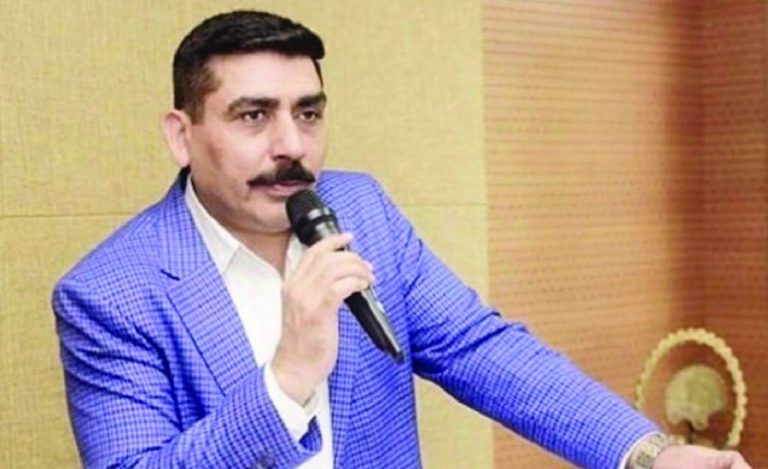
New Delhi: Hindustan Shipyard Limited (HSL) Chairman and Managing Director Rear Admiral C. Raghuram (Retd.) has called for a shift towards series production, collaborative rule-making and digital documentation to strengthen the competitiveness of India’s shipbuilding industry.
Speaking at INMARCO 2026 in Mumbai on October 27, Raghuram said India must move beyond demonstrating its ability to build individual ships and focus on delivering vessels consistently, on schedule and at competitive costs.
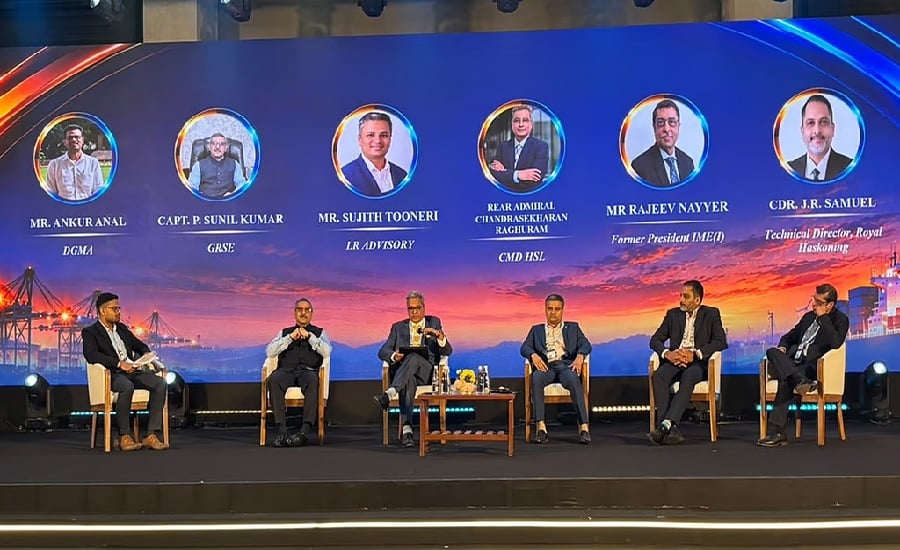
During a panel discussion titled “Shipyards and Newbuilds: Maritime Landscape 2030,” organised by the Institute of Marine Engineers (India), he emphasised that repeatable production processes, rather than isolated achievements, would be essential to developing a globally competitive shipbuilding ecosystem.
“A first ship is a prototype. The fifth ship is a product,” Raghuram said, underlining the importance of adopting a production-system approach across Indian shipyards.
Citing an estimated 24% cost gap between Indian and East Asian shipyards, as reported by the Shipyards Association of India, he said incentives could help narrow the difference, but sustained series production would be necessary to close it.
HSL Expands Shipbuilding Capacity with Key Naval Milestones
Highlighting HSL’s recent achievements at Visakhapatnam, Raghuram referred to several milestones demonstrating the shipyard’s expanding capacity and contribution to indigenous shipbuilding.
On October 6, HSL launched Surya, the first of five Fleet Support Ships being built for the Indian Navy. The 43,500-tonne vessel is targeted to achieve more than 80% indigenous content and is classed by the Indian Register of Shipping (IRS).
On the same day, HSL laid the keel of the fifth Fleet Support Ship and inaugurated its extended Slipway-4, equipped with a 300-tonne Goliath crane. The upgraded facility is designed to handle ships of up to 45,000 deadweight tonnes (DWT).
Other recent milestones include:
- Fleet Support Ship programme: Launch of Surya, the first vessel in the five-ship series for the Indian Navy.
- Expanded infrastructure: Inauguration of the extended Slipway-4, supported by a 300-tonne Goliath crane.
- Indigenous naval shipbuilding: Delivery of INS Nipun, HSL’s second indigenous Diving Support Vessel, in August 2026.
These developments reflect HSL’s efforts to strengthen its shipbuilding infrastructure, increase indigenous content and improve its ability to execute complex naval projects.
Read also: HSL to Serially Produce Indigenous JAYA AUV, Boosting India’s Underwater and Maritime Capabilities
HSL CMD Calls for Greater Indian Participation in Maritime Rule-Making
Raghuram stressed the need for closer collaboration among Indian shipyards, classification societies, regulators, equipment manufacturers and vessel owners to shape maritime standards and regulations.
He said India should play a stronger role in developing the rules governing how ships are designed, approved and built, rather than primarily following standards established elsewhere.
As an initial step, he proposed the collaborative development of green tugs involving ports, shipyards, classification societies, the Directorate and battery manufacturers.
Such collaboration could help bring together regulatory expertise, shipbuilding capabilities and emerging technologies to support the development of environmentally sustainable vessels.
The proposal also highlights the importance of Indian industry stakeholders participating in international maritime rule-making and developing solutions suited to the country’s shipbuilding ambitions.
Digital Ship Records Proposed for Vessels Built in India
The HSL CMD also advocated introducing a digital documentation framework for every vessel built in India.
Under the proposed system, each ship would have a “digital birth certificate” containing a consolidated record of its technical specifications, material details and other relevant information throughout its operational life.
The digital record would include an inventory of hazardous materials required under the Hong Kong Convention.
According to Raghuram, the framework would benefit multiple stakeholders, including:
- Ship surveyors responsible for inspections and compliance.
- Shipowners managing vessels throughout their operational lives.
- Repair yards undertaking maintenance and refurbishment.
- Ship recyclers handling vessels at the end of their service lives.
With a vessel’s lifecycle potentially spanning 30 years, a consolidated digital record could improve information accessibility and support maintenance, regulatory compliance and recycling.
Raghuram proposed that the India Ship Technology Centre support micro, small and medium enterprises (MSMEs), design firms and shipyards in developing a shared digital record framework. HSL, he said, was ready to participate in the initiative.
Government Support and India’s Shipbuilding Growth Outlook
Raghuram welcomed government initiatives aimed at strengthening India’s maritime and shipbuilding sectors. He referred to an estimated demand outlook of around 437 vessels over the next ten years, infrastructure status for Indian-built ships, a ₹69,725 crore package, a ₹25,000 crore Maritime Development Fund and a target of 4.5 million gross tonnes (GT) of annual shipbuilding capacity.
He emphasised that policy support must be accompanied by practical measures to improve production planning, financing and industrial capabilities.
The key priorities highlighted by the HSL CMD included:
- Clear delivery timelines: Establishing more predictable schedules to help shipyards plan production and meet customer commitments.
- Long-term financing: Improving access to financing for shipbuilding projects, which often require substantial investment and extended execution periods.
- Local equipment support: Encouraging equipment manufacturers and financial institutions to provide long-term financing and local service support.
- Indian design capabilities: Increasing the participation of Indian designers in international maritime rule-making and vessel development.
- Shared digital infrastructure: Developing a common digital documentation framework for vessels built in India.
These measures, he indicated, could help improve cost competitiveness, strengthen domestic supply chains and support the expansion of India’s shipbuilding capacity.
Shipbuilding Growth Could Generate Employment Opportunities
Raghuram also highlighted the employment potential of the shipbuilding industry, noting that every shipbuilding job creates approximately six additional jobs.
He said the announced package could generate close to 30 lakh jobs, underlining the potential contribution of the sector to employment and industrial development.
Shipbuilding supports a broad industrial ecosystem that includes engineering, equipment manufacturing, design, logistics, maintenance and other maritime services. Strengthening domestic capabilities across these areas could help India increase its participation in the global shipbuilding market.
Three Priorities for Indian Shipyards: Design, Delivery and Productivity
Raghuram reiterated three priorities outlined by the Defence Minister during his visit to HSL on October 6: indigenous design capabilities, timely delivery and measurable productivity.
He emphasised that shipyards must focus not only on launching vessels but also on delivering successive ships efficiently and within committed timelines.
According to him, consistent delivery would demonstrate the maturity of India’s shipbuilding industry and improve its credibility among domestic and international customers.
The discussion at INMARCO 2026 highlighted the need for an integrated approach combining production efficiency, technological innovation, regulatory cooperation, digitalisation and long-term investment.
INMARCO 2026 Panel Discussion Brings Together Maritime Industry Experts
The panel discussion on “Shipyards and Newbuilds: Maritime Landscape 2030” was moderated by Ankur Anal, Junior Ship Surveyor-cum-ADG (Technical), Directorate General of Maritime Administration.
Other panellists included:
- Capt. P. Sunil Kumar of Garden Reach Shipbuilders & Engineers (GRSE).
- Sujith Tooneri of Lloyd’s Register.
- Rajeev Nayyer of Swan Defence and Heavy Industries and former President of the Institute of Marine Engineers (India).
- Cdr. Samuel Ranji of First Marine International, Royal HaskoningDHV.
The discussion focused on the future of shipbuilding, the competitiveness of Indian shipyards and the measures needed to strengthen India’s maritime industrial ecosystem by 2030.
About Hindustan Shipyard Limited (HSL)
Hindustan Shipyard Limited (HSL) is a Miniratna Category-I public sector undertaking under the Ministry of Defence, Government of India. Headquartered in Visakhapatnam, Andhra Pradesh, the company undertakes shipbuilding, ship repair, submarine refit and other maritime engineering activities. HSL plays an important role in supporting India’s naval capabilities, indigenous shipbuilding and the development of the domestic maritime sector.
Read also: HSL Achieves Precision Engineering Feat as Three Vessels Dock Simultaneously in One Dock