Hyderabad: Indian space-tech startup Agnikul Cosmos is planning to enter the growing space-based data centre industry with a proposed investment of ₹510 crore in Andhra Pradesh. The company has signed a Memorandum of Understanding (MoU) with the state government to establish a manufacturing facility in Tirupati district.
The proposed facility will focus on building orbital data centres and reusable rockets. The project is expected to strengthen India’s private space industry and support the growing demand for artificial intelligence (AI) computing infrastructure.
Agnikul Cosmos Space Data Centre Plan: Agnikul Signs ₹510 Crore MoU With Andhra Pradesh Government
Agnikul Cosmos signed the MoU with the Andhra Pradesh government during the CII Partnership Summit 2026.
Read also: Kalpana Mission: Everything You Need To Know About India’s New Reusable Rocket Program
Under the agreement, the Chennai-based startup plans to establish a facility in the state’s proposed Space City in Tirupati district.
The facility will focus on two major areas: manufacturing orbital data centre units and assembling reusable rockets.
According to company co-founder and CEO Srinath Ravichandran, the proposed investment will help the company develop its space-based data centre technology and expand its rocket manufacturing capabilities.
The location is also important because it is relatively close to Sriharikota, India’s major space launch centre.
How Will Agnikul Build Data Centres In Space
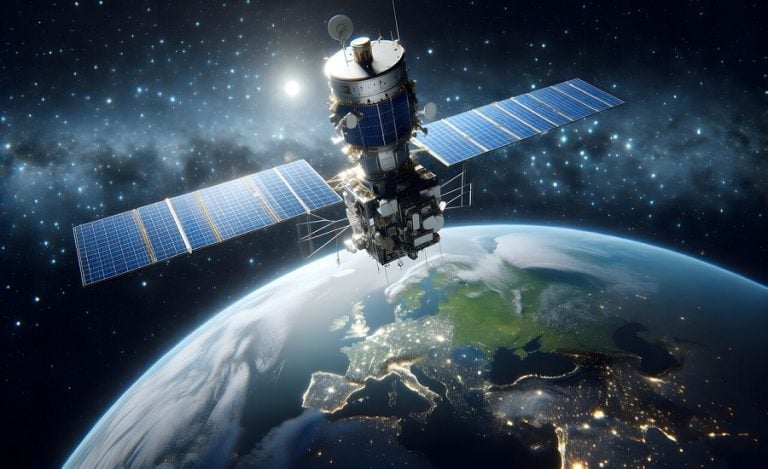
Agnikul is working on a technology that could turn the upper stage of its rocket into a platform for hosting data centres in orbit.
Normally, rocket stages are separated during a launch. Agnikul wants to use its extendable upper stage for an additional purpose instead of treating it only as a part of the launch vehicle.
The company plans to integrate computing hardware, including Graphics Processing Units (GPUs), into this platform.
These GPUs are important because they perform the complex calculations needed for artificial intelligence, machine learning and other high-performance computing tasks. The company has also developed patented technology for this approach.
Why Are Space-Based Data Centres Important
Data centres on Earth require large amounts of electricity and water to operate. Their cooling systems also create additional infrastructure requirements.
Space-based data centres could offer a different approach to these challenges.
They may use solar energy to generate electricity and radiate heat into space, reducing dependence on some traditional ground-based cooling systems.
Such facilities could support AI computing, cloud storage and data processing. However, the technology still needs testing and successful demonstrations before it can become a large-scale commercial solution.
Agnikul Cosmos Space Data Centre Plan: Agnikul Partners With NeevCloud
Agnikul has already identified Bengaluru-based cloud infrastructure company NeevCloud as its first customer for the orbital data centre project.
Under their partnership, Agnikul plans to launch an orbital AI data centre module developed using NeevCloud’s AI SuperCloud platform.
The project aims to bring AI computing capabilities into low Earth orbit. This partnership could help Agnikul move beyond rocket manufacturing and enter the growing market for space-based computing infrastructure.
Agnikul Plans Reusable Rocket Mission In 2027
Apart from orbital data centres, Agnikul is also working on reusable rocket technology.
The company plans to demonstrate its reusable launch vehicle and advanced upper-stage technology during a mission expected in the first half of 2027.
In a reusable rocket system, parts of the launch vehicle can return after completing their work and be used again in future missions.
Agnikul is working on recovering the lower stage while keeping the upper stage operational as an orbital platform.
This approach could give the upper stage a second purpose by allowing it to host data centres and other space-based infrastructure.
Agnikul’s Previous Achievement In India’s Private Space Sector
Agnikul achieved an important milestone in May 2024 when it successfully launched its Agnibaan SOrTeD mission from Sriharikota.
The mission demonstrated the company’s 3D-printed semi-cryogenic rocket engine. It was also a major achievement for India’s private space sector because the rocket was launched from the country’s first privately operated launchpad.
In September 2026, the company also inaugurated two new units at its Chennai assembly and testing facility to strengthen its manufacturing and reusable rocket testing capabilities.