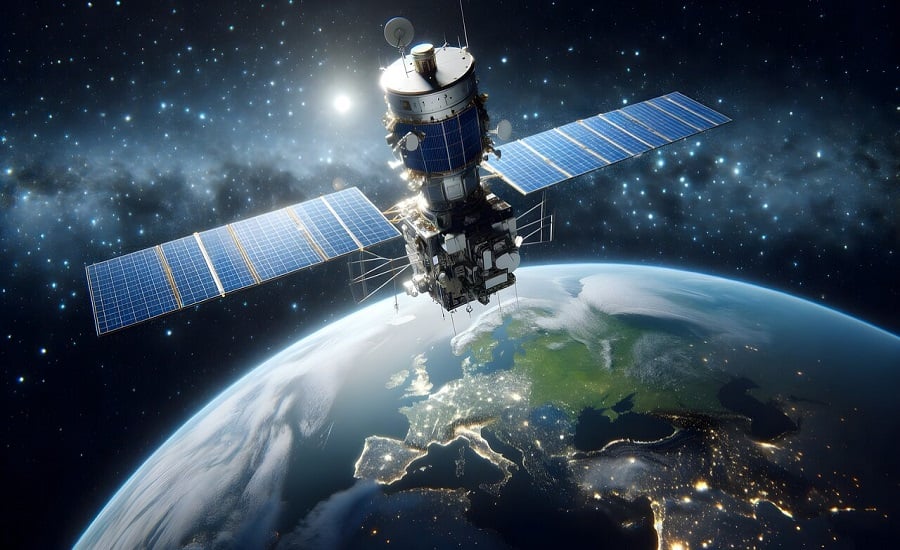
New Delhi: India must strengthen its self-reliant space capabilities to protect its military operations from possible disruptions during future wars. CDS General NS Raja Subramani has highlighted the risks of depending on foreign-controlled satellite networks, citing Ukraine’s experience with Starlink during the Russia-Ukraine war.
His remarks underline the growing importance of indigenous satellite communication, military navigation, surveillance and space-based intelligence for India’s national security.
Indigenous Navigation System: Why CDS Raja Subramani Raised Concerns Over Starlink
Addressing the ANI National Security Summit 3.0 in New Delhi on November 16, 2026, General Raja Subramani explained how space technology has become an important part of modern warfare.
Read also: Made-in-India Hypersonic Glide Missile Gains Speed, Strengthening National Security Capabilities
He referred to the disruption or degradation of Starlink services during the Ukraine conflict. According to him, Ukrainian long-range drones lost some of their effectiveness when access to the satellite communication network was restricted.
The example highlighted an important military risk: a country depending heavily on a foreign-controlled communication network could lose access to critical services during a conflict.
General Raja Subramani warned that India’s adversaries could also attempt to deny access to space-based services during a future war.
He stressed that India needs reliable and independent space infrastructure to protect its military communication and operational capabilities.
Why Space Technology Is Important For Modern Warfare
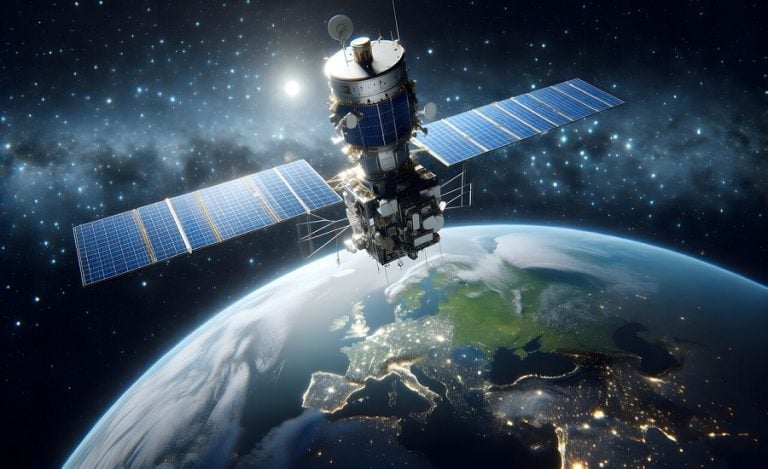
Space technology is no longer limited to scientific research and satellite launches. It has become a major part of military operations.
Modern armed forces depend on satellites for several important functions, including:
- Intelligence, Surveillance And Reconnaissance (ISR): Monitoring enemy movements and collecting important battlefield information.
- Military Communication: Connecting soldiers, aircraft, ships and command centres.
- Precision Navigation: Helping military platforms identify their exact positions.
- Precision Timing: Supporting accurate coordination of weapons, communication networks and military systems.
Without reliable access to these services, military operations can become more difficult. This is why India wants to strengthen its own satellite infrastructure instead of depending entirely on external providers.
Indigenous Navigation System: India’s Space-Based Surveillance-3 Programme
General Raja Subramani highlighted India’s Space-Based Surveillance-3 (SBS-3) programme as an important step towards strengthening the country’s space-based military capabilities.
He said the programme would provide significant capabilities once fully deployed. However, India would need to expand its satellite infrastructure further.
The objective is to establish reliable intelligence, surveillance, reconnaissance and communication capabilities.
A stronger satellite surveillance network can help the armed forces monitor important areas, improve situational awareness and make better military decisions.
The CDS also stressed the importance of developing these capabilities through both the Indian Space Research Organisation (ISRO) and private companies.
NavIC: Why India’s Indigenous Navigation System Matters
Another important point raised by the CDS was the importance of India’s indigenous navigation system, NavIC.
NavIC, developed by ISRO, provides regional navigation services. It is important for civilian applications as well as national security.
General Raja Subramani highlighted the successful launch of the NVS-03 navigation satellite on October 30, 2026. He explained that precision, navigation and timing capabilities are essential for India’s long-range weapons.
If these critical services depend on external systems, another country could potentially restrict access during a conflict. Therefore, developing and controlling indigenous navigation technology is important for India’s strategic independence.
Five Key Areas India Must Focus On For Future Warfare
Apart from space technology, General Raja Subramani identified five important areas that will shape India’s military preparedness.
1. Self-Reliant Space Capabilities
India needs stronger satellite-based surveillance, communication and navigation systems.
The country must develop reliable infrastructure through ISRO and private space companies.
2. Artificial Intelligence And Data Warfare
Artificial intelligence (AI) and data are expected to play a major role in future military operations.
The CDS highlighted four important requirements for AI-based warfare:
- Data
- Computing Power
- Energy
- Skilled Human Resources
These capabilities can help military forces improve intelligence, planning, logistics and decision-making.
3. Domestic Defence Manufacturing
General Raja Subramani stressed that India must move beyond assembling complete defence systems.
Domestic companies should also develop the technology to manufacture critical components such as sensors, servos and magnetometers.
He said Indian industries should either manufacture these components domestically or have control over the intellectual property and technology required to produce them at scale.
This would reduce dependence on foreign suppliers during emergencies and prolonged conflicts.
4. Modernisation Of Existing Military Equipment
The CDS explained that no country can replace all its older military equipment with modern systems immediately.
Therefore, India must upgrade its existing platforms and make them more effective.
He also highlighted the importance of artificial intelligence and open-system architecture.
Open architecture can help different military systems communicate and operate together instead of working as isolated platforms.
5. Development Of Skilled Human Resources
Technology and manufacturing alone cannot guarantee military strength.
India also needs trained personnel, engineers, scientists and researchers who can develop and operate advanced defence technologies.
The CDS called for stronger cooperation between the armed forces, industries, academic institutions and start-ups.
Read also: India’s 1 Crore Private Security Guards Could Become A National Security Shield: Ex-Army Chief
FAQs
SBS-3 is India’s space-based surveillance programme aimed at strengthening the country’s satellite-supported intelligence, surveillance and reconnaissance capabilities.
India needs self-reliant space capabilities to protect military communication, surveillance and navigation services from possible disruptions by external powers during conflicts.
NavIC is India’s indigenous regional satellite navigation system developed by ISRO. It supports positioning, navigation and timing services that are important for civilian applications and military operations.