https://indianmasterminds.com

ADVERTISEMENT
ADVERTISEMENT

World’s Largest 3D-Printed Rocket Engine Developed and Fired by India’s Agnikul Cosmos in Major Breakthrough

Agnikul Cosmos has test-fired the world’s largest single-piece 3D printed rocket engine, showcasing India’s growing strength in advanced space technology and private aerospace innovation.
Agnikul Cosmos 3D Printed Rocket Engine
Indian Masterminds Stories

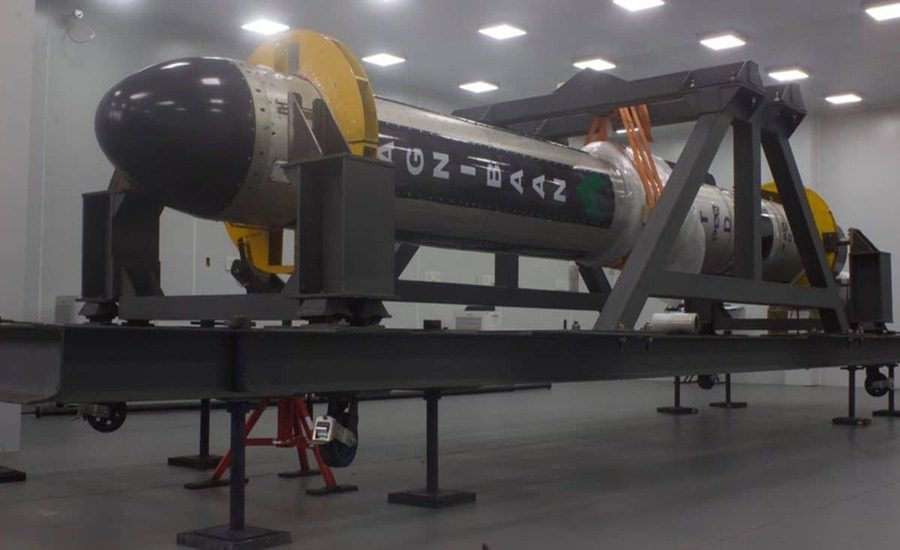
New Delhi: Agnikul Cosmos 3D printed rocket engine technology has reached a new milestone as the Indian space startup successfully fires what is being described as the world’s largest single-piece 3D-printed rocket engine. 

This breakthrough highlights India’s growing strength in private space innovation. Developed entirely in-house, the engine represents a major step forward in faster, cheaper, and more reliable rocket manufacturing

The achievement also strengthens India’s position in the global space race, especially in the emerging small-satellite launch market.

Details of Agnikul Cosmos 3D Printed Rocket Engine

Chennai-based space startup Agnikul Cosmos has successfully test-fired a large single-piece 3D-printed rocket engine, considered among the biggest of its kind globally.

  • The engine is made as one single piece, without joints or welding
  • It uses advanced additive manufacturing (3D printing)
  • It is built using Inconel, a heat-resistant superalloy
  • The engine is around 1 meter long, making it one of the largest integrated designs

Read also: India Fires 24 Pinaka Extended Range Rockets in Pokhran Trial, Showcasing Precision and Firepower

This test marks a major engineering success because building such a large engine in one piece is extremely complex. 

Why Agnikul Cosmos 3D Printed Rocket Engine Is Important

1. Faster Manufacturing

Traditional rocket engines require thousands of parts and months of assembly.

  • 3D printing reduces production time by over 60%
  • No need for welding or assembling multiple parts

2. Higher Reliability

  • No joints = fewer chances of failure
  • Better structural strength during launch

3. Better Performance

  • Improved fuel flow and cooling
  • Lighter and more efficient engine design

How Agnikul Is Leading This Innovation

Agnikul Cosmos, an IIT Madras-incubated startup founded in 2017, is focused on building small satellite launch vehicles.

Key highlights of the company:

  • Developed Agnilet, a fully 3D-printed semi-cryogenic engine
  • Earlier launched Agnibaan SOrTeD, the world’s first rocket with a single-piece 3D-printed engine
  • Built India’s first private launchpad at Sriharikota

The latest engine is an advanced and larger version of its earlier designs.

Recent Milestones Achieved

Agnikul has been rapidly progressing in rocket technology:

  • Successfully fired cluster of 3 engines together in 2026
  • Developed engines with electric motor-driven pumps
  • Achieved multiple “firsts” in India’s private space sector

These milestones show the company is moving towards full orbital launches.

What Makes Agnikul Cosmos 3D Printed Rocket Engine Unique

Unlike traditional engines:

  • Fully integrated design (no assembly)
  • Built layer-by-layer using 3D printing
  • Made from Inconel, which handles extreme heat and pressure
  • Designed for semi-cryogenic propulsion

This combination makes it one of the most advanced rocket engines developed in India.

What is the Impact of Agnikul Cosmos 3D Printed Rocket Engine

This achievement is important for India’s space future:

Boost to Private Space Industry

  • Encourages startups in space technology
  • Supports government’s push for space privatization

Global Competitiveness

  • Positions India alongside global players like SpaceX in innovation
  • Shows capability in advanced manufacturing

Lower Launch Costs

  • Faster production = cheaper rockets
  • Makes space access more affordable

What Comes Next?

Agnikul is now focusing on:

  • Scaling up engine production
  • Conducting full rocket launches using clustered engines
  • Entering the commercial satellite launch market

Their goal is to provide on-demand, low-cost launches for small satellites.

Read also: Indian Space Tech Breakthrough: IIT Madras Develops Indigenous Power System For Plasma Thrusters In Small Satellites


Indian Masterminds Stories
Join our WhatsApp Channel
ADVERTISEMENT
ADVERTISEMENT
Related Stories
ADVERTISEMENT
ADVERTISEMENT
NEWS
JVVNL-HCL Arbitration Dispute
Former SC Judge Fights Back After Rajasthan HC Slams Tribunal, Reduces Arbitration Fees
Jodhpur Premises Safety Trial
₹316 Crore Rajasthan High Court Building Red-Flagged Over Safety Risks, Court Orders Immediate Measures
India Defence Modernisation
Explained: How Agni MIRV, Rudram-II and Pinaka Are Transforming India's Military Power
Acoustic Anti-Drone System
Meet Acoustic Anti-Drone System That Can Neutralise Drones Without Bullets, Lasers or Jamming
India-Australia Space Cooperation
India-Australia Space Cooperation Signals New Era for Global Space Exploration
DRDO NETRA-2026 Seminar
What Is Electronic Warfare? Key Takeaways From DRDO NETRA-2026 Seminar
AASHVAST
What Is AASHVAST? How it will Help to Identify Hidden Vulnerabilities in India's Defence Electronics
Indian Air Power
Operation Sindoor vs Kargil War: How Indian Air Power Evolved Over 26 Years
ADVERTISEMENT
ADVERTISEMENT
Videos
Shakeel Ahmad Ganie IRS Interview
‘My Path Has Not Been Straight’: Shakeel Ahmad Ganie’s Journey to the IRS
Sumit Ramteke tn
IPS Sumit Ramteke on the Cases That Changed His Career and Shook Organized Crime | Video Interview
How NAFED is Strengthening Farmers, Markets and Food Security
ADVERTISEMENT
UPSC Stories
Prachi Jain
A Failed Prelims, A Fractured Leg & One More Shot: How Prachi Jain Made AIR 714
Prachi Jain secured AIR 714 in UPSC CSE 2025 after setbacks, injury and two interviews, and now prepares...
Abhay Pratap Singh UPSC CAPF 2025
From 10 SSB Setbacks to UPSC CAPF AIR 191: Abhay Pratap Singh’s Journey in Uniform
After 10 SSB setbacks, postal department job and two CAPF attempts, Abhay Pratap Singh cleared UPSC CAPF...
From Engineering Desks to the Uniform: The Inspiring Journeys of UPSC CAPF 2025’s Top 5 Toppers
Sheershoo Deb, Aryan Sheoran, Akanksha Vishwakarma, Rohan and Harsh Shankarlal Solanki prove that there...
CSR NEWS
CSR TIMES Awards
NLC India Bags Gold at CSR TIMES Awards 2026 for Over 150 Rural Infrastructure Projects 
NLCIL recognised in the Rural & Infrastructure Development category after implementing over 150 projects...
Project Bright Horizon
HPCL, Assam Rifles and Antogattva Foundation Sign MoU to Launch Project Bright Horizon in Northeast
Project Bright Horizon aims to directly impact 1,500 people and benefit 2,500 more through better learning,...
CMPDI CSR
CMPDI Partners with Frontline Global Services to Train 60 Jharkhand Youth Under CSR Initiative
 CMPDI will invest ₹73.62 lakh to provide residential Phlebotomy Technician training, helping unemployed...
ADVERTISEMENT
ADVERTISEMENT
ADVERTISEMENT
Latest
JVVNL-HCL Arbitration Dispute
Former SC Judge Fights Back After Rajasthan HC Slams Tribunal, Reduces Arbitration Fees
Jodhpur Premises Safety Trial
₹316 Crore Rajasthan High Court Building Red-Flagged Over Safety Risks, Court Orders Immediate Measures
ADVERTISEMENT
ADVERTISEMENT
ADVERTISEMENT
ADVERTISEMENT
ADVERTISEMENT
ADVERTISEMENT
ADVERTISEMENT
Videos
Shakeel Ahmad Ganie IRS Interview
Sumit Ramteke tn
How NAFED is Strengthening Farmers, Markets and Food Security
ADVERTISEMENT
ADVERTISEMENT