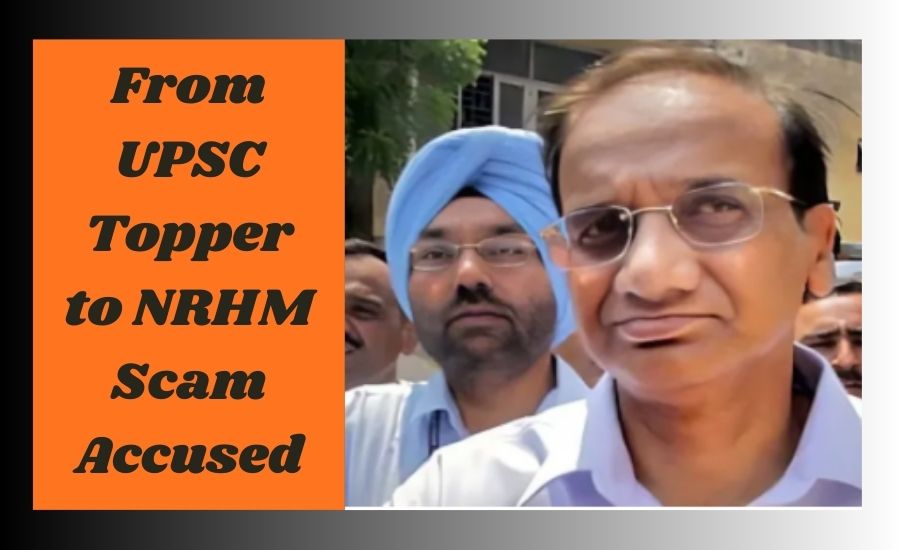
Pradeep Shukla was once counted among the brightest minds of the Indian civil services. A first-class master’s degree holder in Physics from Allahabad University, he topped the UPSC Civil Services Examination in 1981, rising from a modest background to national prominence. He chose the Uttar Pradesh cadre, a decision that placed him at the centre of one of India’s most complex administrative landscapes.
At the Lal Bahadur Shastri National Academy of Administration in Mussoorie, his final performance assessment saw him slip to second position, with Anuj Kumar Bishnoi emerging as the batch topper. Still, Shukla’s early career showed immense promise. His first posting in 1983 was as an Executive Magistrate at the sub-divisional level.
Colleagues and seniors from his early years remember him as an exceptionally intelligent but eccentric officer. He often worked late into the night, sometimes reporting to office after 8 pm and continuing till morning. While his unconventional work style made coordination difficult for others, there were no allegations of corruption during this phase of his career.
NRHM Years and the Start of the Downfall
The most controversial phase of Pradeep Shukla’s career came between 2009 and 2011, when he served as Principal Secretary, Family Welfare, and Mission Director of the National Rural Health Mission (NRHM) in Uttar Pradesh. During this period, large-scale irregularities surfaced in the implementation of NRHM, leading to massive financial losses and a sharp decline in health indicators across the state.
Shukla held extraordinary control over the programme. He was responsible for decision-making, chaired the executive committee, and also supervised implementation. This concentration of authority became a key factor in the collapse of institutional checks and balances.
Under his tenure, routine monitoring mechanisms weakened. Regular district health meetings declined sharply. Recruitment of ASHA workers came to a halt. Immunisation coverage dropped significantly. These failures coincided with widespread financial irregularities, including contracts being awarded without tenders and violations of established norms.
The crisis drew national attention after the murder of two Chief Medical Officers, which exposed the depth of corruption within the NRHM framework. In April 2011, Pradeep Shukla was removed from his post and later arrested on serious corruption charges. He was produced before a CBI court in Ghaziabad and sent to judicial custody.
In 2015, the Supreme Court granted him bail on medical grounds. He was later reinstated in service and, in 2017, received conditional bail requiring him to deposit ₹72 lakh within four weeks.
Family Links and Continued Controversies
Pradeep Shukla’s personal life also remained under scrutiny. His wife, Archana Shukla, is also an IAS officer of the Uttar Pradesh cadre and was named in reports related to the NRHM scam. Their daughter, Poulomi Pavani Shukla, a lawyer by profession, was arrested at Delhi airport in January 2013 in connection with a fake visa case.
Shukla’s son-in-law, Prashant Sharma, a 2012-batch IAS officer of the UP cadre, has also faced controversy. In 2019, he was removed from his post as District Magistrate of Amethi following complaints of misconduct.
The story of Pradeep Shukla stands as a stark reminder that even the most promising administrative careers can unravel due to poor judgment, unchecked authority and ethical lapses.