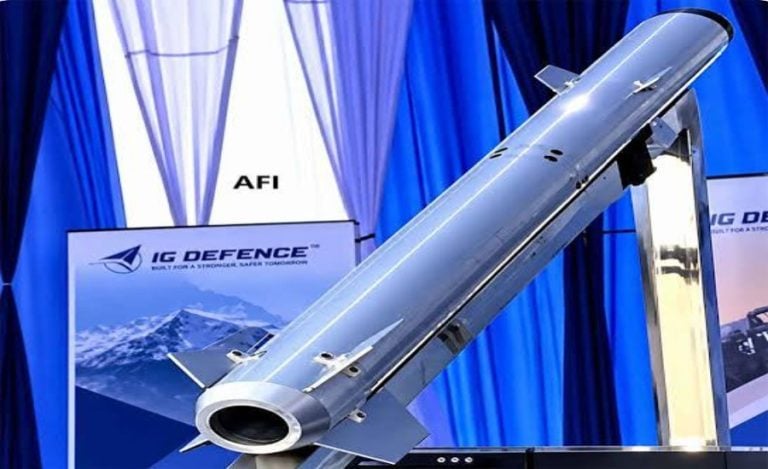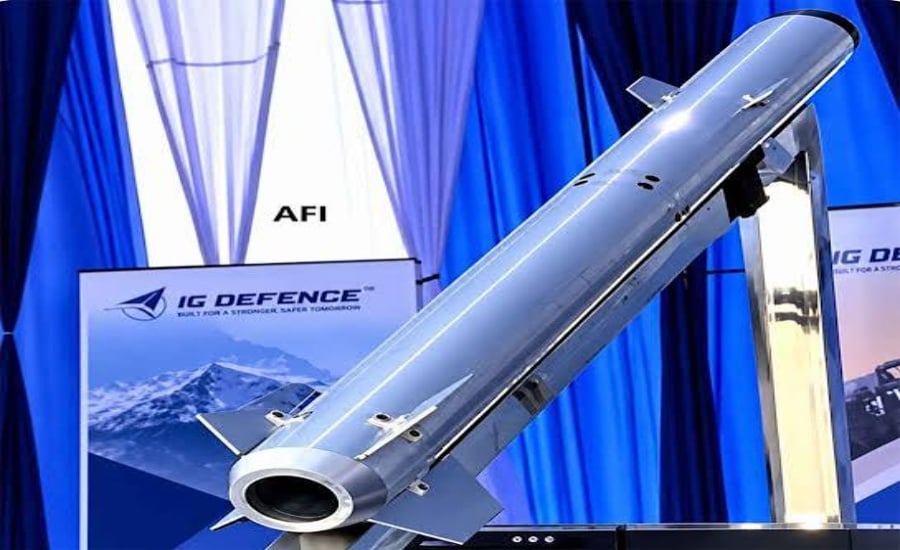
New Delhi: India’s defence industry is taking another step towards developing affordable, Indigenous counter-drone technology. IG Defence’s JWALA micro-missile system is moving towards its first experimental trials after the successful test-firing of two solid rocket motors.
The missile is designed to destroy hostile drones and strengthen India’s ability to deal with growing aerial threats. Its upcoming system-level tests will be an important step in checking how its different components work together.
The project also highlights the growing role of India’s private defence companies in developing modern military technology.
Details of JWALA Micro-Missile
Indian defence technology company IG Defence is preparing for the next stage of testing its indigenous JWALA micro-missile system. The development follows the successful test-firing of two solid rocket motors.
Read also: Big Defence Upgrade: India Plans 300+ K9 Vajra-T Guns to Strengthen Army Firepower
The upcoming experimental trials will help assess the missile as a complete system. These tests are important because they can show whether its propulsion, guidance, electronics and other major components work together as planned.
The JWALA project aims to provide India with a cost-effective weapon for counter-drone operations. This is becoming increasingly important as small, unmanned aerial vehicles are being used for surveillance, reconnaissance and attacks.
What Is The JWALA Micro-Missile System
The JWALA is a surface-to-air missile designed specifically to destroy hostile drones. It is being developed as a hard-kill interceptor, which means it aims to physically destroy a target rather than simply block its communication signals.
Traditional air-defence missiles can be expensive to use against small, low-cost drones. JWALA aims to address this challenge by offering a more affordable interception option.
The system is intended to help military forces respond to drone threats without depending entirely on costly air-defence weapons. However, its actual cost-effectiveness will need to be assessed as further technical and operational details become available.
What are the Key Specifications Of The JWALA Micro-Missile
According to the reported project details, the missile has the following planned capabilities and specifications.
- Engagement Range: Approximately 2 km to 5 km.
- Altitude Envelope: Up To 5,000 Metres.
- Accuracy: A Reported Circular Error Probable (CEP) Of Less Than 2 Metres At Maximum Range.
- Warhead: A Reported 0.5 Kg To 1.5 Kg Fragmentation Warhead With A Proximity Fuse.
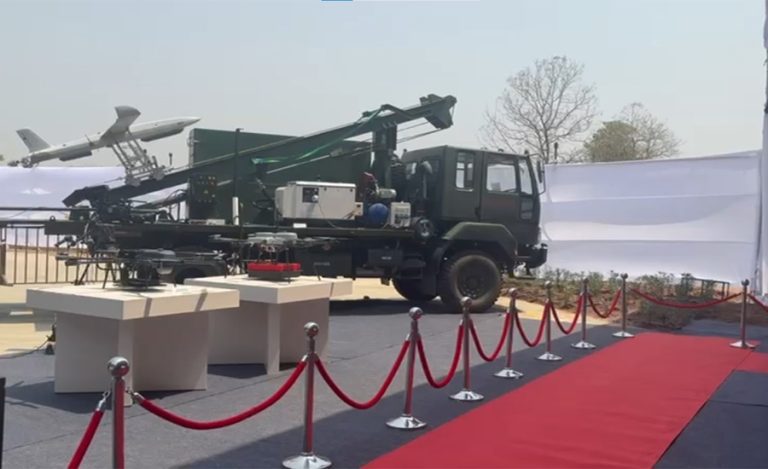
- Launch Platform: A Truck-Mounted Multi-Canister Launcher Designed For Mobile Operations.
- Reaction Time: Reportedly Under Seven Seconds From Target Detection To Launch.
These figures describe the reported capabilities of the system. They should not be treated as independently verified operational performance until the relevant testing and validation are completed.
How JWALA Micro-Missile Is Designed To Work
The JWALA system is designed to detect and engage hostile aerial targets within its intended operating range. Once a suitable target is identified, the system is expected to support a rapid response.
Its rocket motor provides propulsion, while its guidance and target-acquisition components are intended to help direct the interceptor towards the target. The fragmentation warhead is designed to damage or destroy the target when an engagement is successful.
The planned combination of mobility, short reaction time and relatively low-cost interception could make the system useful against certain classes of small drones.
Successful Solid Rocket Motor Tests Mark An Important Step
The successful test-firing of two solid rocket motors represents an important development milestone for the JWALA programme.
The propulsion system is a critical part of any missile because it provides the thrust required for flight. Testing the motors helps developers assess whether this part of the system performs as expected. However, a successful motor test does not automatically mean that the complete missile is ready for military service. Guidance, control, target detection, flight performance and warhead integration must also be evaluated.
The upcoming experimental trials will therefore be important in determining how the complete system performs under test conditions.
Integrated Brain And Muscle: JWALA And GRID Defend
IG Defence is developing JWALA as part of a wider counter-drone ecosystem rather than as a standalone weapon.
The company’s GRID Defend architecture is described as an AI-enabled battle-management network. It is designed to bring together information from different sensors, command systems and weapons into a common operational picture.
According to the information published by IG Defence, the company’s Founder and CEO, Bodhisattwa Sanghapriya, describes GRID as the system’s “brain” and JWALA as its hard-kill “muscle.”
In simple terms, GRID is intended to process information, track threats and coordinate responses. JWALA is designed to act as the physical interceptor that destroys a selected target.
This approach could help defence forces connect detection and decision-making with the weapon used to stop a threat. The effectiveness of the overall architecture will depend on its integration, testing and performance in realistic operating conditions.
T-SHUL BEAM Adds A Non-Destructive Layer Of Defence
IG Defence is also developing other counter-drone capabilities that can complement the JWALA missile.
Earlier in 2026, the company reportedly showcased the T-SHUL BEAM system at the Indian Air Force’s Droneathon 2026 event. The system is described as a tactical eight-channel handheld anti-drone gun.
Unlike a missile designed to destroy a target physically, this system is intended to disrupt certain drone communication, navigation or video links. According to the reported specifications, it can operate against suitable targets at line-of-sight distances of up to 3 km.
Such systems can provide a non-destructive option against some drone threats, while a kinetic interceptor may be needed when electronic disruption is unsuitable or ineffective. The two approaches serve different purposes. Their usefulness depends on the type of drone, the surrounding environment and the operational requirements.
Why India Needs Affordable Counter-Drone Systems
The growing use of unmanned aerial systems has created new challenges for modern armed forces. Small drones can be relatively inexpensive, but the weapons used to stop them can cost significantly more.
Using an expensive missile against a low-cost drone may not always be an economically practical solution. Defence planners therefore need a mix of systems that can respond to different threats at an appropriate cost.
Affordable interceptors such as JWALA could help address this problem if they achieve their intended performance and production costs.
A layered defence strategy can combine surveillance sensors, electronic warfare systems, command-and-control networks and physical interceptors. This allows forces to select a suitable response based on the threat.
Read also: Big Defence Upgrade: India Plans 300+ K9 Vajra-T Guns to Strengthen Army Firepower
FAQs
The reported engagement range of the JWALA missile is approximately 2 km to 5 km. Its actual operational performance will depend on the results of further testing and validation.
The JWALA is an indigenous surface-to-air missile being developed by IG Defence to destroy hostile drones. It is designed as a hard-kill interceptor for counter-drone operations.
The available report describes the successful test-firing of two solid rocket motors and preparations for experimental trials. It does not confirm that the missile has entered military service.