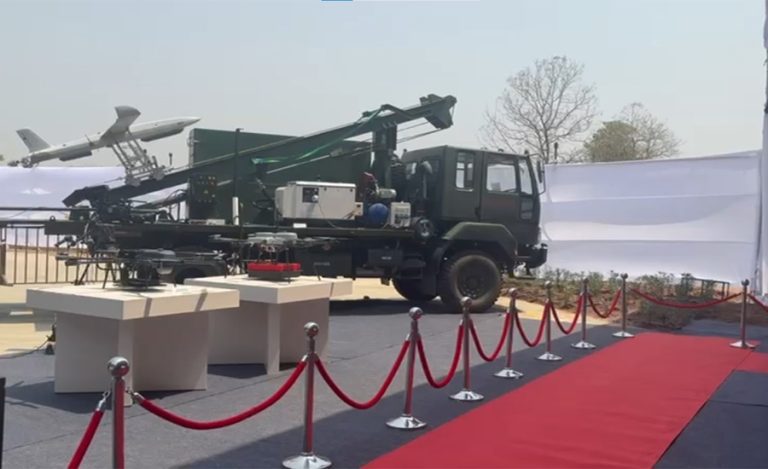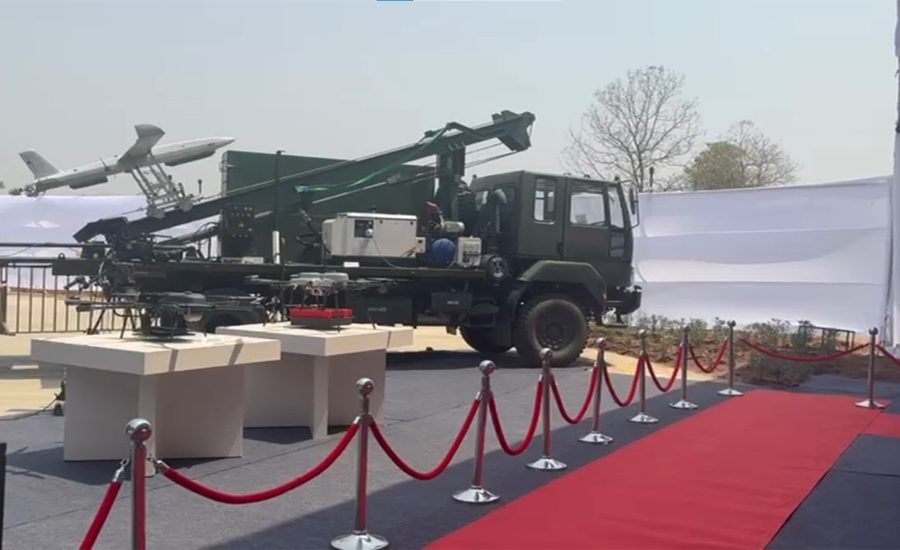
New Delhi: The Indian Army has received 450 Nagastra-1R kamikaze drones from Solar Defence and Aerospace Limited (SDAL), marking a major step forward in India’s indigenous defence manufacturing.
The delivery fulfills an order placed in June 2025 under the emergency procurement process. These Indian-made loitering munitions are designed to help soldiers carry out accurate strikes against selected targets during short-range military operations.
The delivery also highlights India’s growing ability to develop advanced defence equipment through domestic companies and reduce its dependence on foreign suppliers.
Details of Indian Army Nagastra-1R Drones Deal
Nagpur-based Solar Defence and Aerospace Limited has completed the delivery of 450 Nagastra-1R loitering munitions to the Indian Army. The company described the delivery as the largest single-batch supply of these systems by an Indian manufacturer.
Read also: This Hidden Backbone Of The Indian Army Is About To Get A Massive Makeover
The order was placed in June 2025 through the Army’s emergency procurement route. This process allows the armed forces to acquire important equipment quickly to meet urgent operational requirements.
Before receiving the contract, the Nagastra-1R system underwent technical trials at the Special Forces Training School in Makloh, Maharashtra, in March 2025. Four companies took part in the evaluation process. However, SDAL was the only manufacturer reported to have met all the required operational parameters during the trials. The successful delivery is an important development for India’s defence industry, particularly in the field of unmanned systems and precision-strike technology.
What Is The Nagastra-1R Drone
The Nagastra-1R is an indigenous loitering munition designed for short-range precision attacks. It is commonly described as a kamikaze drone because it is designed to strike its target rather than return after a successful attack.
A loitering munition can remain in the air over a designated area while an operator observes the situation and identifies a suitable target. Once the target is selected, the system can be directed towards it.
Unlike conventional ammunition, this type of system gives operators additional time to assess a developing battlefield situation before deciding whether to engage a target.
The Nagastra-1R has been developed to meet the Indian Army’s operational requirements. It is intended to support missions where accurate targeting and quick responses are important.
What are the Features Of The Nagastra-1R System
1. Indigenous Defence Technology
One of the major features of the Nagastra-1R is its high level of indigenous content. Information released when the procurement was announced stated that the system contained more than 80% locally sourced components. This supports India’s efforts to strengthen domestic defence manufacturing and reduce dependence on imported military equipment.
The involvement of an Indian manufacturer also helps build technical expertise in the country’s growing drone and aerospace sector.
2. Precision Targeting Capability
The Nagastra-1R is designed to engage selected targets with a high level of accuracy. The procurement information released in June 2025 cited a circular error probable (CEP) of approximately two metres.
CEP is a technical measurement used to describe the accuracy of a weapon system. It does not mean that every strike will land within exactly two metres of the intended target. Accurate targeting can help the Army engage designated military objectives while improving control over the use of force.
3. Day And Night Observation Options
The system has been described as having a 360-degree gimbal camera, with an optional thermal camera for night operations.
A gimbal camera can move to observe different directions without requiring the entire drone to change its position. A thermal camera detects heat patterns and can support observation in low-light conditions. These features can help operators assess the surrounding area and identify potential targets under different battlefield conditions.
4. Secure Communication
The Nagastra-1R uses proprietary encryption for video and telemetry communications, according to the procurement announcement.
Video communication carries visual information from the drone, while telemetry provides operational data about the system.
Secure communication is important for remotely operated military equipment because it helps protect information exchanged between the drone and its control station.
5. Reusable Launcher System
Another reported feature is the reusability of the launcher system. Reusing supporting equipment can help reduce waste and improve the cost-effectiveness of operating the system. However, the drone itself is designed as a strike munition and should not be confused with a conventional reusable surveillance drone.
Why Did The Indian Army Order 450 Nagastra-1R Drones
The order was placed under the emergency procurement mechanism to address the Army’s operational requirements.
Modern military operations increasingly involve unmanned systems that can provide information, observe target areas and support precision strikes. Loitering munitions are one part of this changing battlefield environment.
For the Indian Army, the Nagastra-1R offers an indigenous option for short-range strike missions. Such systems can support troops by allowing them to engage selected targets remotely rather than relying only on conventional ground-based weapons. The delivery of all 450 systems also represents a substantial production and supply achievement for the domestic manufacturer.
How Indian Army Nagastra-1R Drones Deal Supports India’s Defence Self-Reliance
India has been working to expand domestic defence production through indigenous research, development and manufacturing. The Nagastra-1R programme supports this objective by bringing an Indian-developed loitering munition into the Army’s inventory.
Domestic manufacturing can help build local supply chains, develop skilled workers and strengthen the country’s ability to maintain and improve military equipment. It can also give Indian defence companies more experience in producing complex unmanned systems for the armed forces.
The reported high level of locally sourced components makes the programme particularly relevant to India’s wider push for self-reliance in defence technology.
Solar Defence And Aerospace Limited’s Growing Role
Solar Defence and Aerospace Limited is based in Nagpur and operates in the defence and aerospace sector. It is associated with Solar Industries India, an Indian industrial group. The company has been involved in developing and supplying defence products for the Indian armed forces.
The Nagastra-1R delivery strengthens its position in India’s emerging market for unmanned military systems. It also demonstrates the growing role of private Indian companies in supplying specialised equipment to the armed forces.
The success of such programmes will depend not only on initial deliveries but also on manufacturing quality, reliability, maintenance support and the ability to meet future military requirements.
Read also: Inside The Indian Army’s Secret Weapon Against Deadly Drone Attacks
FAQs
The Nagastra-1R is manufactured by Solar Defence and Aerospace Limited (SDAL), a Nagpur-based defence and aerospace company associated with Solar Industries India.
The Indian Army has received 450 Nagastra-1R loitering munitions from Solar Defence and Aerospace Limited in a single-batch delivery.
The Nagastra-1R is designed for short-range precision-strike missions. It is a loitering munition that can remain airborne while an operator assesses a target before directing the system to strike.