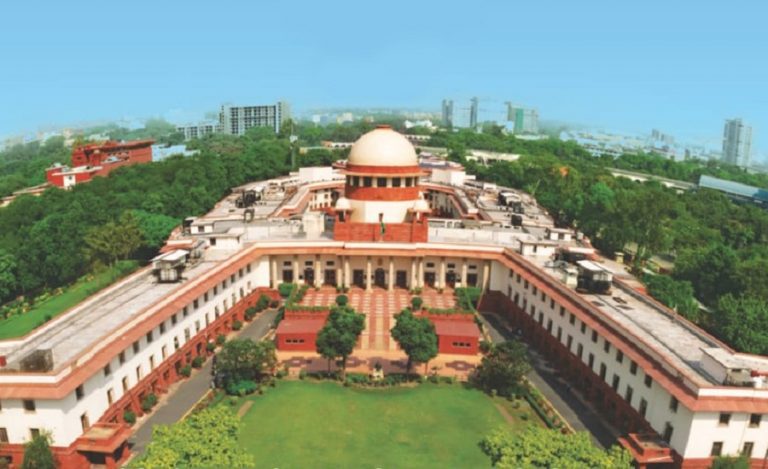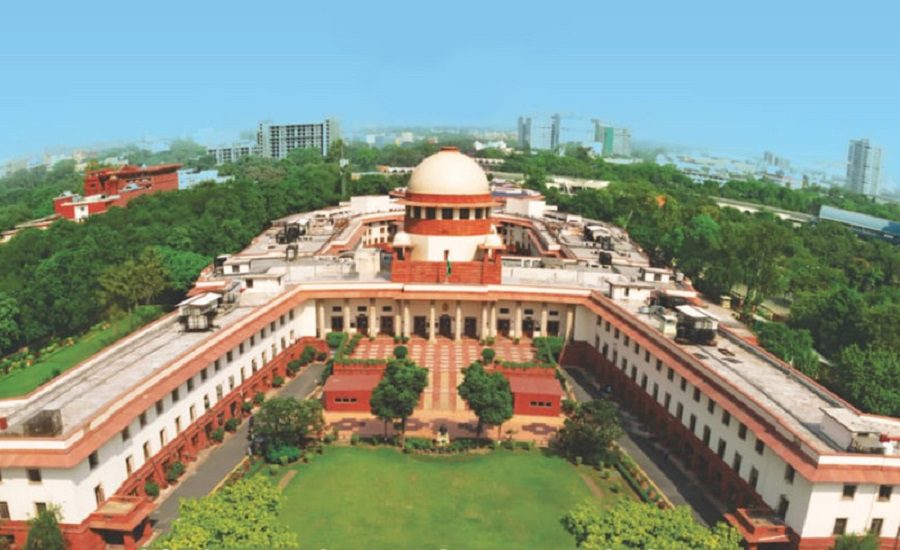
New Delhi: The Supreme Court has raised serious questions about laws that stop people with more than two children from contesting local body elections.
The Supreme Court’s two-child election law observation comes amid a major decline in India fertility rate, which has fallen from 3 in 2003 to 1.9 today.
The court said that the reasons behind these restrictions have weakened due to changing population trends. It also called for a fresh review of the earlier judgment that supported the two-child rule.
Supreme Court Questions The Need For Two-Child Election Law
On November 4, 2026, a Supreme Court bench comprising Justice P.S. Narasimha and Justice Alok Aradhe observed that laws disqualifying people with more than two children from contesting local elections have lost their relevance.
The court said that India’s declining fertility rate has changed the population situation. Therefore, the old reasons for introducing such restrictions need to be reconsidered.
The bench also questioned whether having more than two children should prevent a person from participating in democratic elections.
Why Did The Supreme Court Raise This Issue
The court highlighted the major change in India’s Total Fertility Rate (TFR) over the last two decades.
India’s fertility rate was around 3 children per woman in 2003. It has now fallen to approximately 1.9, which is below the replacement fertility level of 2.1.
The replacement level is the average number of children a woman needs to have for one generation to replace itself, assuming other demographic factors remain broadly stable.
The court warned that a continuously declining fertility rate could lead to an ageing population and a smaller share of working-age people in the future.
It said that laws introduced to control population growth should be reconsidered in light of these changing demographic conditions.
Supreme Court Reconsiders The 2003 Javed Judgment
The Supreme Court also referred to its important 2003 judgment in Javed v. State of Haryana.
In that case, a three-judge bench had upheld the constitutional validity of the Haryana Panchayati Raj Act, 1994. The law disqualified people with more than two living children from contesting Panchayat elections.
The latest bench questioned the reasoning behind that decision and referred the issue to a larger bench for reconsideration. This development could have wider implications for similar laws in different states.
Supreme Court Sets Aside Mangala Bhimrao’s Disqualification
The case involved Mangala Bhimrao, a former Sarpanch of Kakoda Gram Panchayat in Maharashtra.
She was disqualified under Section 14(1)(j-1) of the Maharashtra Village Panchayat Act, 1959, after the birth of her third child.
The provision restricted people with more than two children from contesting local body elections.
After her disqualification was upheld by the Bombay High Court, she approached the Supreme Court. The Supreme Court set aside her disqualification, giving her relief in the case.
Court Raises Concerns About Democratic Rights And Reproductive Freedom
The bench also expressed concern that two-child restrictions could prevent an entire group of citizens from participating in democratic politics.
According to the court, the number of children a person has does not necessarily determine their ability to perform public duties.
It also highlighted the conflict between family choices and democratic participation. The court observed that such restrictions could affect the right to reproductive autonomy under Article 21 of the Indian Constitution.
Which States Still Have Two-Child Election Law
The court considered information about different state policies on the two-child norm.
According to the compilation presented during the proceedings, seven states have withdrawn such restrictions, while fifteen states do not have this policy. The states identified as continuing to have two-child restrictions include:
- Assam
- Goa
- Gujarat
- Maharashtra
- Odisha
- Uttarakhand
However, the rules and their application can differ between states and local government laws.
Read also: Inside the Allahabad High Court Decision That Will Make UP Panchayat Elections 2026 Historic
FAQs
India’s Total Fertility Rate is approximately 1.9 children per woman, below the replacement fertility level of 2.1.
The Supreme Court observed that laws disqualifying people with more than two children from contesting local elections have lost their relevance due to India’s declining fertility rate.
No. The court has questioned the relevance of these laws and referred the 2003 Javed judgment to a larger bench. This does not automatically remove all two-child restrictions across India.