Nature conservation is often seen as a choice between protecting forests and allowing people to use the resources they depend on. But what if both could go hand in hand? What if forests could remain protected, wildlife could flourish, and communities living around them could continue earning their livelihoods without compromising the environment?
India’s Biosphere Reserves are built around precisely this idea.
Stretching from the tropical forests of the Western Ghats to the mangrove ecosystems of the Sundarbans, the coral-rich Gulf of Mannar and the challenging landscapes of the Himalayas, these reserves represent some of the country’s most ecologically important regions.
They are not merely protected landscapes. They are living examples of how biodiversity conservation, scientific research, traditional knowledge and sustainable economic activities can coexist.
As the world observed the International Day for Biosphere Reserves on November 3, India’s conservation journey offers an important reminder that protecting nature is not just about safeguarding wildlife. It is equally about securing water, food, livelihoods, climate resilience and a healthier future for generations to come.
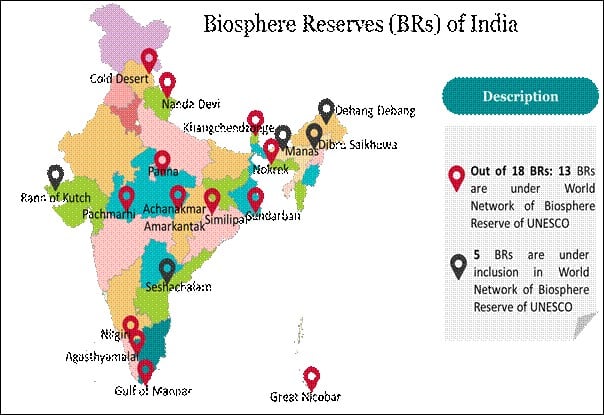
India currently has 18 notified Biosphere Reserves, of which 13 are part of UNESCO’s World Network of Biosphere Reserves (WNBR). Together, they showcase the country’s commitment to conserving its extraordinary ecological wealth while addressing the developmental needs of communities.
Understanding Biosphere Reserves: Where Nature and People Coexist
Biodiversity refers to the variety of living organisms found across terrestrial, marine and other aquatic ecosystems. The Convention on Biological Diversity (CBD) recognises three interconnected levels of biodiversity:
- Genetic Diversity: Variations within a species, such as different varieties of rice.
- Species Diversity: The variety of species living in an ecosystem, including tigers, elephants and orchids.
- Ecosystem Diversity: The range of natural habitats, such as forests, grasslands, wetlands and coral reefs.
Together, these three levels sustain ecological processes and support life on Earth.
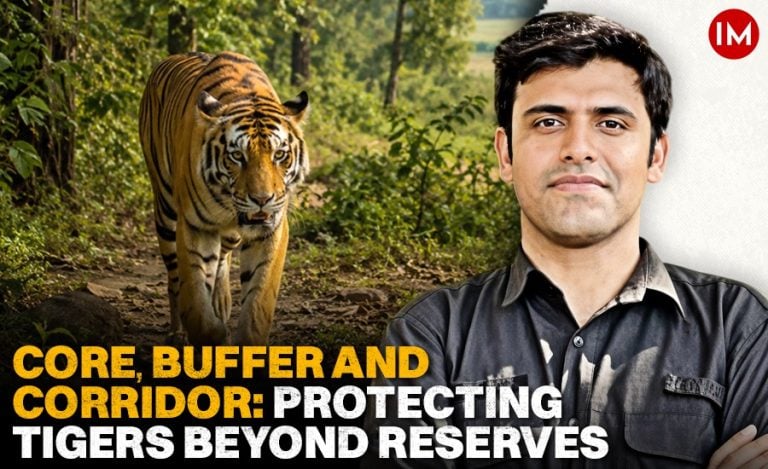
Read Also: Can India save tigers outside Tiger Reserves?
Biosphere Reserves are areas identified by national governments to conserve biodiversity while promoting sustainable development. Their purpose extends beyond protecting natural habitats. They also encourage the responsible use of biological resources, support local livelihoods and maintain ecological balance.
The concept gained international recognition through UNESCO’s Man and the Biosphere (MAB) Programme, launched in 1971. The programme promotes scientific approaches to improving the relationship between people and their environment.
Under this framework, Biosphere Reserves function as living laboratories where conservation methods and sustainable development practices can be tested and demonstrated.
The International Day for Biosphere Reserves is observed annually on November 3. Proclaimed by UNESCO, the day highlights the importance of these landscapes in reconciling environmental protection with human well-being.
How Are Biosphere Reserves Different from National Parks and Wildlife Sanctuaries?
While National Parks and Wildlife Sanctuaries primarily focus on protecting wildlife and their habitats under India’s wildlife protection framework, Biosphere Reserves follow a broader approach.
They connect protected ecosystems with the communities living in and around them.
Their functioning revolves around three major objectives:
- Conservation: Protecting biodiversity, genetic resources, ecosystems, landscapes and associated cultural diversity.
- Sustainable Economic Development: Encouraging economic and social activities that respect ecological limits and local cultural values.
- Scientific Support: Promoting research, environmental monitoring, education, training and knowledge exchange to strengthen conservation practices.
This approach recognises that communities are not necessarily separate from conservation efforts. When provided with sustainable livelihood opportunities and involved in decision-making, they can become important partners in protecting ecosystems.
The Three Zones That Make Conservation Work
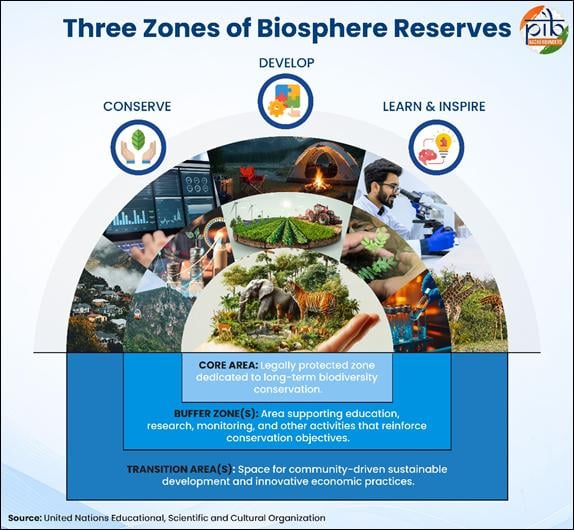
One of the most important features of a Biosphere Reserve is its zonation model. It divides the landscape into three interconnected areas, each serving a different purpose.
– Core Area: This is the most strictly protected zone. It safeguards ecosystems, habitats, species and genetic diversity while maintaining essential ecological processes. Human activities are highly restricted, although compatible scientific research and monitoring are permitted.
– Buffer Zone: Surrounding or adjoining the core area, this zone accommodates activities compatible with conservation. These include environmental education, scientific research and regulated ecotourism. It also helps reduce pressure on strictly protected habitats.
– Transition Area: This is where human settlements and sustainable economic activities are accommodated. Communities can undertake responsible agriculture, sustainable forestry, ecotourism and other locally appropriate livelihood activities.
Globally, Biosphere Reserves comprise an average of 18% core areas, 30% buffer areas and 52% transition areas. This distribution reflects the underlying philosophy of balancing ecological protection with human development.
India’s 18 Biosphere Reserves: A Network of Extraordinary Ecological Wealth
India is among the world’s 17 mega-biodiverse countries. Although it occupies only 2.4% of the Earth’s land area, it accounts for approximately 7–8% of recorded species worldwide.
Its Biosphere Reserve network reflects this remarkable ecological diversity.
According to the Ministry of Environment, Forest and Climate Change (MoEFCC), India has 18 notified Biosphere Reserves, of which 13 have been included in UNESCO’s World Network of Biosphere Reserves. This is the highest number of internationally recognised Biosphere Reserves in South Asia.
The following is the complete list:
| No. | Biosphere Reserve | Year of designation | UNESCO inclusion | State/UT | Area (sq. km) |
|---|---|---|---|---|---|
| 1 | Nilgiri | 1986 | 2000 | Tamil Nadu, Kerala, Karnataka | 5,520 |
| 2 | Nanda Devi | 1988 | 2004 | Uttarakhand | 6,407.03 |
| 3 | Nokrek | 1988 | 2009 | Meghalaya | 820 |
| 4 | Gulf of Mannar | 1989 | 2001 | Tamil Nadu | 10,500 |
| 5 | Sundarbans | 1989 | 2001 | West Bengal | 9,630 |
| 6 | Manas | 1989 | — | Assam | 2,837 |
| 7 | Great Nicobar | 1989 | 2013 | Andaman and Nicobar Islands | 885 |
| 8 | Similipal | 1994 | 2009 | Odisha | 5,569 |
| 9 | Dibru-Saikhowa | 1997 | — | Assam | 765 |
| 10 | Dehang-Dibang | 1998 | — | Arunachal Pradesh | 5,111.50 |
| 11 | Pachmarhi | 1999 | 2009 | Madhya Pradesh | 4,981.72 |
| 12 | Khangchendzonga | 2000 | 2018 | Sikkim | 2,931.12 |
| 13 | Agasthyamalai | 2001 | 2016 | Kerala, Tamil Nadu | 3,500 |
| 14 | Achanakmar-Amarkantak | 2005 | 2012 | Madhya Pradesh, Chhattisgarh | 3,835.46 |
| 15 | Great Rann of Kutch | 2008 | — | Gujarat | 12,454 |
| 16 | Cold Desert | 2009 | 2025 | Himachal Pradesh | 7,770 |
| 17 | Seshachalam | 2010 | — | Andhra Pradesh | 4,755.58 |
| 18 | Panna | 2011 | 2020 | Madhya Pradesh | 2,998.98 |
Note: The 13 reserves included in UNESCO’s World Network are marked with an asterisk in the source document.
The network covers an extraordinary range of ecosystems, from tropical evergreen forests and grasslands to mangroves, marine habitats, wetlands and high-altitude cold deserts.
Three reserves, in particular, offer a glimpse into the ecological and social diversity of India’s conservation landscape.
Nilgiri: Protecting the Rich Biodiversity of the Western Ghats
Designated in 1986, the Nilgiri Biosphere Reserve was India’s first Biosphere Reserve.
Spread across Tamil Nadu, Kerala and Karnataka, it covers approximately 5,520 square kilometres and forms part of the globally significant Western Ghats biodiversity hotspot.
Its landscape includes tropical evergreen forests, montane shola forests and grasslands.
The reserve supports several threatened and endemic species, including the endangered lion-tailed macaque and Nilgiri tahr. It is also home to elephants, tigers, gaur, sambar and chital.
Its biodiversity is remarkable:
- More than 100 mammal species.
- Around 550 bird species.
- Numerous reptiles and amphibians.
- More than 6,000 recorded plant species in the Nilgiri district alone.
Beyond its ecological importance, the reserve also demonstrates how indigenous communities can contribute to conservation while creating sustainable livelihood opportunities.
Cold Desert: Conservation in the High Himalayas
Located in Himachal Pradesh, the Cold Desert Biosphere Reserve represents an entirely different ecological environment.
Spanning 7,770 square kilometres, it lies at elevations ranging from 3,300 to 6,600 metres.
Despite its harsh climatic conditions, the region supports remarkable biodiversity, including:
- 732 vascular plant species, including 30 endemic species.
- Snow leopards.
- Himalayan ibex.
- Blue sheep.
The reserve is also home to approximately 12,000 people who depend on traditional livelihood practices.
These include pastoralism, yak and goat herding, barley and pea cultivation, and Tibetan herbal medicine.
Its inclusion in UNESCO’s World Network in 2025 further highlights the international importance of India’s high-altitude ecosystems.
Gulf of Mannar: Safeguarding India’s Marine Biodiversity
Situated along the southeastern coast of Tamil Nadu, the Gulf of Mannar Biosphere Reserve is among India’s richest marine biodiversity regions.
Covering approximately 10,500 square kilometres, it encompasses interconnected coral reefs, seagrass beds and mangrove ecosystems.
These habitats support an extraordinary 4,223 plant and animal species.
The reserve also has considerable social significance, supporting approximately 25 lakh people across a region containing around 47 coastal villages.
Its conservation is therefore closely linked to protecting marine ecosystems and sustaining the livelihoods of coastal communities.
When Conservation Creates Livelihoods: The Lantana Elephant Initiative
Perhaps one of the most inspiring examples of community-led conservation comes from the Nilgiri Biosphere Reserve.
Here, indigenous communities have found an innovative way to turn an invasive plant into an opportunity for livelihood generation.
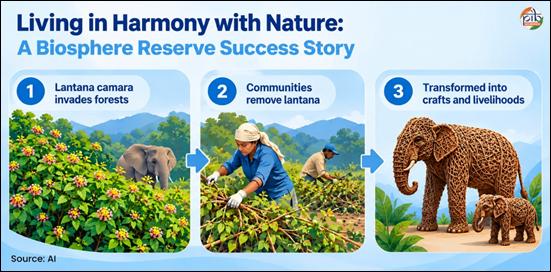
The initiative involves transforming uprooted Lantana vines into beautiful elephant sculptures, furniture and other handicrafts.
Lantana camara is an invasive shrub that has spread across approximately 300,000 square kilometres of Indian forests. It forms dense thickets that suppress native vegetation, reduce biodiversity and alter natural fire patterns.
Its chemical secretions inhibit the growth of competing plants, while its ability to regenerate rapidly makes removal particularly difficult. Despite eradication efforts dating back to 1916, controlling its spread remains costly and challenging.
Instead of treating the removed plant material merely as waste, indigenous artisans have developed ways to give it economic value.
The initiative has created livelihood opportunities while raising awareness about invasive species and habitat degradation.
Its impact has also reached international audiences:
- In 2021, 125 life-sized Lantana elephant sculptures were displayed in London, promoting awareness of wildlife coexistence.
- The sculptures have also been displayed at Bengaluru Airport and at different locations across Bengaluru.
- Some of these creations have even been showcased at Rashtrapati Bhavan.
- The initiative provides economic opportunities to indigenous artisans while supporting awareness about invasive species.
It is a powerful example of how conservation can become more effective when local communities are placed at its centre.
Government Support and Integrated Management Plans
India’s Biosphere Reserve network is supported by a dedicated government programme administered by the Biosphere Reserve Division of the Ministry of Environment, Forest and Climate Change.
The Ministry implements the Centrally Sponsored Scheme called Biodiversity Conservation, which operates under the umbrella scheme Conservation of Natural Resources and Ecosystems.
Under this programme, financial assistance is provided to states for conservation and development activities specified in the respective Biosphere Reserve Management Plans.
The State Forest Departments are responsible for implementing these activities.
The funding pattern is:
- 60:40 (Central Government: State Government) for other states.
- 90:10 (Central Government: State Government) for northeastern and Himalayan states.
An important development came in 2022–23, when the Ministry began piloting five-year Integrated Management Plans for four Biosphere Reserves:
- Nanda Devi, Uttarakhand.
- Pachmarhi, Madhya Pradesh.
- Dehang-Dibang, Arunachal Pradesh.
- Agasthyamalai, Kerala and Tamil Nadu.
These plans bring together reserve authorities, research institutions and local communities to strengthen conservation efforts.
Their key priorities include habitat restoration, biodiversity monitoring, scientific research and sustainable livelihood generation.
The Global Importance of Biosphere Reserves
India’s conservation efforts are part of a much larger international movement.
According to the UNESCO World Network of Biosphere Reserves figures cited in the source material, the global network comprises:
- 797 Biosphere Reserves across 145 countries.
- Approximately 300 million people directly benefiting from these areas.
- Nearly 5% of the Earth’s terrestrial surface covered by Biosphere Reserves.
- More than 60% of the world’s terrestrial vertebrate species richness supported by these landscapes.
However, these ecosystems also face growing challenges.
The Map of the World Network of Biosphere Reserves 2025–26 indicates that approximately 40% of Biosphere Reserves may face more extreme climate events by 2050. More than 50% of all Biosphere Reserves also overlap with another international designation.
These figures underline the urgency of strengthening conservation strategies in the face of climate change and increasing environmental pressures.
The Way Forward
India’s 18 Biosphere Reserves represent much more than a network of ecologically significant landscapes. They demonstrate a conservation philosophy in which protecting nature and improving human well-being are interconnected goals.
From safeguarding endangered species in the Nilgiris to protecting marine biodiversity in the Gulf of Mannar and supporting traditional livelihoods in the Cold Desert, these landscapes show how conservation can be adapted to different ecological and social realities.
The way forward lies in sustained investment in scientific research, habitat restoration, biodiversity monitoring and community-led conservation.
Combining traditional knowledge with modern scientific tools, strengthening partnerships between governments and research institutions, and creating sustainable livelihood opportunities will remain essential.
Ultimately, the success of a Biosphere Reserve should not be measured only by the wildlife it protects or the forests it preserves. It should also be measured by the communities it empowers and the sustainable future it helps create.
Because the true purpose of conservation is not simply to protect nature from people, but to build a future in which people and nature can thrive together.
Read Also: From Kuno to Gandhi Sagar: India Studies How Cheetahs Coexist with Other Predators