New Delhi: Academic cooperation has emerged as the main focus of the Indo-Pacific Regional Dialogue 2026, organised by the Indian Navy in New Delhi. Former Deputy Chief of the Naval Staff Vice Admiral Sanjay Mahindru (Retd) said the dialogue aims to bring universities and academic institutions from Indo-Pacific countries together. The goal is to share knowledge, improve research and build stronger regional cooperation to address future challenges.
Indo-Pacific Regional Dialogue 2026 Focuses On Academic Cooperation
The Indo-Pacific Regional Dialogue 2026 is an annual international strategic dialogue based on the Indo-Pacific Oceans Initiative (IPOI).
Read also: Indo-Pacific Regional Dialogue 2026: Dates, Theme And Key Details
According to Vice Admiral Sanjay Mahindru, this year’s main focus is academic cooperation. The initiative aims to connect educational institutions across the Indo-Pacific region.
Through this cooperation, participating countries can share their research, knowledge, skills and institutional capabilities.
The objective is to build collective strength and find solutions to common regional challenges.
Indian Navy Organises Three-Day Indo-Pacific Dialogue 2026
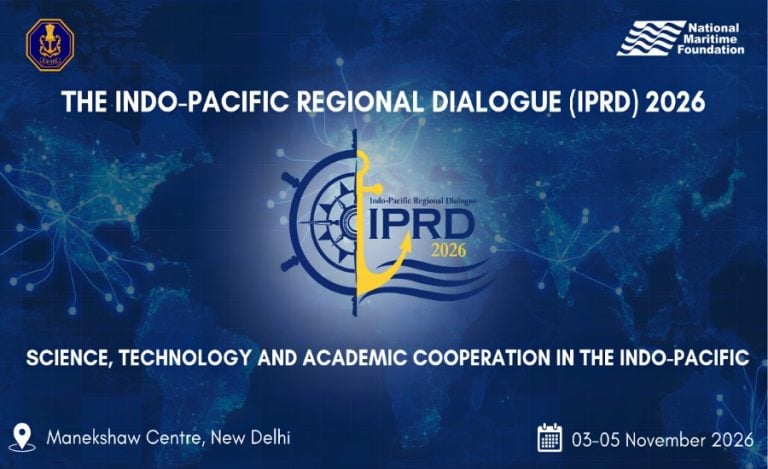
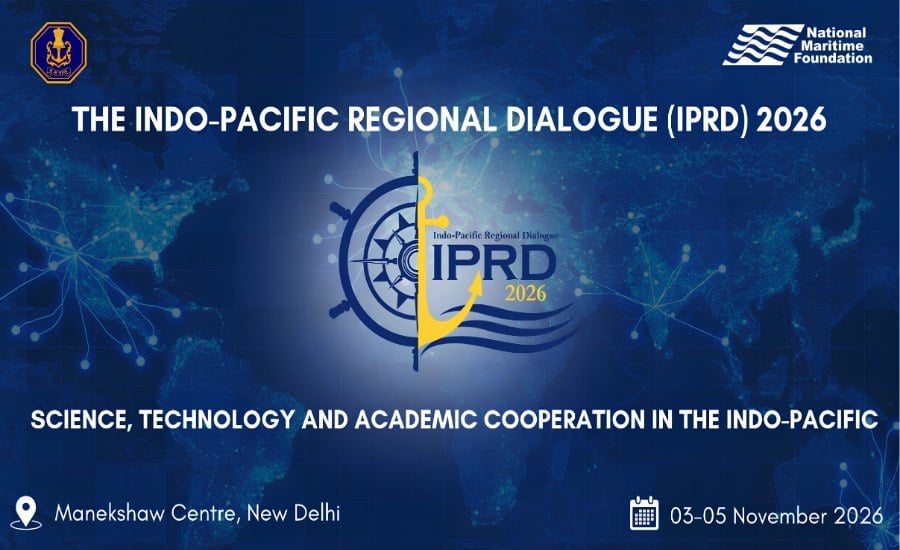
The Indian Navy’s annual international strategic dialogue began in New Delhi on November 3, 2026.
The three-day conference is being organised in association with the National Maritime Foundation (NMF), the Navy’s knowledge partner.
The event is being held under the theme “Science, Technology And Academic Cooperation In The Indo-Pacific.”
It brings together maritime experts, researchers and representatives from partner countries.
The opening day focused on turning scientific progress and institutional partnerships into practical cooperation. Discussions also covered ways to improve maritime capabilities and regional security.
Indo-Pacific Dialogue 2026: Academic Networks And Research Cooperation Discussed
The first professional session focused on Academic Networks, Research, And Human Capital Development.
The session was moderated by Vice Admiral Sanjay Mahindru (Retd). Representatives from France, Indonesia, Japan and the Maldives shared their views.
Participants discussed the possibility of creating a wider Indian Ocean academic network.
The proposed network could encourage cooperation between universities in Indo-Pacific coastal cities. It could also strengthen social science research across the Indian Ocean region.
The session highlighted the importance of cooperation between universities, research institutions, think tanks and governments.
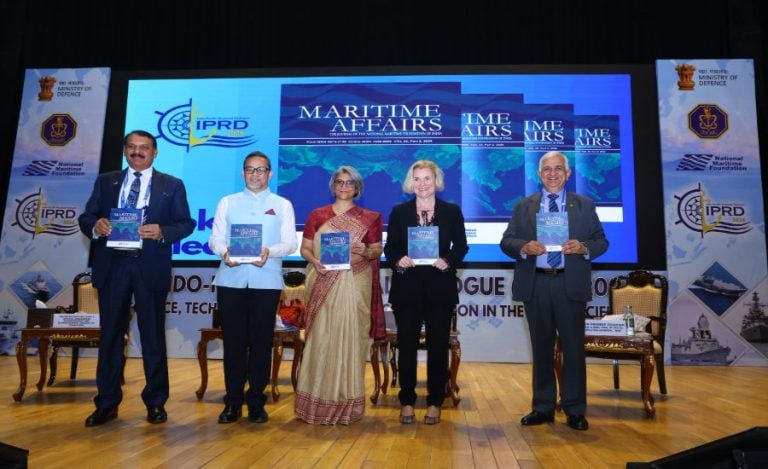
A monograph titled Sea Blindness And Maritime Heritage In India was also released at the end of the session.
Maritime Security And Critical Infrastructure Protection
The second professional session focused on Maritime Situational Awareness And Protection Of Critical Maritime Infrastructure.
It examined important challenges related to maritime awareness, the protection of sea-based trade and the safety of critical underwater infrastructure.
The session was moderated by Vice Admiral Tarun Sobti (Retd), former Deputy Chief of the Naval Staff.
Discussions covered the Indo-Pacific Partnership for Maritime Domain Awareness (IPMDA).
Participants examined the importance of sharing maritime information and developing a cooperative regional system for better underwater domain awareness.
The session also included perspectives from the Indian Ocean Commission (IOC) on protecting critical maritime infrastructure.
Submarine Cooperation And Underwater Domain Awareness
Submarine cooperation was another important subject discussed during the dialogue.
Vice Admiral Sanjay Mahindru explained that submarines are highly confidential parts of every country’s navy. However, countries can still cooperate in understanding the underwater environment.
He highlighted the importance of sharing knowledge about regional hydrology and bathymetry.
Hydrology involves the study of water, while bathymetry refers to measuring and mapping the depth of water bodies.
Such knowledge can help countries understand different maritime regions and improve their awareness of underwater conditions.
Better scientific cooperation can also support safer maritime operations and stronger regional understanding.
Climate Risks And Maritime Technology Cooperation
The two professional sessions also explored how countries can work together to address climate-related risks.
Participants discussed improving access to oceanographic knowledge and strengthening maritime information-sharing systems.
Scientific and technological partnerships can help countries understand changing ocean conditions and respond to regional challenges.
The discussions also highlighted the importance of protecting critical infrastructure and improving coordinated maritime responses.
Diplomatic Interaction With Indo-Pacific Countries
The first day’s programme also included a special diplomatic interaction called “Sahyog Ka Samvaad.”
The interaction involved Sri Lankan High Commissioner Mahishini Colonne, Philippines Ambassador Josel F Ignacio and Norwegian Ambassador May-Elin Stener.
It was hosted and moderated by Vice Admiral Pradeep Chauhan (Retd), Director-General of the National Maritime Foundation.
The programme provided an opportunity for diplomatic representatives to discuss regional cooperation and shared maritime interests.
Why Is The Indo-Pacific Regional Dialogue 2026 Important
The Indo-Pacific region is important for international trade, maritime security and economic development.
Many countries depend on safe sea routes for transporting goods, energy resources and other essential products. However, maritime regions also face challenges such as climate change, underwater infrastructure risks and security concerns.
The Indo-Pacific Regional Dialogue 2026 provides a platform for countries to discuss these issues.
Its focus on academic cooperation is particularly important because universities and research institutions can support better scientific understanding and long-term solutions.
By connecting academic institutions, maritime experts and governments, the initiative aims to build stronger regional partnerships.
Read also: Explained: Why Great Nicobar Airport Project Is So Crucial for India in the Indo-Pacific Region
FAQs
The Indian Navy is organising the Indo-Pacific Regional Dialogue 2026 in association with the National Maritime Foundation (NMF).
Academic cooperation is the main focus of the Indo-Pacific Regional Dialogue 2026. The event aims to connect academic institutions across Indo-Pacific countries to share research, knowledge and capabilities.
The theme of the Indo-Pacific Regional Dialogue 2026 is “Science, Technology And Academic Cooperation In The Indo-Pacific.” The three-day conference discusses scientific research, maritime security and regional cooperation.