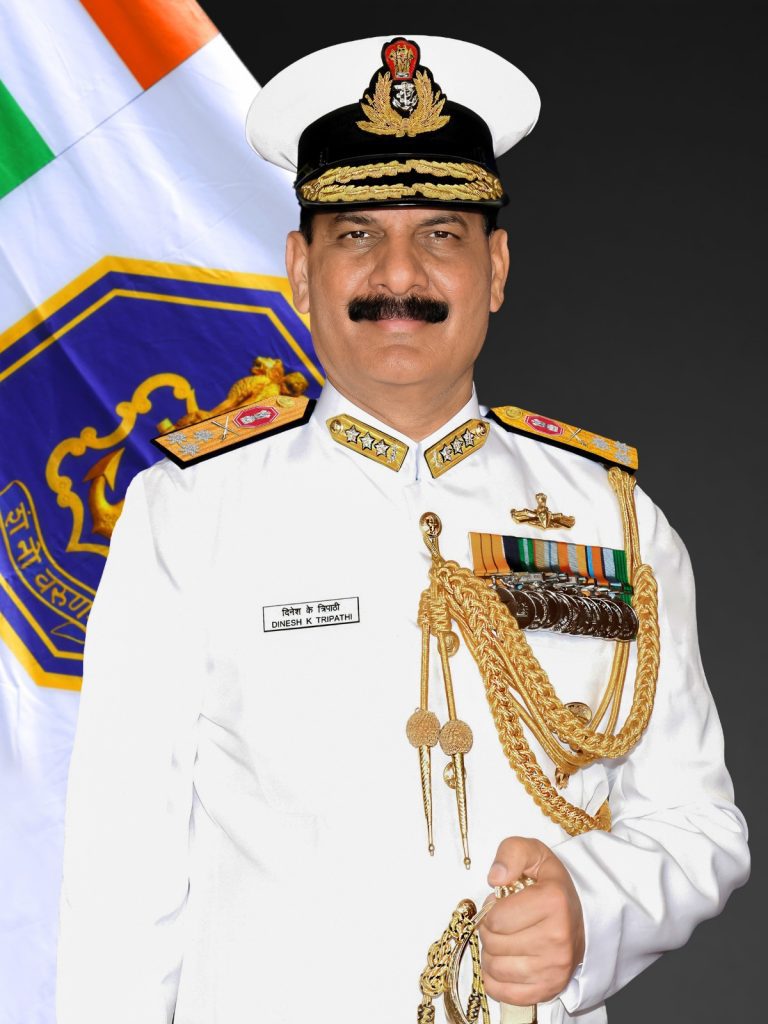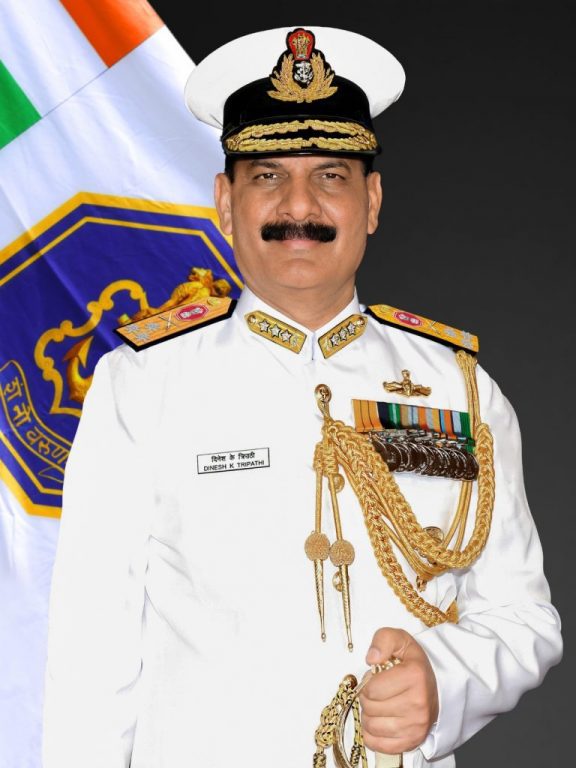
New Delhi: Maritime disruptions in the Red Sea, Strait of Hormuz and South China Sea are creating serious concerns for global trade, energy supplies and economic stability. Former Indian Navy Chief Admiral Dinesh Kumar Tripathi has warned that instability in these important waterways can affect countries far beyond the regions where conflicts take place.
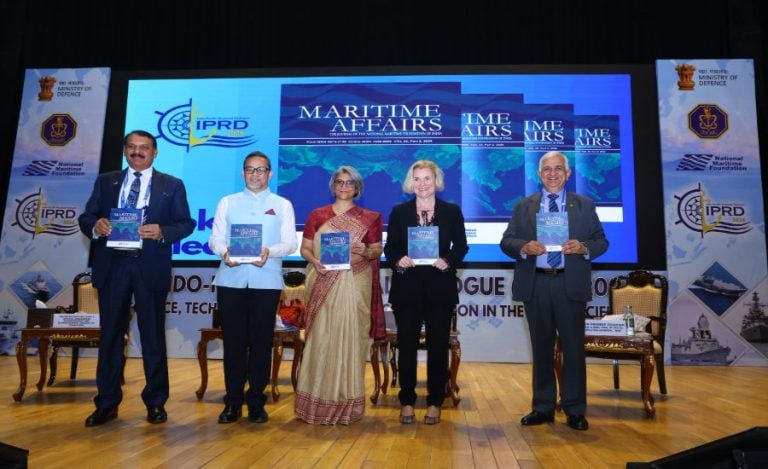
Speaking at the Indo-Pacific Regional Dialogue 2026 in New Delhi on November 3, he highlighted the growing challenges facing international maritime security. He also explained how rising shipping and insurance costs can put additional pressure on India’s economy.
Indo-Pacific Regional Dialogue 2026: Former Navy Chief Highlights Growing Maritime Security Challenges
Admiral Dinesh Kumar Tripathi said the global maritime environment is passing through a period of considerable uncertainty.
Read also: How India Got a New Trade Route Beyond Strait of Hormuz After India-Oman CEPA
He pointed to growing geopolitical competition, armed conflicts and technological changes as major challenges for international shipping and maritime security.
According to him, disruptions in the Red Sea and Strait of Hormuz have shown how problems in a small geographical area can create economic difficulties across different continents.
He also highlighted continuing tensions in the South China Sea, developments in the Black Sea and growing concerns about the safety of important underwater infrastructure.
These developments show why countries need stronger maritime security systems and better international cooperation.
How Maritime Disruptions Affect India’s Economy
India depends heavily on maritime routes for energy supplies, international trade and industrial activities.
A large amount of the country’s imported oil and other essential goods travels through important sea routes. Any disruption can make transportation slower and more expensive.
Admiral Tripathi explained that shipping disruptions increase freight charges and insurance premiums. These additional costs put pressure on national resources.
When shipping companies face higher risks, they may charge more money to transport goods. Businesses importing essential products can then face higher expenses.
Such problems can also affect industries, businesses and consumers through increased transportation and production costs.
The former Navy Chief warned that money which could support economic development may instead be used to manage these unexpected external challenges.
Why The Red Sea And Strait Of Hormuz Are Important
The Red Sea and Strait of Hormuz are two important waterways for international trade and energy transportation.
Both routes connect major economic regions and support the movement of essential goods around the world.
Red Sea
The Red Sea is an important shipping route connecting the Mediterranean Sea with the Indian Ocean through the Suez Canal and Bab el-Mandeb Strait.
It provides a shorter route for ships travelling between Asia and Europe.
Security problems in this region can force shipping companies to choose longer alternative routes. This increases travel time, fuel consumption and transportation expenses.
Strait Of Hormuz
The Strait of Hormuz is one of the world’s most important energy transportation routes.
It connects the Persian Gulf with the Gulf of Oman and the Arabian Sea.
Large quantities of crude oil and other energy products pass through this narrow waterway.
Any security problem in the region can affect energy transportation, increase shipping costs and create uncertainty in international energy markets.
For India, disruptions in this region are particularly important because the country depends on imported energy to support transportation, electricity generation and industrial activities.
South China Sea Tensions Add To Global Shipping Concerns
The South China Sea is another important region for international maritime trade.
It connects major Asian economies with important global shipping networks. Many commercial ships use these waters to transport industrial products, raw materials and other essential goods.
Admiral Tripathi highlighted continuing tensions in the region as another challenge for maritime security. Any serious escalation could create uncertainty for shipping companies and international businesses.
The former Navy Chief also mentioned developments in the Black Sea and security concerns involving critical undersea infrastructure.
Together, these challenges show that maritime security is not limited to protecting ships. It also involves protecting the infrastructure and systems that support international trade.
Indo-Pacific Regional Dialogue 2026: Former Navy Chief Calls For Stronger Indo-Pacific Cooperation
Admiral Tripathi called for stronger international cooperation to improve maritime security and regional stability.
He said countries should identify areas where they can work together while respecting each other’s interests, responsibilities and concerns.
He also highlighted the importance of technological development and academic partnerships across the Indo-Pacific region.
Better research, information sharing and modern technologies can help countries understand security risks and prepare for unexpected situations.
According to him, long-term cooperation can build trust and improve the ability of countries to respond to maritime challenges.
Indo-Pacific Regional Dialogue 2026 Focuses On Science, Technology And Maritime Cooperation
The remarks were delivered during the Indo-Pacific Regional Dialogue 2026, which began in New Delhi on November 3.
The three-day event is organised by the Indian Navy in association with the National Maritime Foundation.
Its main theme is “Science, Technology and Academic Cooperation in the Indo-Pacific”.
The dialogue focuses on how scientific research, technological development and institutional partnerships can improve regional cooperation.
The opening-day discussions also covered maritime awareness, protection of critical maritime infrastructure and information sharing between countries.
These discussions highlight the growing importance of technology in protecting international shipping routes and underwater infrastructure.
FAQs
Former Navy Chief Dinesh Kumar Tripathi warned that instability in important sea routes can create serious economic and human costs. He called for stronger international cooperation, technological development and better maritime preparedness.
Maritime disruptions in these regions can delay international shipping, increase transportation and insurance costs, and affect global energy supplies and trade.
Maritime disruptions can increase India’s energy import costs, shipping expenses and insurance premiums. They can also affect industrial production, international trade and economic growth.