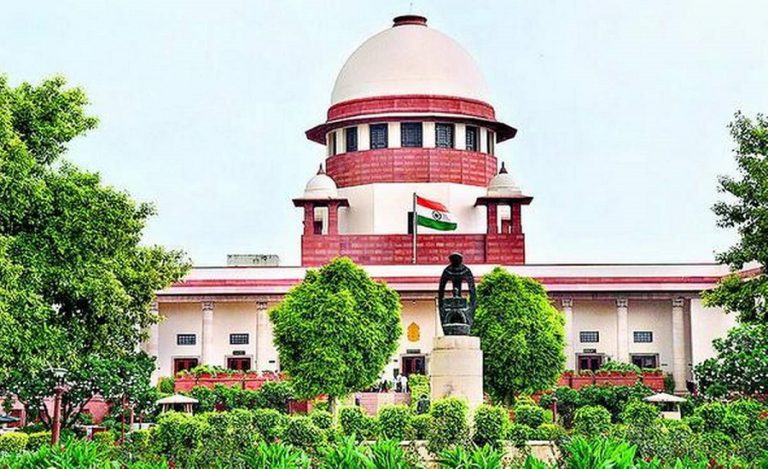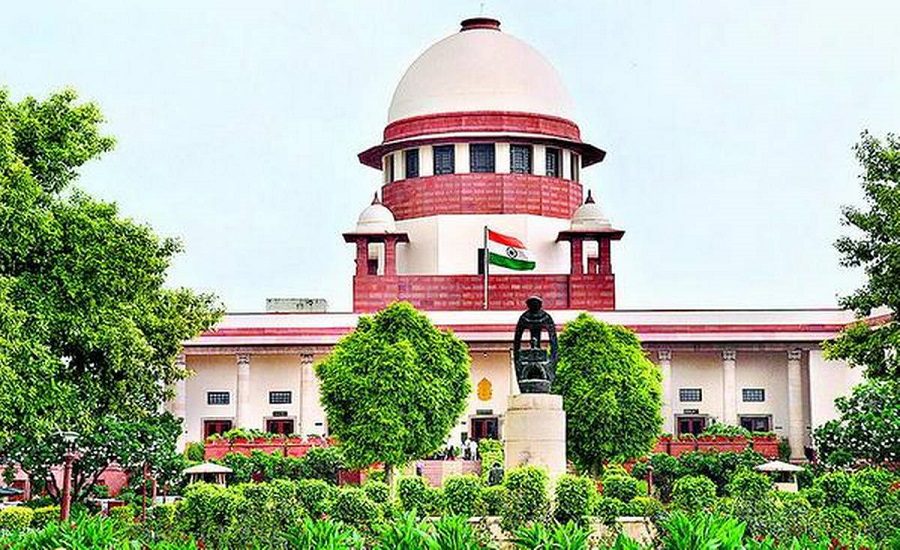
New Delhi: The Supreme Court of India has declared a nearly 27-year-old reference on the power of states to impose additional sales tax or surcharge as infructuous following the introduction of the Goods and Services Tax (GST) in 2017.
A seven-judge Constitution Bench, led by Chief Justice of India Surya Kant, also clarified that the earlier judgment in S. Kodar v. State of Kerala remains good law. The ruling settles an important legal question about the power of state governments to impose additional taxes on sales tax.
Arjun Flour Mills Case: What Did The Supreme Court Decide
On November 4, 2026, a seven-judge Constitution Bench of the Supreme Court held that the long-pending reference in Arjun Flour Mills v. State of Odisha had become academic after the introduction of GST.
Read also: How GST Reforms Are Easing Compliance and Supporting India’s Business Growth
The Court explained that the constitutional provisions and state laws involved in the dispute had been replaced or changed under the new GST tax system.
Therefore, the original question no longer required a decision from the seven-judge bench. However, the Court clarified that the legal position established in S. Kodar v. State of Kerala continues to remain valid.
Why Was The 27-Year-Old Arjun Flour Mills Case Important
The case started with a dispute over the power of state governments to collect additional tax from businesses that already paid sales tax.
The main question was whether a state government could impose an extra tax calculated as a percentage of the existing sales tax.
The legal issue was whether such an additional levy was a tax on the sale of goods or an indirect attempt to impose a tax on the income of businesses.
This question involved the division of taxation powers between the state and central governments under the Indian Constitution.
What Was The Arjun Flour Mills Case About
The reference originated from Arjun Flour Mills v. State of Odisha. The case challenged Section 5A of the Odisha Sales Tax Act, 1947, which introduced an additional tax on dealers based on their annual business turnover. Under the provision:
- Dealers with an annual turnover between Rs 10 lakh and Rs 1 crore had to pay an additional tax of 10%.
- Dealers with an annual turnover above Rs 1 crore had to pay an additional tax of 15%.
The dispute was about whether the Odisha government had constitutional authority to impose this additional tax. The matter was referred to a larger Supreme Court bench in 1999 because earlier Supreme Court judgments appeared to create differences in the interpretation of taxation powers.
Which Earlier Supreme Court Judgments Were Examined
The seven-judge bench examined important earlier decisions to understand the constitutional position.
1. Hoechst Pharmaceuticals Case
In Hoechst Pharmaceuticals Ltd. v. State of Bihar, the Supreme Court upheld a surcharge imposed under the Bihar Finance Act.
The Court treated the surcharge as a form of sales tax falling within the taxation powers of the state government.
2. S. Kodar Case
In S. Kodar v. State of Kerala, a five-judge Supreme Court bench upheld an additional sales tax under the Tamil Nadu Additional Sales Tax Act, 1970.
The Court rejected the argument that the additional tax was actually a tax on the income of businesses. It treated the additional levy as a tax on the sale of goods.
3. India Cement Case
In India Cement Ltd. v. State of Tamil Nadu, a seven-judge Supreme Court bench examined a different type of levy connected with mining royalty. The Court had earlier struck down the relevant cess and surcharge.
However, the legal position in India Cement was later affected by the larger nine-judge bench decision in Mineral Area Development Authority v. Steel Authority of India Ltd. in 2024.
After examining these decisions, the seven-judge bench found no existing conflict that required it to reconsider the legal position established in S. Kodar.
Supreme Court Clarifies States’ Power To Impose Additional Sales Tax
One of the important findings of the Supreme Court was that an additional tax or surcharge calculated as a percentage of the sales tax payable can be treated as an increase in the sales tax rate.
In simple words, if a state government has the constitutional power to impose a particular sales tax, an additional levy calculated on that tax can also remain within the same taxation category.
The Court explained that the nature of the tax is important when deciding whether a state legislature has the constitutional authority to impose it.
The bench also clarified that this legal principle under the earlier constitutional framework continues to hold good.
Why Did GST Make The Reference Academic
The Goods and Services Tax (GST) was introduced in India on July 1, 2017.
Before GST, different state and central tax laws governed several types of indirect taxes, including sales tax and other additional levies.
GST brought many of these indirect taxes under a common taxation framework.
As a result, the constitutional provisions and state laws involved in the original dispute were replaced or changed.
During the Supreme Court hearing, the Union Government also argued that the issue had become largely academic after GST was introduced.
The seven-judge bench agreed that the original constitutional question no longer had prospective significance and declared the reference infructuous. However, this does not mean that every pending dispute involving earlier tax assessments has automatically ended.
Which Issues Did The Supreme Court Leave Open
Although the main reference was declared infructuous, the Supreme Court did not decide every issue connected with the individual cases. The bench specifically left two important questions open:
1. Validity Of The Punjab Sales Tax Surcharge
The Court left open the question of whether Section 30AA of the Punjab General Sales Tax Act, 1948, could require industrial units that were otherwise exempt from sales tax to pay a surcharge.
2. Punjab Social Security Cess
The bench also left open whether the money collected through the cess under the Punjab Social Security Act, 2000, could be directly transferred to the Punjab Social Security Fund.
The legal question was whether the money first had to become part of the State’s Consolidated Fund under Article 266 of the Indian Constitution.
The Court made it clear that it was not expressing any final opinion on these issues. It directed the Registry to place the main case and connected matters before an appropriate regular bench for further proceedings.
Read also: GST Council Approves Track and Trace Mechanism, Reduces Tax Rates on Key Goods and Services
FAQs
The Supreme Court declared the reference infructuous because GST was introduced in 2017, replacing the relevant constitutional framework and state tax laws involved in the dispute. Therefore, the original question no longer had prospective significance.
The Supreme Court’s seven-judge bench declared the long-pending reference in Arjun Flour Mills v. State of Odisha infructuous because GST replaced the earlier taxation framework. It also confirmed that S. Kodar remains good law.
Yes. The Supreme Court clarified that S. Kodar v. State of Kerala remains good law. It held that an additional tax calculated as a percentage of sales tax can be treated as an enhancement of the sales tax rate under the earlier constitutional framework.