For a pregnant woman living in a remote village, reaching a hospital in time can mean the difference between life and death. A sudden complication during pregnancy or childbirth can become fatal if the nearest health facility is far away or the hospital is not prepared to handle the emergency.
In many rural areas, women with serious health complications lose precious time travelling to tertiary healthcare centres. Even after reaching a hospital, the absence of timely information, blood arrangements or trained medical staff can make treatment difficult.
When Dr. Thiyagarajan S.M. was serving as the Collector of Darbhanga in Bihar, he witnessed such maternal deaths, particularly those caused by excessive bleeding, or haemorrhage. He realised that maternal healthcare needed a more systematic approach. Identifying high-risk pregnancies early, ensuring timely referrals and preparing hospitals before patients arrived could save many lives.
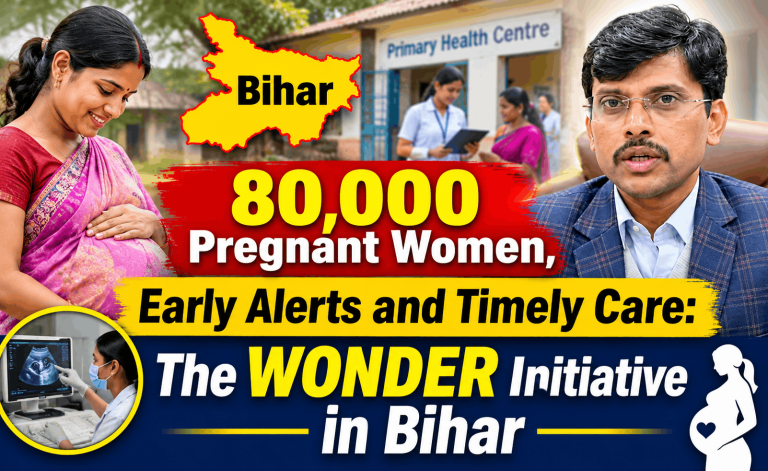
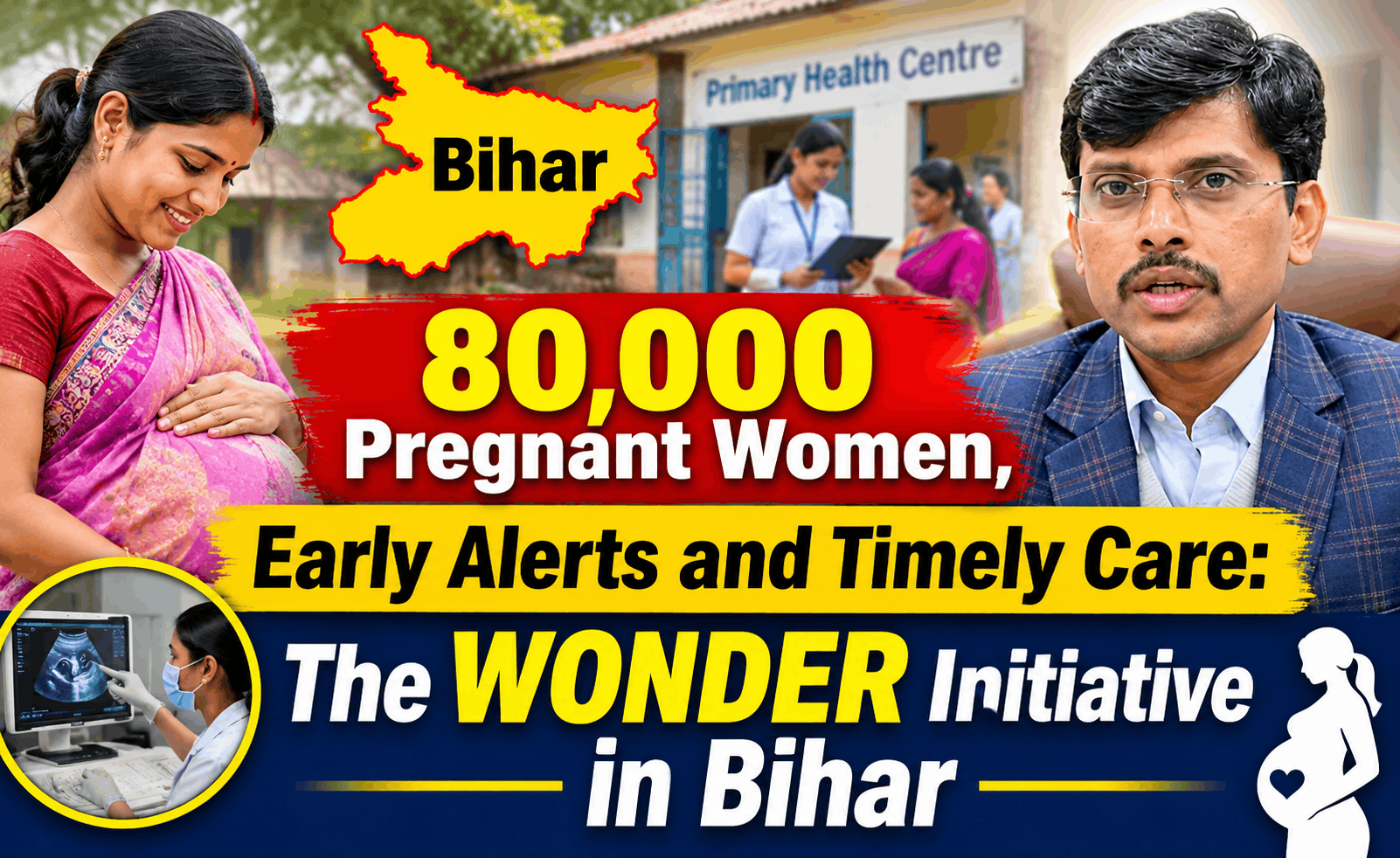
This led to the development of WONDER (Women’s Obstetric and Neonatal Death Evaluation and Reduction), an initiative that used technology, community participation and standard treatment protocols to improve maternal healthcare.
What began as an intervention in Darbhanga was later expanded across Bihar by the state government. The initiative is now being implemented in all districts of the state and has also received appreciation from the World Health Organization (WHO).
An Indian Administrative Service officer of the 2011 batch, Bihar cadre, Dr. Thiyagarajan S.M. is currently serving as Director in the Ministry of Cooperation, New Delhi, under the Central Staffing Scheme. Speaking to Indian Masterminds, he explained how WONDER was designed to identify medical risks early and ensure that hospitals were prepared before an emergency reached their doors.
Also Read – Should UPSC Aspirants Give Up Their Hobbies? IDAS Officer Himanshu Tembhekar Explains
IDENTIFYING HIGH-RISK PREGNANCIES AT THE VILLAGE LEVEL
The first challenge was to identify women who were at risk during pregnancy. In remote areas, many women reached hospitals only after their health had deteriorated. By then, doctors often had very little time to prepare for treatment.
To address this gap, the administration organised camps at the panchayat level. Pregnant women were mobilised through ASHA workers, ANMs, other grassroots health workers and local public representatives.
At these camps, women underwent basic health examinations. Their blood pressure, pulse, haemoglobin levels and other important health indicators were recorded in a dedicated software system.
The software analysed the information and generated alerts whenever abnormal readings were detected. Women with serious health concerns were marked with red alerts, while those with moderate risks received yellow alerts.
This helped health officials identify high-risk pregnancies from the early stages rather than waiting for complications to develop.
Dr. Thiyagarajan explained that the objective was to ensure that women requiring immediate attention received priority treatment. With a large population to serve and limited healthcare resources, identifying medical risks in advance helped the administration focus on those who needed care the most.
The system also helped health workers maintain information about pregnant women and track their medical condition over time. This made it easier to identify changes in their health and arrange timely medical support.
SAVING THE GOLDEN HOUR THROUGH HOSPITAL COORDINATION
The second major component of WONDER focused on coordination between primary and tertiary healthcare centres.
One of the most dangerous complications during childbirth is severe bleeding. A woman with extremely low haemoglobin levels may not survive significant blood loss. In such cases, even a short delay in arranging blood or preparing the required treatment can have serious consequences.
Dr. Thiyagarajan recalled the importance of having medical information available before a patient reached the referral hospital.
For instance, if a pregnant woman with a haemoglobin level of just six grams per decilitre developed bleeding during labour, she could lose her life within a few hours. If the hospital knew about her condition and blood group in advance, it could arrange the required blood and prepare for treatment before she arrived.
Under WONDER, information recorded at the primary healthcare centre was shared with the tertiary healthcare facility before the patient reached there. This allowed doctors and hospital staff to understand the patient’s condition and make necessary preparations in advance.
“Before the pregnant woman reaches the tertiary healthcare centre, all her details are transferred to the hospital. If she is experiencing haemorrhage and we already know her blood group, the required blood can be arranged in advance. This helps save the golden hour and can make the difference between life and death,” Dr. Thiyagarajan told Indian Masterminds.
This coordination reduced delays during emergency referrals. Instead of beginning the process of understanding the patient’s condition after her arrival, the receiving hospital could prepare for treatment beforehand.
STANDARD PROTOCOLS TO HANDLE EMERGENCIES
The third component of WONDER focused on standard operating procedures (SOPs) for pregnancy-related complications.
In rural healthcare facilities, medical emergencies can occur at any time, including during night hours when doctors may not always be available. In such situations, the ability of nurses and other healthcare staff to provide immediate care becomes critical.
To address this, standard treatment protocols were developed for different pregnancy-related complications. These protocols were shared with and explained to ANMs, staff nurses and other frontline health workers.
The aim was to ensure that basic emergency care could begin without waiting for a doctor to arrive, wherever the treatment was within the staff’s training and authorised responsibilities.
Dr. Thiyagarajan recalled an instance involving a pregnant woman who suffered epileptic fits. The hospital staff followed the prescribed protocol and administered magnesium sulphate at the appropriate dose. The timely intervention helped save her life.
Such cases highlighted the importance of equipping frontline health workers with the knowledge and confidence to respond to emergencies.
The protocols also brought greater consistency to treatment. Healthcare workers could follow standard procedures instead of relying entirely on individual judgment during stressful situations.
FROM DARBHANGA TO ALL DISTRICTS OF BIHAR
WONDER was initially developed and implemented in Darbhanga, where the administration sought to address gaps in maternal healthcare through better monitoring and coordination.
The initiative covered approximately 80,000 pregnant women at a given point during its implementation in the district. Since pregnancy and childbirth are continuous processes, the number of beneficiaries changed over time.
The model attracted attention beyond the district. According to Dr. Thiyagarajan, the World Health Organization studied the initiative, and its country head visited Darbhanga to understand how the system was working. The initiative also received appreciation from the Union Ministry of Health.
Recognising its potential, the Bihar government decided to expand the model across the state. It was subsequently taken up for implementation in all districts of Bihar.
The expansion demonstrated how a district-level administrative intervention could become a larger public healthcare initiative when its model and processes were adopted at the state level.
TECHNOLOGY WITH A HUMAN PURPOSE
WONDER demonstrates that technology does not always need to involve complicated or expensive systems to make a meaningful difference. Even a relatively simple digital platform can improve public service delivery when it addresses a clearly identified problem.
The initiative brought together village-level screening, digital risk identification, coordination between hospitals and standard treatment protocols. Each component addressed a different gap in maternal healthcare, but together they created a more organised system of care.
More importantly, it shifted the focus from responding to emergencies after they occurred to identifying risks and preparing for them in advance.
For Dr. Thiyagarajan, the larger lesson is that maternal deaths can be prevented when healthcare systems identify vulnerable women early, share information across facilities and ensure that frontline workers are prepared to act.
WONDER’s journey from Darbhanga to all districts of Bihar reflects the importance of identifying local problems and developing practical administrative solutions. It also shows how district-level innovation can contribute to wider policy changes.
For women in remote villages, the success of such an initiative is ultimately measured in something far more important than software or digital records: the possibility of reaching safe motherhood and returning home with a healthy child.
Also Read – How Dhirendra Kumar Transformed Jharkhand’s Forests, Silk Industry and Rural Economy