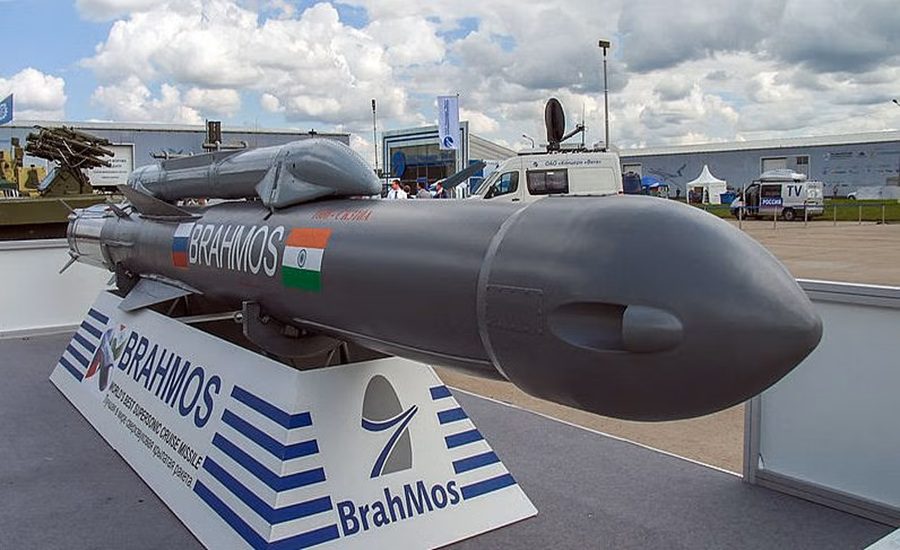
New Delhi: India has significantly accelerated the development of enhanced BrahMos missile variants following the weapon system’s definitive operational success during Operation Sindoor in May 2025, defence officials and strategic analysts say.
The move is expected to substantially boost India’s precision-strike profile, extend strategic deterrence, and strengthen the nation’s high-end missile production base amid ongoing regional tensions in South Asia.
Advanced BrahMos Missile Production: Operational Breakthrough Spurs Strategic Upgrades
The Indo-Russian BrahMos supersonic cruise missile, already one of the fastest and most accurate cruise weapons in the world, was deployed in live combat during Operation Sindoor. This marked a historic milestone — its first battlefield use — and underscored India’s maturing missile capabilities.
In response to this battlefield success, Indian defence planners have green-lit a new generation of BrahMos variants with extended strike ranges of:
- 450 km
- 600 km
- 800 km
These variants are designed to expand India’s ability to precisely engage targets at strategic depth, including potential targets deep inside neighbouring territories — a capability that analysts say changes operational calculus across the region.
Technology Evolution of BrahMos Missile
Historically, BrahMos variants were limited to approximately 290–300 km range due to Missile Technology Control Regime (MTCR) restrictions. After India’s accession to the MTCR in 2016, that cap was lifted, unlocking the pathway for extended-range developments.
Recent testing achievements include a successful 800 km range flight, achieved by lengthening the missile airframe to accommodate larger fuel stores while ensuring compatibility with existing launch platforms.
The extended-range models — often termed BrahMos-LR (Long Range) — will dramatically increase the geographical reach of India’s standoff strike capabilities beyond the standard theater of operations.
Lighter, Air-Launched BrahMos Variants
A critical component of the development push is the air-launched BrahMos-A variant, which has been lightened to approximately 2.5 tonnes from the standard 3-tonne weight class.
This makes integration with frontline fighters like the Sukhoi Su-30MKI more feasible, reducing airframe strain and broadening tactical options.
The project design board has approved ongoing work on these lighter variants, with ground evaluations and extended-range trials scheduled ahead of anticipated flight testing by late 2027.
Operation Sindoor: The Catalyst
Operation Sindoor — initiated in May 2025 — served as both a strategic and technological proving ground. BrahMos missiles were launched in retaliation for a cross-border terrorist incident, hitting multiple high-value targets in contested regions with precision.
The success of that strike campaign was widely acknowledged by defence leadership and foreign military observers as elevating India’s credibility in precision strike operations.
The operation also integrated BrahMos alongside other advanced systems such as SCALP long-range missiles and loitering munitions, underscoring modern multi-domain warfare synergies.
Way Forward
Officials indicate that full development of the advanced BrahMos family is targeted for completion within three years, with initial test flights possible by late 2027. Parallel work on BrahMos-NG, a next-generation lightweight missile, is expected to reach flight trials in 2026 and production ramp-up by 2027-28.
These developments reflect broader efforts to strengthen India’s indigenous defence industrial base under the Aatmanirbhar Bharat (self-reliant defence) initiative, further positioning the nation as a leading high-tech military technology supplier in the Indo-Pacific region.
Read also: From Lab to Battlefield: India Fast-Tracks 800 km BrahMos Missile for 2027 Deployment!