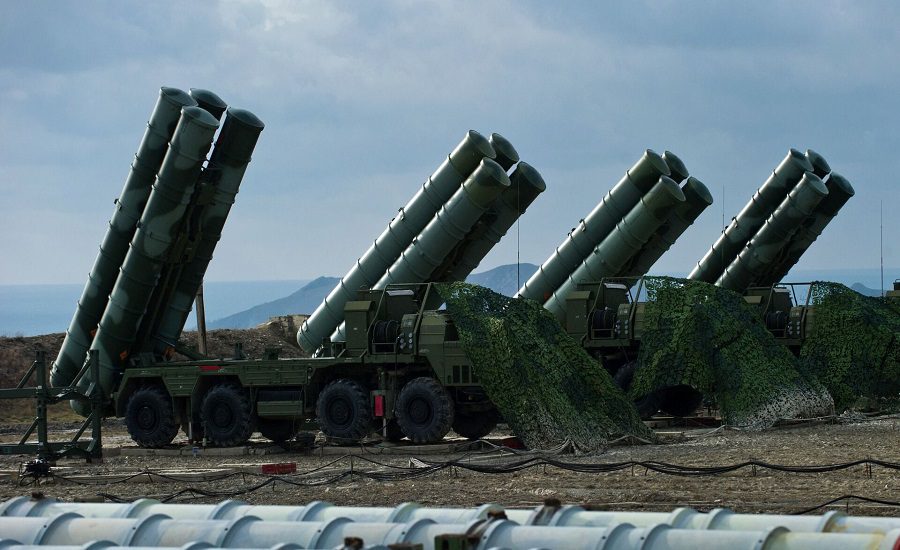
New Delhi: India’s strategic air defence preparedness received a major boost as Russia reaffirmed its commitment to completing delivery of the five-system S-400 Triumf air defence deal by mid and late 2026, Defence Secretary RK Singh confirmed.
The completion of this USD 5.43 billion contract — signed in 2018 — will significantly enhance India’s layered long-range air defence capability, reinforcing deterrence against regional aerial threats.
Details of S-400 Delivery Schedule
India and Russia have finalised exact delivery timelines for the remaining two S-400 squadrons after earlier delays impacted by global supply disruptions linked to the Russia-Ukraine conflict.
Read also: What Is Krasukha-2 EW System? and How It Can Protect S-400 Air Defence Without Firing a Shot
India’s Defence Secretary RK Singh announced that:
- The fourth squadron is expected in June 2026.
- The fifth and final squadron will arrive by November 2026.
These confirmations mark Moscow’s renewed assurance to fulfil its obligations under the 2018 contract — a key pillar in India-Russia defence cooperation.
Importance of S-400 Delivery Schedule Clarification
The Russian S-400 Triumf is globally recognised as one of the most advanced long-range surface-to-air missile systems in operation. It can detect, track and engage multiple aerial threats — including enemy aircraft, drones, cruise missiles and ballistic missiles — at ranges extending up to 400 km.
Once all five systems are deployed, India will:
- Strengthen its air defence shield against simultaneous multi-axis incursions.
- Achieve more comprehensive coverage of strategic airspace along its land borders.
- Better integrate these systems with existing platforms such as the Akash and MRSAM (Medium Range Surface-to-Air Missile).
This layered architecture ensures that threats are engaged early and from afar, significantly improving India’s deterrence posture.
Implications of S-400 Delivery Schedule Clarification
For India, the complete induction of all S-400 squadrons not only strengthens defence capability but also sends a strong message about diplomatic resilience. Despite longstanding challenges — including potential penalties under the U.S. CAATSA (Countering America’s Adversaries Through Sanctions Act) — India has pursued this contract while maintaining diversified global defence ties.
Officials highlight that successful completion of deliveries will:
- Boost strategic autonomy in military procurement.
- Provide operational readiness amid ongoing regional tensions, especially along northern and western borders.
- Expand opportunities for collaborative Maintenance, Repair, and Overhaul (MRO) facilities with Russian manufacturers, potentially anchored in India by 2028.
What Comes After S-400
While the current focus remains on completing the existing contract, India is also exploring next-generation defence technologies:
- Project Kusha, an Indian indigenous long-range air defence system, is under development to eventually supplement or complement foreign systems. It aims to detect and intercept targets at ranges up to 350 km.
- India is also evaluating potential air defence solutions beyond the S-400 to ensure long-term self-reliance in aerial shielding technology.
Read also: Russia Confirms Fourth S-400 Delivery to India by May 2026, Final Squadron Planned for 2027