https://indianmasterminds.com

ADVERTISEMENT
ADVERTISEMENT

Samudrayaan Mission Explained: How This 500-Metre Dive Strengthens India’s Deep-Ocean Capabilities

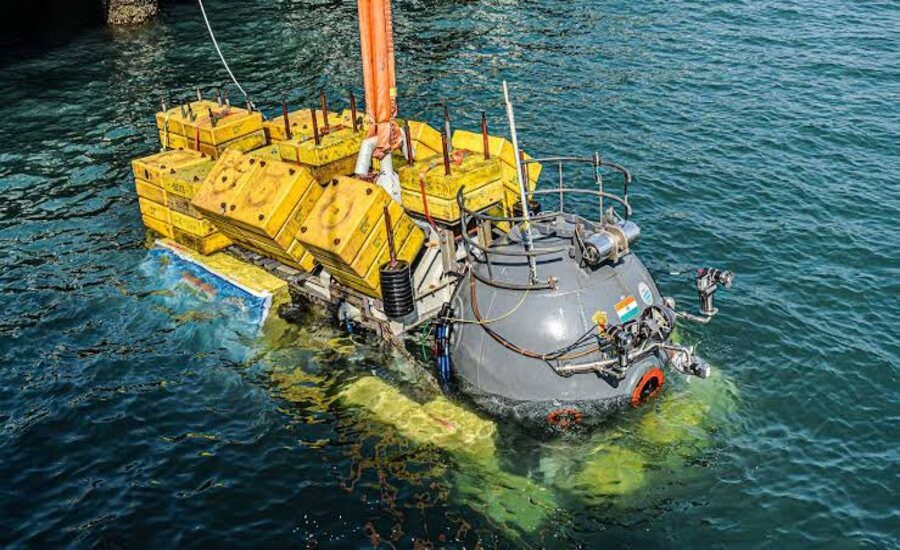
India’s Samudrayaan mission is gearing up for a 500-metre test dive of the Matsya-6000 submersible in May 2026.
Samudrayaan mission
Indian Masterminds Stories

New Delhi: India’s Samudrayaan mission is fast gaining momentum as the nation prepares for the Matsya-6000 submersible’s maiden 500-metre dive in May 2026, a major milestone toward deep-sea exploration goals.

This first full-depth test marks a significant step in India’s effort to become a leader in crewed underwater missions and reinforces its presence in global ocean science and resource exploration.

What Is the Samudrayaan Mission?

Samudrayaan is India’s ambitious deep-sea exploration program under the Ministry of Earth Sciences and is part of the wider Deep Ocean Mission (DOM). Designed to explore the deep ocean floor and ocean resources, it aims to gather scientific data, study marine biodiversity, and potentially discover valuable minerals such as polymetallic nodules.

Read also: Black Shark Torpedo Deal: How India’s ₹1,896 Crore Agreement With Italy Will Transform Indian Navy’s Underwater Combat Power

The centerpiece of the mission is the Matsya-6000, an indigenously engineered submersible capable of carrying three aquanauts and operating at depths up to 6,000 metres — the sort of capability only a few nations currently possess.

Fast-Tracking the 500-Metre Maiden Dive

Officials at the National Institute of Ocean Technology (NIOT) in Chennai are actively integrating and testing the Matsya-6000 for its first dive to 500 metres in May 2026.

This shallow-to-mid-depth dive is critical: it allows engineers to assess systems like pressure hull strength, life support units, navigation sensors, buoyancy control and communication systems under real ocean conditions.

Instead of conducting multiple shallow trials first, NIOT plans to move directly to this 500-metre testing phase, reflecting confidence in the vehicle’s indigenous engineering.

Why the 500-Metre Dive Matters

The May 2026 dive is not the final goal — that remains the full target of a 6,000-metre crewed voyage. However, this intermediate test will:

  • Validate safety and operational systems before deeper missions.
  • Build confidence for future deep-sea crewed missions, the first of their kind in India.
  • Position India alongside nations such as the United States, Russia, China, France, and Japan, which have achieved similar underwater exploration milestones.

Science, Strategy, and Global Context

Deep-sea missions like Samudrayaan serve multiple purposes:

Scientific Discovery

Exploration at several hundred to thousands of metres can help scientists understand marine ecosystems, geology, deep-sea life, and ocean circulation, enriching knowledge that could aid climate science and oceanography.

Resource Potential

The Indian Ocean’s seabed is believed to contain polymetallic nodules, rich in metals like manganese, nickel, cobalt, and copper — resources critical for electronics, batteries and clean technologies.

Russia, China, the United States, Japan, and France currently lead in crewed ocean exploration. India is gradually catching up and could join this elite group upon the success of Samudrayaan’s deep-sea milestones.

Preparing for the Full 6,000-Metre Objective

The 500-metre test dive is a precursor to the ultimate objective of a 6,000-metre crewed descent by late 2026 or 2027. Once complete, that mission will push India into a very select global club of countries with deep-sea crewed submersible capability.

Officials believe the lessons learned in May will guide enhancements to support life support systems, structural integrity and emergency protocols for deeper operations.

Beyond Exploration — The Future of Indian Marine Technology

The Samudrayaan project also aligns with India’s Blue Economy initiative, which seeks sustainable economic growth from ocean resources. Investment in deep-sea technology, marine research, and human skills development could lead to breakthroughs in science, climate understanding, industry and even ocean-based tourism.
Read also: India Becomes 6th Nation Ever: Matsya-6000 Submersible Ready for Epic 6000m Ocean Dive, A Boost to Samudrayaan Mission


Indian Masterminds Stories
ADVERTISEMENT
ADVERTISEMENT
Related Stories
ADVERTISEMENT
ADVERTISEMENT
NEWS
Farmers Welfare Initiatives
West Bengal Unveils Four Climate-Resilient Rice Varieties to Boost Yields in Drought and Flood-Prone Areas
WEF 2026
Jharkhand Showcases Vision for Critical Minerals and Sustainable Growth at WEF 2026
jhar
Jharkhand CM Hemant Soren Meets UK Minister to Strengthen Education, Skills, and Inclusive Growth Ties
Healthcare Hub
Gujarat Government to Deregulate NA Certificate Requirement for Projects Under TP Schemes
Private Satellite Plant
Gujarat Lays Foundation for India’s First Private Satellite Plant in Sanand to Boost Space Manufacturing
Deputy CM Arun Sao
Chhattisgarh Sees Major Progress: Deputy CM Arun Sao Highlights Roads, Housing, and Urban Development
Chief Secretary Anand Vardhan
Uttarakhand Chief Secretary Anand Vardhan Cracks Down on Slow Development Projects, Warns of Strict Action
Bihar Road
Uttarakhand Gets Major Boost Under PMGSY-4 as Centre Approves Over 10,000 Km Rural Road Projects
ADVERTISEMENT
ADVERTISEMENT
Videos
Desh Deepak Verma
The Dhaba Deal That Helped Flip The Ledger of UPSRTC 
Col M Shashidhar
 Lessons From Operation Sindoor & Operation Absolute Resolve 
Dr
Why an MBBS Doctor Chose IAS and Cleared UPSC in Her First Attempt | Dr. Akshita Gupta Video Interview
ADVERTISEMENT
UPSC Stories
IAS Avdhija Gupta UPSC
She Cried, She Learned, She Returned: The Unbreakable UPSC Journey of IAS Avdhija Gupta
From three consecutive Prelims failures to securing AIR 43, IAS Avdhija Gupta’s UPSC CSE-2024 journey...
UPSC Logo Explained
Why the UPSC Centenary Logo Matters: A Visual Guide to 100 Years of Civil Services
The UPSC centenary logo marks 100 years of India’s civil services. Decode its symbols and trace the journey...
Bhilai Steel Plant Diploma Engineer to CGPSC 2024 Deputy Collector – Yashwant Dewangan
Lost Father at 17, Worked Full-Time: Bhilai Steel Plant Diploma Engineer to CGPSC 2024 Deputy Collector – Yashwant Dewangan
Yashwant Kumar Dewangan, a BSP diploma engineer from Korba, overcame personal and professional challenges...
Social Media
One-Horned Rhino Calf
Watch: First One-Horned Rhino Calf of 2026 Takes Birth at Jaldapara National Park, IFS Officer Shares Rare Footage
A newborn one-horned rhinoceros calf was spotted at Jaldapara National Park on January 1, 2026. IFS officer...
venomous banded krait
Rare Night Encounter: IFS Officer Spots Highly Venomous Banded Krait During Forest Patrol, Internet Amazed
An IFS officer’s night patrol video of a highly venomous banded krait has gone viral, highlighting India’s...
elephant rescue Karnataka
Heroic Karnataka Elephant Rescue: How a 28-Hour “Impossible Mission” Became a Triumph of Wildlife Care, IFS Parveen Kaswan Shares Video
A trapped elephant was rescued after 28 hours in Karnataka through a massive, expertly coordinated Forest...
ADVERTISEMENT
ADVERTISEMENT
ADVERTISEMENT
Latest
Farmers Welfare Initiatives
West Bengal Unveils Four Climate-Resilient Rice Varieties to Boost Yields in Drought and Flood-Prone Areas
WEF 2026
Jharkhand Showcases Vision for Critical Minerals and Sustainable Growth at WEF 2026
ADVERTISEMENT
ADVERTISEMENT
ADVERTISEMENT
ADVERTISEMENT
ADVERTISEMENT
ADVERTISEMENT
ADVERTISEMENT
Videos
Desh Deepak Verma
Col M Shashidhar
Dr
ADVERTISEMENT
ADVERTISEMENT