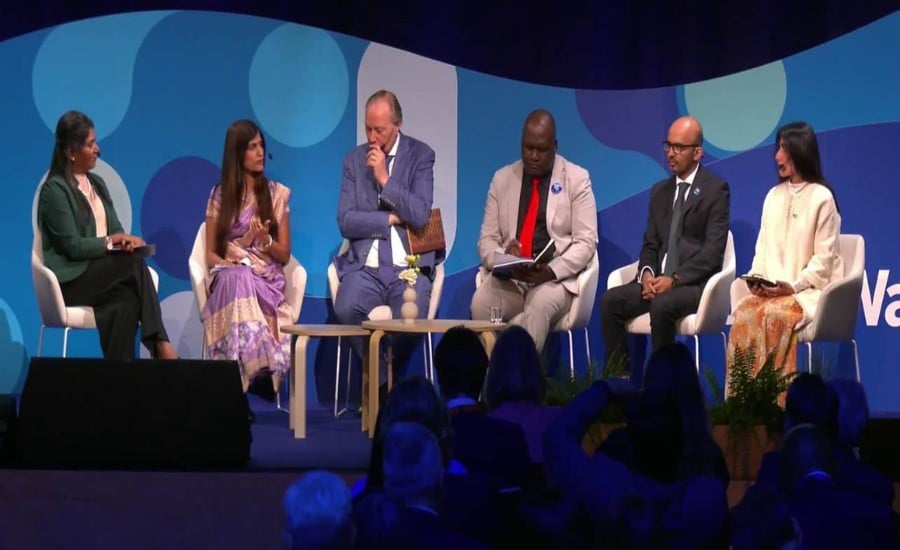
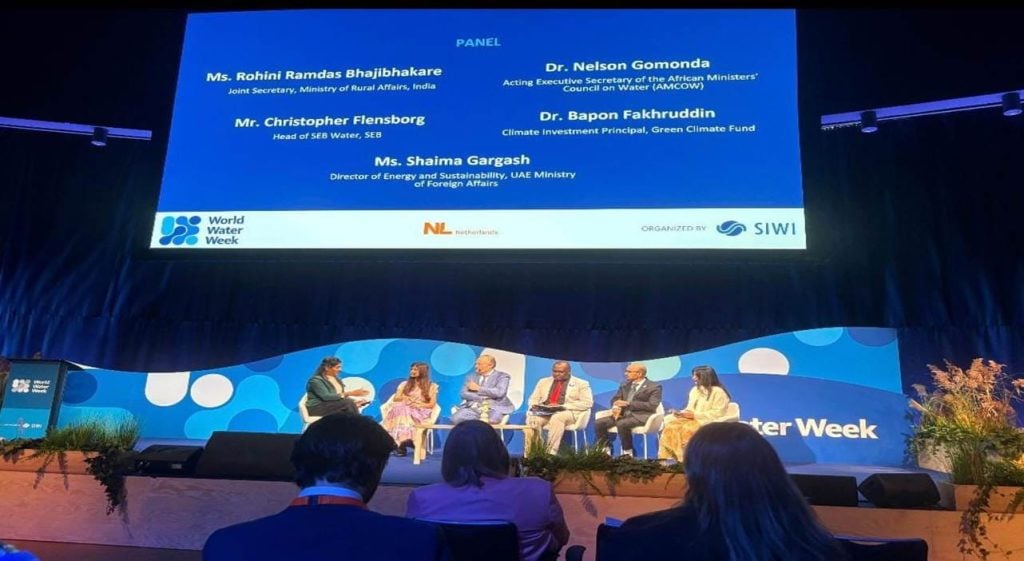
Stockholm: The Ministry of Rural Development participated in World Water Week 2026 in Stockholm, Sweden, highlighting India’s approach to water security through community participation, technology-enabled planning and sustainable management of natural resources.
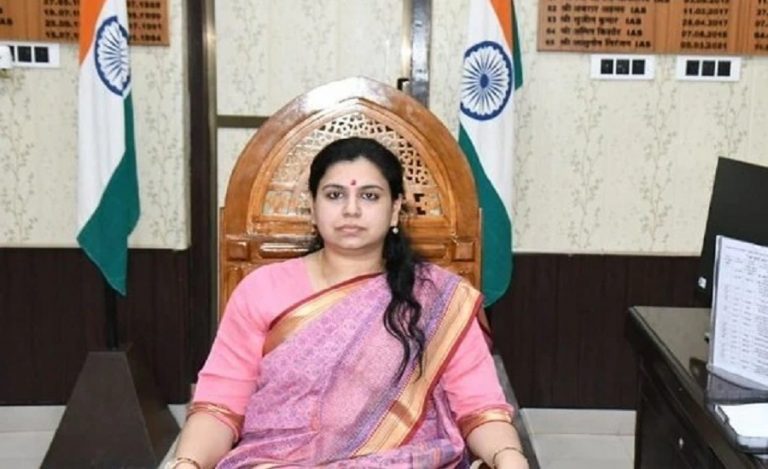
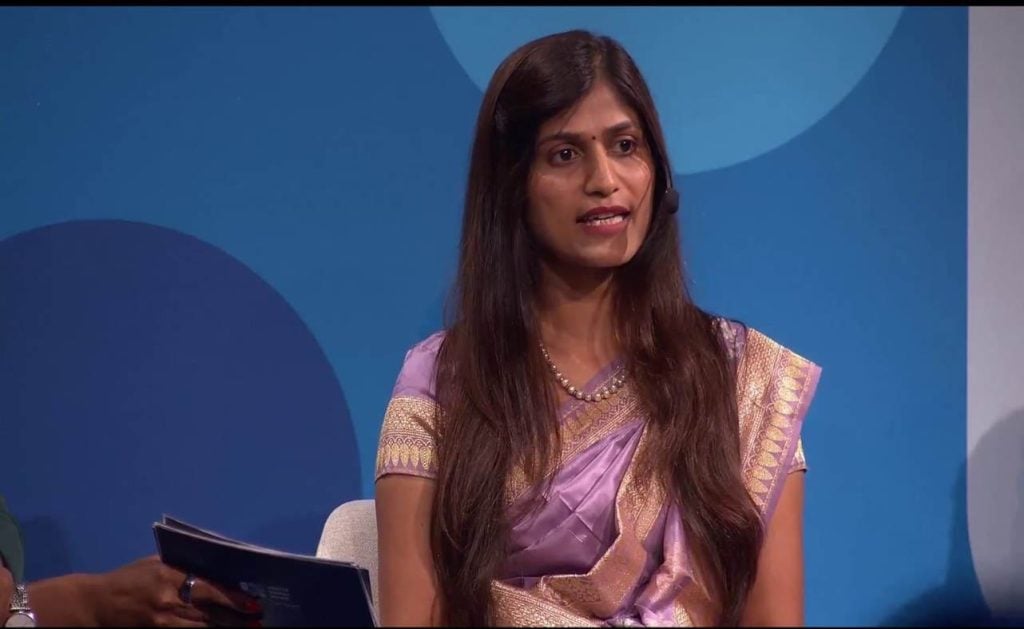
Representing the ministry, Joint Secretary Rohini R. Bhajibhakre, a 2008-batch IAS officer of the Tamil Nadu cadre, participated in discussions on translating national water-security goals into action at the grassroots level.
India Highlights Water Security Approach
At the session “National Initiative on Water Security: Translating National Water Visions to Reality: What Works?”, Bhajibhakre presented India’s experience with institutional and operational measures aimed at strengthening water security in rural areas.
The session was convened by GIZ and the International Water Management Institute (IWMI).
The ministry highlighted Water Vision @2047, aligned with the broader Viksit Bharat @2047 framework, as an approach focused on:
- Integrated water-security planning
- Technology-enabled decision-making
- Community participation
- Water conservation and harvesting
- Groundwater recharge
- Climate-resilient rural development
Jal Jeevan Mission and NIWS Among Key Initiatives
The ministry highlighted the Jal Jeevan Mission and the National Initiative on Water Security (NIWS) as key components of India’s water-security framework.
While Jal Jeevan Mission focuses on access to safe drinking water in rural areas, NIWS supports investments in water conservation, groundwater recharge, water harvesting and related water-security assets.
A key feature of NIWS is the prioritisation of water-related expenditure based on groundwater conditions at the block level, providing a framework for directing investments towards water-stressed areas.
Rural Employment Framework Linked With Water Security
The ministry also highlighted the Viksit Bharat-Guarantee for Rozgar and Ajeevika Mission (Gramin): VB-G RAM G Act, 2025, which includes water security among the focus areas of rural development interventions.
The framework promotes convergence between employment generation, livelihoods, natural-resource management and the creation of durable community assets through participatory planning.
Digital Tools Support Water Planning
India also showcased its use of digital and geospatial technologies for planning and monitoring rural water interventions.
Key technology platforms highlighted at the forum included:
- Yuktdhara: Uses GIS and remote sensing for geospatial planning of rural development and natural-resource management works.
- E-Jal: Supports water budgeting at the Gram Panchayat level using information on water resources, rainfall, groundwater and population.
- E-Saksham: Supports capacity building and knowledge dissemination.
- VBGRAMG Soft, SECURE and BhuGRAM: Enable implementation tracking, financial management, monitoring and transparency across rural development programmes.
Focus on Gram Panchayats and Local Communities
The Ministry of Rural Development also emphasised the role of Gram Panchayats, Village Water and Sanitation Committees and local communities in planning, implementing, operating and maintaining water-related infrastructure.
The ministry highlighted community participation, social accountability and digital monitoring as components of its approach to water investments.
India Joins Discussion on Financing Water Resilience
On August 25, Bhajibhakre also participated in the high-level panel “Financing Water Resilience and Prosperity: Translating Commitments into Implementation and Sustainable Impact ahead of the UN 2026 Water Conference.”
The discussion brought together ministers, multilateral development banks, climate-finance institutions and development partners to examine ways to strengthen investment in water resilience and advance the Sustainable Development Goal related to water.
India highlighted the importance of:
- Strong political commitment
- Cooperative federalism
- Digital public infrastructure
- Community-centred planning
- Converting water investments into sustainable outcomes
About World Water Week
Organised annually by the Stockholm International Water Institute (SIWI), World Water Week brings together governments, development partners, researchers and practitioners to discuss global water challenges and share solutions.
India’s participation in the 2026 forum focused on its experience with local water planning, digital governance, community-led action and integration of water security with rural development.