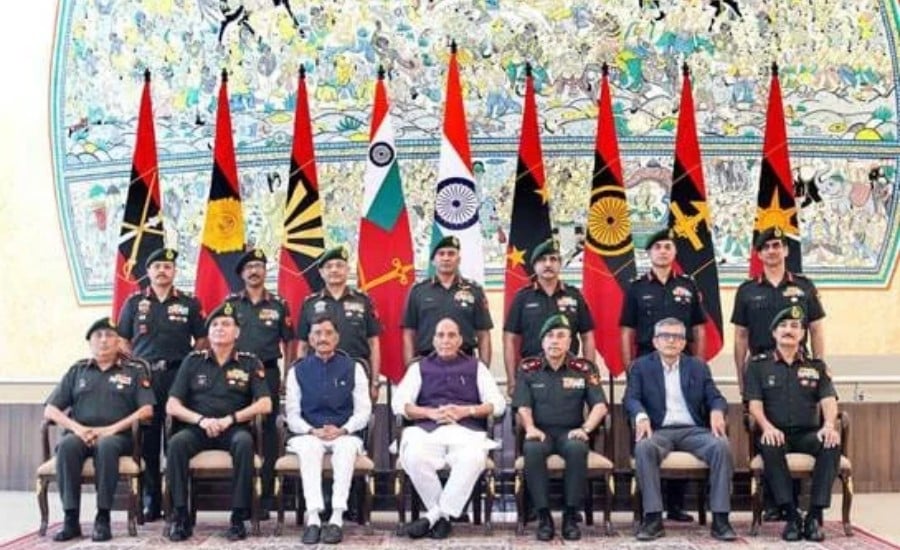
New Delhi: Defence Minister Rajnath Singh has called on the Indian Army’s senior leadership to develop a long-term strategic vision for the next 20–30 years while maintaining readiness to respond to immediate and emerging security challenges.
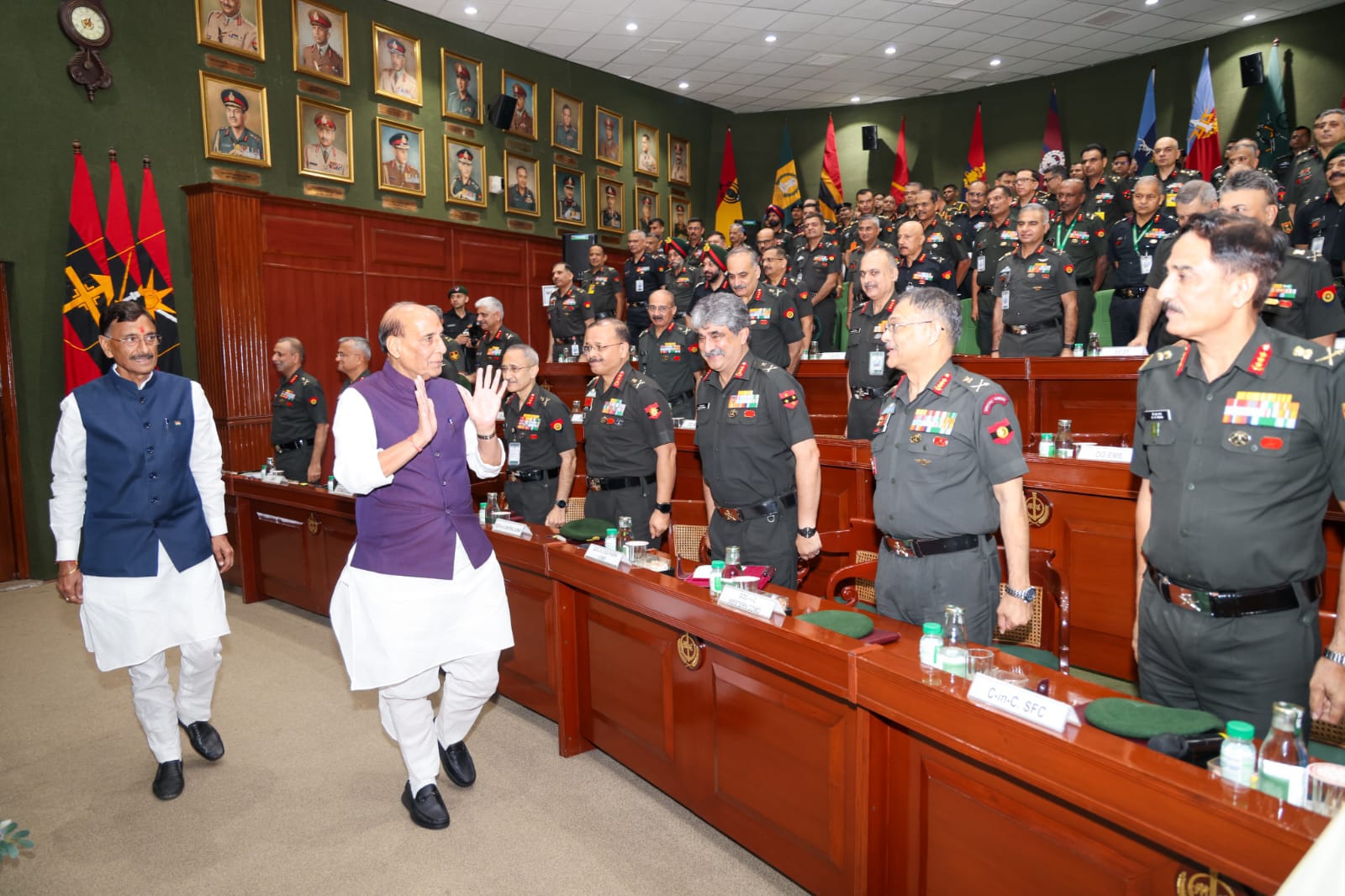
Addressing the Army Commanders’ Conference in New Delhi on October 23, 2026, Singh emphasised the need for flexible military strategies that can adapt to changing geopolitical conditions and the evolving nature of warfare.
He also released the Land Warfare Doctrine, which provides an overarching framework to prepare the Indian Army for future conflicts and emerging operational challenges.
The conference brought together senior military leadership to review ongoing initiatives, identify future priorities and formulate policy directions for building a technologically enabled and future-ready Army.
Land Warfare Doctrine Outlines Framework for Future Conflicts
The newly released Land Warfare Doctrine is intended to guide the Indian Army’s preparation for the changing character of warfare.
Read Also: COAS Flight Safety Trophy 2026: 665 And 209 Army Aviation Squadrons Win Awards
Singh stressed that land forces would remain indispensable even as the importance of air, maritime, space and cyber capabilities continues to grow.
He called for an integrated approach to modern warfare, highlighting the importance of multi-domain capabilities and seamless coordination during joint operations.
The emphasis on integration reflects the need to coordinate capabilities across different operational domains rather than rely on land forces working in isolation.
Operation Sindoor Highlighted for Innovation and Coordination
Referring to Operation Sindoor, Singh commended the Defence Forces for adapting to evolving operational circumstances.
He attributed the operation’s success to a combination of innovative thinking, improved synergy, effective coordination and advanced weaponry.
According to the Defence Minister, the operation conveyed India’s willingness to take necessary measures to safeguard its national interests.
He also highlighted the Indian Army’s restructuring efforts, particularly those involving drones and modern technologies, and called for continuous assessment of military capabilities to identify areas requiring improvement.
AI, Autonomous Systems and Cybersecurity Among Modernisation Priorities
Singh called for faster progress in emerging technologies that could strengthen the Army’s operational capabilities.
The areas he identified for greater attention included:
- Artificial intelligence: Advancing the application of AI in military capabilities.
- Autonomous systems: Strengthening the development and use of autonomous technologies.
- Data analytics: Improving the use of data to support military operations and decision-making.
- Cybersecurity: Enhancing protection against cyber threats.
- Secure communications: Strengthening secure communication networks.
- Drone technology: Continuing the development and integration of drone-based capabilities.
He also urged commanders to evaluate performance regularly and introduce improvements in response to changing operational requirements.
Defence Production Reaches ₹1.78 Lakh Crore in FY 2025–26
The Defence Minister highlighted India’s progress in defence manufacturing and exports, linking the growth to efforts by multiple stakeholders to strengthen domestic capabilities.
According to Singh, defence production reached a record ₹1.78 lakh crore in the financial year 2025–26, while defence exports rose to an all-time high of approximately ₹38,000 crore.
He said the government led by Prime Minister Narendra Modi was prioritising Aatmanirbharta in defence amid changes in the global security environment.
The emphasis on self-reliance formed part of Singh’s broader message on military modernisation, alongside technological advancement, reforms and improved operational preparedness.
Army Commanders Asked to Translate Reforms into Operational Gains
Referring to the Year of Reforms – 2025, Singh said reform was an ongoing process and that its success depended on effective implementation.
He urged commanders to advance reforms within their respective commands and organisational levels, ensuring that the changes produced tangible improvements in operational capabilities.
He also highlighted several areas requiring continued attention:
- Greater self-reliance in defence.
- Effective implementation of military reforms.
- Improved manpower management.
- Greater participation of women in the armed forces.
- An integrated approach to national security.
Singh credited the Defence Forces’ valour, discipline, preparedness and restraint, along with Prime Minister Narendra Modi’s leadership and diplomatic efforts, for strengthening India’s global standing.
Army Personnel Felicitated for UN Peacekeeping Service
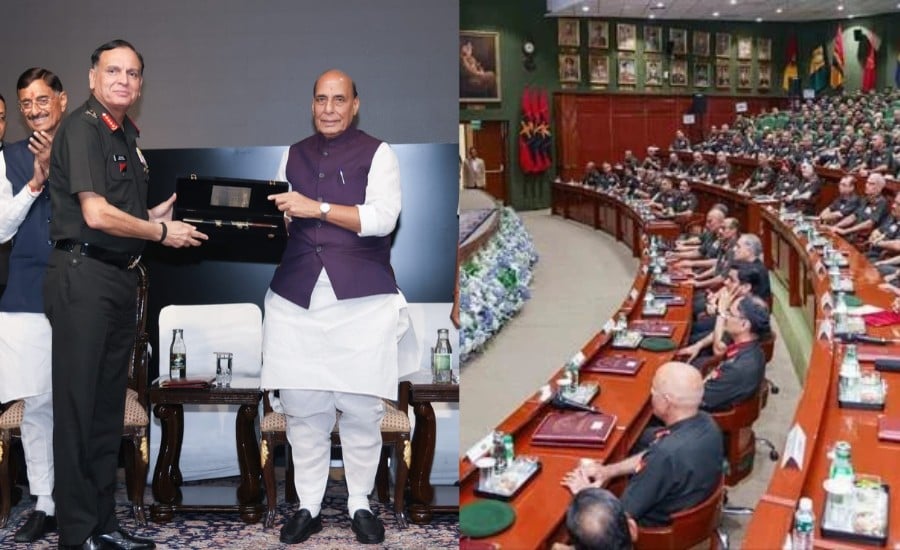
During the conference, Singh also unveiled the annual United Nations Journal and felicitated Indian Army personnel who had made notable contributions while serving as United Nations peacekeepers.
The personnel were recognised for their service, professionalism and contributions to international peace and security.
The event was attended by Minister of State for Defence Sanjay Seth, Chief of Defence Staff General NS Raja Subramani, Chief of the Army Staff General Dhiraj Seth, Defence Secretary Rajesh Kumar Singh and other senior officials.
The Army Commanders’ Conference serves as a forum for the service’s senior leadership to assess ongoing initiatives, identify future priorities and establish policy directions for a more adaptable, technologically enabled and future-ready Indian Army.