Jharkhand is preparing to showcase its potential as a leader in critical minerals at the World Economic Forum (WEF) Annual Meeting 2026 in Davos, Switzerland. The state government announced on Thursday that it aims to establish Jharkhand as a vital player in the global clean-energy economy, leveraging its abundant mineral reserves and commitment to sustainable, forward-looking development.
CM Hemant Soren to Represent Jharkhand at WEF
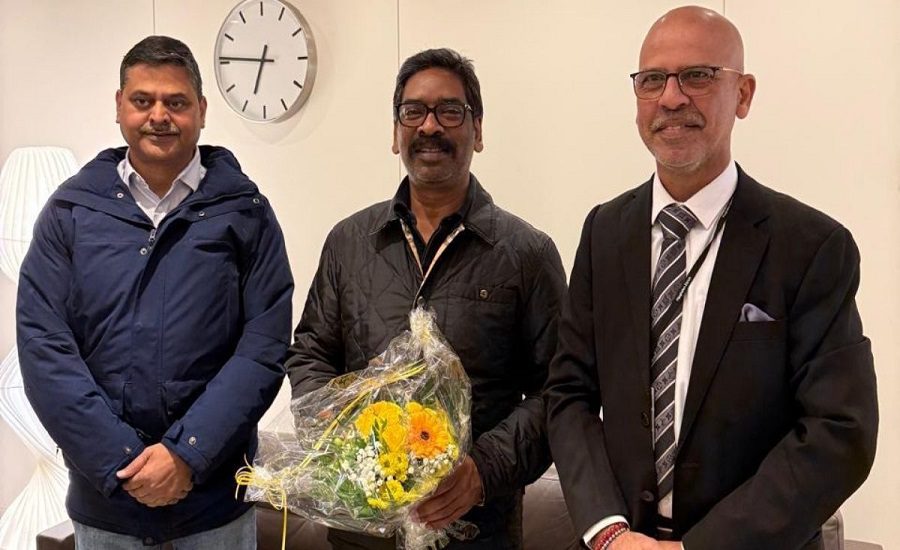
In a historic first, Jharkhand Chief Minister Hemant Soren will attend the prestigious WEF annual meeting this month. During the event, the Chief Minister is expected to highlight Jharkhand’s strategic role in supplying critical minerals essential for clean energy technologies, electric mobility, and advanced industrial applications.
Following his participation in Davos, CM Soren will also visit the United Kingdom to strengthen international partnerships and attract global investments in Jharkhand’s mineral and technology sectors. Officials said the dual international engagements reflect the state’s commitment to building a globally integrated approach to sustainable resource management and industrial development.
Jharkhand’s Rich Mineral Reserves
Jharkhand is endowed with vast deposits of iron ore, copper, coal, and rare earth minerals, which are critical for industries driving the clean-energy transition. The state government plans to present a roadmap at WEF 2026 that moves beyond raw extraction toward value-added processing, technology-driven manufacturing, and export-oriented mineral products.
This strategic focus aligns with India’s broader objectives of achieving energy security, advancing electric vehicle adoption, and supporting renewable energy infrastructure. By emphasizing both sustainability and economic growth, Jharkhand hopes to attract global investors and technology partners to its mineral and industrial ecosystems.
Positioning as a Global Clean-Energy Hub
The state aims to position itself not merely as a mineral supplier but as a key contributor to the global clean-energy economy. This includes the development of industries related to battery materials, rare earth elements, and high-tech metals, all essential for electric vehicles, solar panels, wind turbines, and other renewable energy technologies.
Officials said the WEF platform provides a unique opportunity for Jharkhand to engage with international investors, business leaders, and policymakers, enabling the state to showcase its investment potential, sustainable mining practices, and industrial readiness.
Strategic Shift from Extraction to Advanced Manufacturing
Historically known for raw mineral extraction, Jharkhand is now making a concerted effort to transition toward processing, manufacturing, and technological innovation. The government’s vision is to create an integrated ecosystem where raw minerals are converted into high-value products within the state, generating employment, economic growth, and skill development opportunities for local communities.
By attending global forums such as WEF 2026 and engaging with international partners, Jharkhand seeks to attract investment in mineral processing plants, renewable energy projects, and high-tech manufacturing units, contributing to both national and global clean-energy goals.
Outlook for Global Partnerships
Jharkhand’s participation in WEF 2026 signals the state’s proactive approach to international cooperation, particularly in the areas of sustainable mining, clean energy, and industrial technology. CM Hemant Soren’s engagements in Davos and the UK are expected to open new avenues for joint ventures, foreign direct investment, and knowledge exchange, further integrating Jharkhand into the global economic and industrial landscape.
Read also: Jharkhand CM Hemant Soren Launches Grassroots Innovation Internship, Boosts Education Initiatives