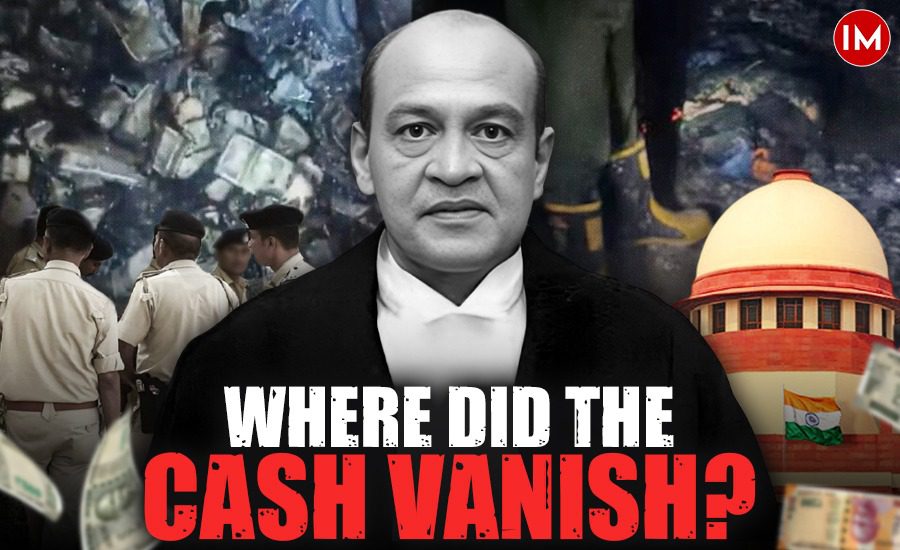
New Delhi: The Justice Yashwant Varma probe panel report has found all three allegations against the former Allahabad High Court judge proved. The parliamentary inquiry committee concluded that a large quantity of unexplained cash was found at his official residence, evidence was not properly preserved after a fire incident, and his explanations during the inquiry were inadequate. The findings were presented in Parliament on August 12, 2026, and have renewed debate over judicial accountability and transparency in India.
What Is the Justice Yashwant Varma Cash Case
The case began after a fire broke out at Justice Yashwant Varma’s official residence in Delhi on August 14, 2025. During firefighting operations, officials reportedly discovered sacks containing burnt and partially burnt currency notes inside a storeroom. The discovery triggered a high-level inquiry that later became the basis for parliamentary proceedings seeking Justice Varma’s removal.
Justice Yashwant Varma Cash Case: Inquiry Committee Finds All Three Charges Proved
The Joint Inquiry Committee submitted its report to both Houses of Parliament. After examining witness testimonies, official documents, police records, fire department reports, and other evidence, the committee concluded that all three charges against Justice Varma had been proved.
The report emphasized that its findings were made for parliamentary proceedings and should not be treated as a criminal conviction.
Charge 1: Unexplained Cash Found at Official Residence
The first allegation concerned the presence of a large quantity of unaccounted cash at Justice Varma’s official residence. According to the inquiry report, bundles of ₹500 notes and partially burnt currency were discovered inside the storeroom.
Witnesses from the Delhi Fire Service and Delhi Police stated that the notes were scattered across a large area rather than being located at a single spot. One fire department official reportedly described seeing bundles of ₹500 notes spread across a seven-to-eight-foot area.
A police officer told the committee that the amount appeared significantly higher than ₹5 lakh. However, because the currency was never formally seized, counted, inventoried, or preserved, investigators could not determine the exact amount.
Verdict on Charge 1
The committee concluded that substantial unexplained cash was present at premises under Justice Varma’s control and that no satisfactory explanation was provided regarding its source, ownership, or presence.
Verdict: Charge Proven.
Charge 2: Evidence Was Not Preserved After the Fire
The second allegation related to the handling of evidence after the fire incident. The committee found that the storeroom was not immediately sealed after emergency operations ended. Witnesses stated that cleaning activities took place before a formal inspection was conducted.
According to testimony presented before the panel, staff members associated with the residence were seen cleaning the area during the early hours following the fire. By the time investigators conducted a detailed inspection, several burnt materials had reportedly been removed.
The committee observed that currency notes found at the scene were not properly secured and were never recovered later.
Verdict on Charge 2
The inquiry panel concluded that important evidence was not preserved and that the scene had been altered before investigators could fully examine it.
Verdict: Charge Proven.
Charge 3: Responses Were Evasive and Unsatisfactory
The third allegation focused on Justice Varma’s explanations during the inquiry. Initially, he stated that he had no knowledge about the cash discovered at the residence.
Later, his defence suggested that the currency could have been counterfeit and may have been planted as part of a conspiracy. However, the committee noted that no FIR, complaint, witness testimony, affidavit, or documentary evidence was produced to support those claims.
The report also stated that Justice Varma did not personally testify before the panel and no family members or staff members appeared as defence witnesses. The committee described his explanations as incomplete, evasive, and misleading.
Verdict on Charge 3
The inquiry panel held that the explanations failed to answer key questions about the cash and the events that followed the fire.
Verdict: Charge Proven.
Why Is the Exact Amount of Cash Still Unknown
One of the most important questions in the case remains unanswered. The committee said the currency was never officially seized, counted, or preserved. As a result, investigators could only confirm that a substantial quantity of ₹500 notes was present. The precise amount could not be determined.
Justice Yashwant Varma Cash Case: How Did the Inquiry Begin
The Joint Inquiry Committee was formed in September 2025 after a motion seeking Justice Varma’s removal was admitted in Parliament. The committee began hearings, reviewed documentary evidence, and examined officials from the Delhi Police, Delhi Fire Service, CRPF, and other agencies. After months of investigation, the panel concluded that all three allegations had been proved.
Justice Yashwant Varma Resigned in April 2026
Before the parliamentary process could reach its final stage, Justice Yashwant Varma resigned from the Allahabad High Court on April 9, 2026.
In his resignation letter, he expressed sadness over his decision and described serving as a High Court judge as an honor.
Legal experts noted that once a judge submits a resignation and it is formally processed, impeachment proceedings generally become ineffective.
What Does the Inquiry Report Mean
The committee’s findings are significant because they establish that all three charges were proved for the purpose of parliamentary proceedings. However, the report does not amount to a criminal conviction.
The inquiry did not make a criminal-law finding that the cash personally belonged to Justice Varma. Instead, it focused on institutional responsibility, accountability, and the circumstances surrounding the discovery of the cash.
Read also: Justice Siddharth Mridul Controversy: How an LPG Dealership Sparked Questions Over Judicial Ethics