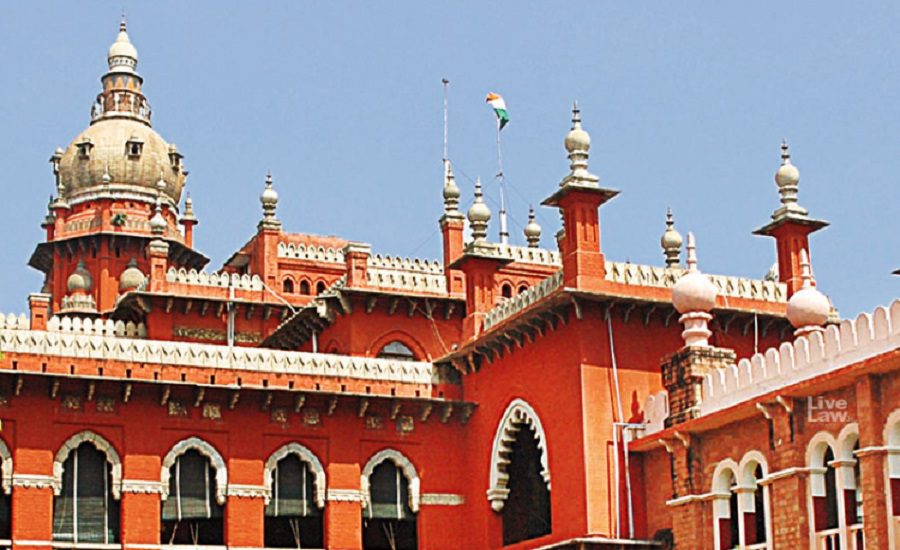
Madurai: The Madras High Court has delivered a pivotal judgment in the long-running legal and cultural dispute surrounding Thiruparankundram Hill in Madurai district, Tamil Nadu, firmly rejecting claims that the stone pillar known as Deepathoon was merely a British-era survey stone and reaffirming the right to conduct traditional Karthigai Deepam lamp lighting at the site.
The ruling comes amid deep sensitivities over religious heritage, property rights, and law-and-order concerns at one of the region’s most sacred sites — Thiruparankundram, considered one of the six holy abodes (Arupadaiveedu) of Lord Murugan.
Thiruparankundram Deepathoon Dispute: Court Rejects Survey Stone Theory
A division bench of the Madurai Bench of the Madras High Court, comprising Justices G Jayachandran and K K Ramakrishnan, dismissed contentions by appellants that the Deepathoon was a survey marker left behind by the British authorities.
Read also: Karthigai Deepam Row Ends: Madras High Court Upholds Lamp Lighting atop Thiruparankundram Hill
During hearings, lawyers for the appellants, including government representatives and private parties, argued that the pillar was not historically used for lamp lighting and could be a relic of the Great Trigonometrical Survey of India, pointing to descriptions in an 1879 synopsis.
However, the court noted that authenticated survey markers from that era are typically marked with distinctive engravings — dots and concentric circles — and differ markedly from the Thiruparankundram pillar, which carries a carved cavity designed to hold oil and cotton wicks.
> “This eliminates the calculated campaign launched by some private individuals that the pillar is only a mark stone left behind by the survey department of British-era mapping,” the court held.
Affirmation of Religious and Cultural Rights
The dispute arose after Rama Ravikumar, representing Hindu Munnani, filed a petition seeking court recognition to light the Karthigai Deepam — a sacred lamp — not just at the traditional Uchipillaiyar temple location on Thiruparankundram hill but also atop the hill at the Deepathoon site.
A single-judge bench of the Madras High Court had earlier ruled in favor of the petition, prompting appeals by the Tamil Nadu government, Madurai district authorities, HR & CE Department, and the Sikandar Badusha Dargah committee, among others.
The division bench upheld the single judge’s directive, emphasising that:
- The stone pillar lies within the property of the Arulmigu Subramania Swamy Temple Devasthanam.
- The appellants failed to prove that Agama Shastra or Saivite religious texts prohibit lamp lighting at elevated locations outside main sanctums.
- The Waqf Board lacks locus standi (legal standing) in the matter.
The bench also clarified that the court’s order is subject to Archaeological Survey of India (ASI) supervision and police coordination to safeguard the hill’s protected archaeological status.
Historic and Cultural Context of Thiruparankundram Hill
Thiruparankundram Hill is not just a geographical landmark; it is a site of deep religious devotion and centuries-old tradition. The Karthigai Deepam festival — celebrated annually — involves lighting an everlasting flame that symbolizes divine presence and spiritual illumination, drawing thousands of devotees each year.
The site also includes a historic dargah, contributing to overlapping religious interests that have occasionally sparked local tensions. However, court authorities have urged respectful coexistence and negotiation between communities in the wake of the judgment.
The Importance of The Judgement on Thiruparankundram Deepathoon Dispute
This judgment reinforces the continuity of religious traditions while recognising cultural heritage rights and setting legal boundaries for administrative action. The Madras High Court’s approach underscores a willingness to intervene where fundamental worship rights intersect with historical identity and public administration.
The involvement of heritage authorities like the ASI and local administrators aims to balance tradition with public safety and preservation of protected sites — a model that may guide future disputes in culturally sensitive areas across India.