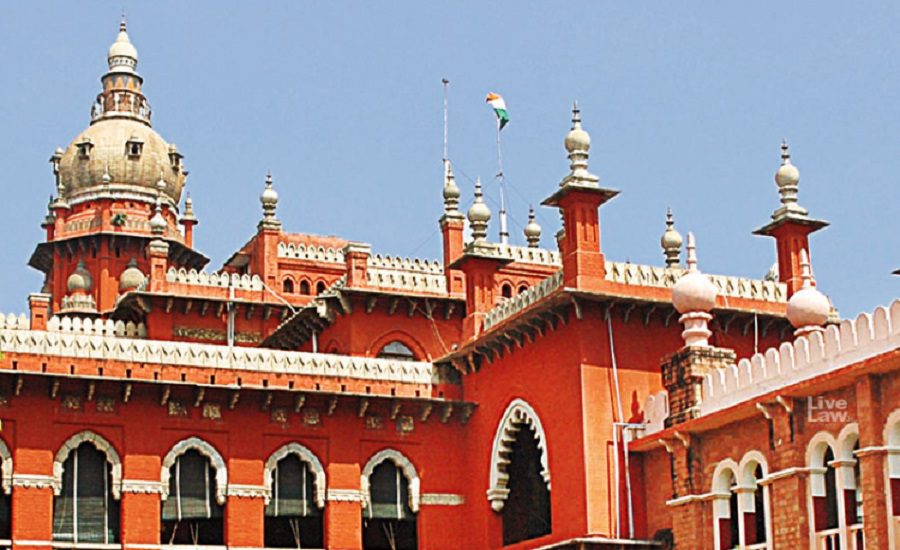
Chennai: In a landmark judgment delivered on Tuesday, the Madurai Bench of the Madras High Court upheld a single-judge order directing the lighting of the Karthigai Deepam at a stone pillar known as the Deepathoon atop Thiruparankundram Hill in Madurai district.
The Division Bench, comprising Justices G. Jayachandran and K.K. Ramakrishnan, dismissed appeals by the Tamil Nadu government and other parties challenging the legitimacy of the earlier directive.
The judgment not only reaffirmed the right to perform the ceremonial lamp-lighting ritual but also rejected state arguments that the practice could disturb public order.
Background of Karthigai Deepam Row
Thiruparankundram — located just outside Madurai — is a site of deep religious significance for multiple communities.
The hillock is home to the ancient Subramaniya Swamy Temple, dedicated to Lord Murugan, as well as the Sikkandar Badhusha Dargah, a historic Sufi shrine.
Though traditionally a place of syncretic worship, disputes have periodically surfaced regarding religious rights and ritual practices at the site.
The latest controversy stemmed from a petition filed by devotees seeking permission to light a Karthigai Deepam, a sacred lamp ritual associated with the annual Karthigai festival, traditionally celebrated by Hindus during the Tamil month of Karthigai.
Petitioners argued that the lamp-lighting was a customary religious practice and should be permitted on the hill’s stone pillar — even though the practice had not been consistently performed in recent years.
The single judge — Justice G.R. Swaminathan — had earlier ruled in favor of the petitioners, prompting opposition from the state government, the temple administration, the Tamil Nadu Waqf Board, and the dargah authorities.
Those appellants challenged the order, raising law and order concerns and asserting that the pillar did not qualify as a traditional Deepathoon (lamp-stand).
Madras HC Ruling on Karthigai Deepam Row
Here are the major Madras HC ruling on Karthigai Deepam Row;
1. Upholding Religious Practice
The Division Bench upheld the single judge’s directive to allow the ceremonial lighting of the Karthigai Deepam.
The court found that petitioners had produced sufficient documentary and historical material indicating that lighting the lamp was a religious custom connected to the temple’s Karthigai festivities.
2. Law and Order Concerns Deemed Baseless
In a strongly worded judgment, the High Court rebuffed the state’s contention that allowing the ritual could trigger disturbances.
The Bench described such apprehensions as an “imaginary ghost created conveniently,” noting that there was no substantive evidence of likely unrest merely because of the ritual.
“It is ridiculous and hard to believe,” the bench observed, that the lighting of a lamp by temple authorities on temple land could disrupt public peace unless such disturbances were sponsored by the State itself, the court added.
3. Rejection of Competing Claims
The court also criticized submissions by some litigants — including the Waqf Board — that the stone pillar belonged to the dargah. It termed this argument “mischievous” and held that there was no credible evidence supporting that claim.
4. Preservation and Safety Conditions
While upholding the core directive, the court emphasized that the ceremonial event must be conducted with practical safeguards.
It directed that:
- The Archaeological Survey of India (ASI) could impose conditions to ensure the protection of the hill’s monuments.
- Only designated temple representatives may light the lamp — with limits agreed upon in consultation with the ASI and police.
- The District Collector must supervise logistical arrangements.
- General public access during the ritual may be restricted for safety and order.
Read also: Supreme Court Clarification on RTI Act Limitation: Act Cannot Be Used to Probe Suspension Orders