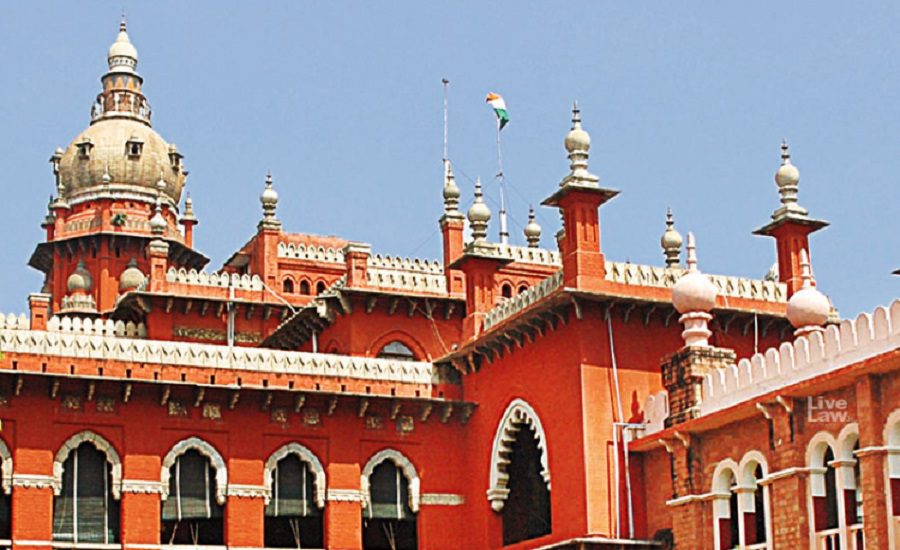
Madras: The Madras High Court witnesses uniform order has made it clear that police officers, doctors and other professionals must wear their prescribed official uniform while appearing before courts as witnesses. The court said professionals must also maintain discipline, integrity and devotion to duty inside courtrooms. The directions came while deciding a case involving a police officer who allegedly appeared before a court in a drunken condition. The court also directed the Tamil Nadu Director General of Police (DGP) to issue a statewide circular to ensure strict compliance.
Details of Madras High Court Witnesses Uniform Ruling
The Madras High Court said every professional who appears before a court as a witness represents not only themselves but also their department and profession.
Read also: Madras High Court Orders Tamil Nadu to Submit District-Wise POCSO Court Status Report
The Division Bench of Justice S.M. Subramaniam and Justice N. Senthilkumar observed that police officers, doctors and other professionals should always appear in their prescribed uniform while giving evidence in court. The judges also stressed that every witness should maintain discipline, honesty, dignity and respect for the judicial process.
Why Did the Court Issue Madras High Court Witnesses Uniform Ruling
The court said discipline inside courtrooms is essential to maintain public confidence in the justice system. According to the judges, appearing in proper uniform reflects professionalism and respect for the court. Any misconduct by officials during court proceedings can damage the image of the entire department.
The bench further said judicial officers should immediately report any misconduct by professionals appearing before the court so that departmental disciplinary action can be taken.
DGP Directed to Issue Circular Across Tamil Nadu
The High Court directed the Director General of Police (DGP), Tamil Nadu, to issue a circular within four weeks. The circular should instruct all police personnel to:
- Wear the prescribed official uniform while appearing before courts.
- Maintain discipline and proper courtroom behaviour.
- Show integrity and devotion to duty while giving evidence.
- Follow courtroom decorum at all times.
- Face disciplinary action if they fail to follow these directions.
The court said these measures are necessary to protect the dignity of courts and strengthen public trust in the legal system.
Background of the Madras High Court Witnesses Uniform Ruling
The observations were made while hearing an appeal filed by the Director General of Police, Deputy Inspector General of Police and Superintendent of Police against an earlier order passed by a single judge. The case involved a Special Sub-Inspector of Police who appeared before a Judicial Magistrate to give evidence in a criminal case.
During the proceedings, the Magistrate noticed that the officer appeared to be under the influence of alcohol. The Magistrate recorded that there was a smell of alcohol and the officer’s speech was not clear. The Magistrate immediately directed the officer to undergo a medical examination.
Medical Examination Led to Departmental Action
A medical officer examined the police officer and issued a Certificate of Drunkenness. Although blood and urine tests were not conducted, the Magistrate forwarded a complaint to the Superintendent of Police based on the medical certificate. The police department started disciplinary proceedings against the officer.
Initially, the disciplinary authority ordered compulsory retirement. Later, the Appellate Authority reduced the punishment to postponement of one increment for three years. The Revisional Authority also upheld this modified punishment.
Madras High Court Witnesses Uniform Ruling: Single Judge’s Order Challenged
After nearly four years, the police officer challenged the punishment before the Madras High Court. A single judge set aside the disciplinary action, observing that blood and urine tests had not been conducted to scientifically establish intoxication. The police department challenged this decision before a Division Bench.
Division Bench Restores Departmental Punishment
The Division Bench allowed the appeal filed by the police authorities. The court explained that disciplinary proceedings are different from criminal cases. In departmental proceedings, misconduct is decided on the “preponderance of probabilities” instead of proof beyond reasonable doubt.
The judges held that the Certificate of Drunkenness issued by the medical officer was sufficient evidence for departmental action. As a result, the High Court restored the modified punishment imposed on the officer.
Court Says Such Behaviour Harms the Image of Police
The High Court observed that a police officer appearing before a court in a drunken condition seriously damages the reputation of the police force. The bench noted that the officer had nearly 30 years of service, yet failed to maintain the high standards expected from a government servant.
The court said every public servant, especially police personnel, must maintain discipline, professionalism and respect while attending court proceedings.
Why Madras High Court Witnesses Uniform Ruling Is Important
This judgment is important because it sets clear standards for professionals appearing before courts. It reminds police officers, doctors and other professionals that they must wear their prescribed uniform, maintain proper behaviour and respect courtroom discipline. The ruling is expected to improve professionalism, strengthen public confidence in the judiciary and ensure greater respect for court proceedings across Tamil Nadu.