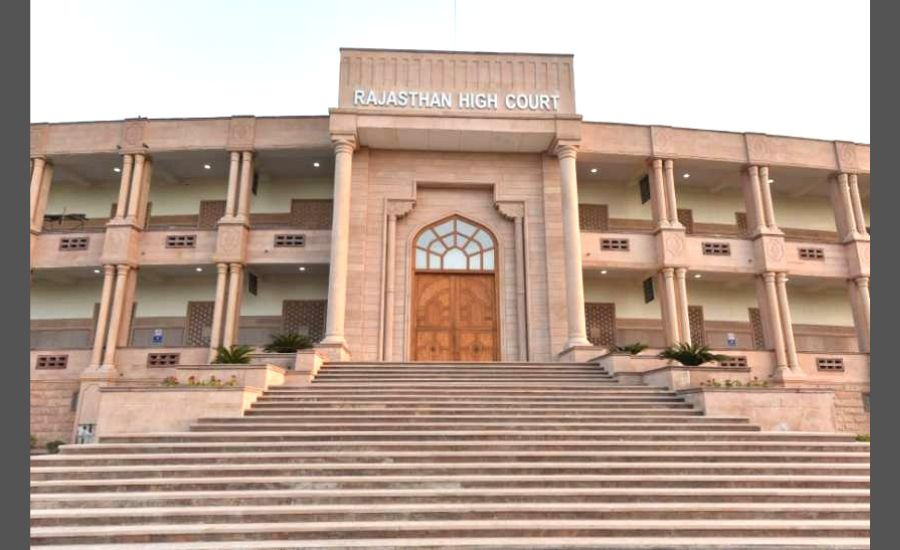
Jaipur: The Rajasthan waqf property case has drawn national attention after the Rajasthan High court took suo motu cognizance of a media report claiming that judges’ official residences, schools, colleges, temples and several public and private properties in Jodhpur were recorded as Waqf properties in official records. The High Court has registered the matter as a Public Interest Litigation (PIL) and ordered an immediate inquiry into the allegations.
Rajasthan Waqf Property Controversy: Why Did The Rajasthan High Court Act
A Division Bench of Justice Pushpendra Singh Bhati and Justice Praveer Bhatnagar took suo motu cognizance based on a news report. The court observed that the issue involved a large number of properties and raised serious questions about the accuracy of public records. According to the bench, the matter affects public interest and therefore deserves judicial examination.
Rajasthan Waqf Property Controversy: What Are The Allegations
According to the report placed before the court, several properties in Jodhpur were allegedly entered in the Waqf Gazette and uploaded on the Umeed Portal as Waqf properties even though revenue records reportedly showed otherwise. The properties mentioned include:
- Judges’ official residences
- Schools and colleges
- Temples and places of worship
- Residential properties
- Commercial properties
The High Court has not confirmed these allegations as facts. Instead, it has ordered an inquiry to verify whether the claims are correct.
Court Expresses Concern Over Public Records
The bench said the apparent mismatch between revenue records and Waqf records raises concerns about:
- The reliability of public records.
- The lawful administration of Waqf properties.
- The process through which entries were made in the Waqf Gazette and uploaded to the Umeed Portal.
The court stressed that these issues require careful judicial examination before any conclusion can be reached.
Rajasthan Waqf Property Controversy: Rajasthan High Court’s Key Directions
To protect the disputed properties while the matter is being examined, the High Court issued several directions. The State Government has been ordered to maintain the status quo over the properties. The court also restrained authorities from carrying out:
- Mutation
- Transfer
- Lease
- Licence
- Construction
- Demolition
- Any other action that changes the physical or legal status of the properties
These restrictions will remain in place until further orders.
District Collector Asked To Verify Properties
The High Court directed the District Collector, Jodhpur to:
- Preserve the existing revenue records.
- Conduct a physical verification of the concerned khasra numbers.
- Record photographs and GPS coordinates.
- Submit a factual report describing the nature and present use of each property.
This exercise aims to establish the actual status of the disputed land.
Waqf Board Also Directed To Produce Records
The court instructed the Chief Executive Officer of the Rajasthan Board of Muslim Waqf to submit all records relating to the inclusion of the disputed properties in the Waqf Gazette and on the Umeed Portal. These records will help the court examine how and why the entries were made.
Rajasthan Waqf Property Controversy: Next Hearing
The Rajasthan High Court has listed the matter for August 11, 2026, when it will review the reports and records submitted by the concerned authorities.
Read also: Rajasthan HC Wants Faster Criminal Investigations, Seeks Reply On Police Wing Separation