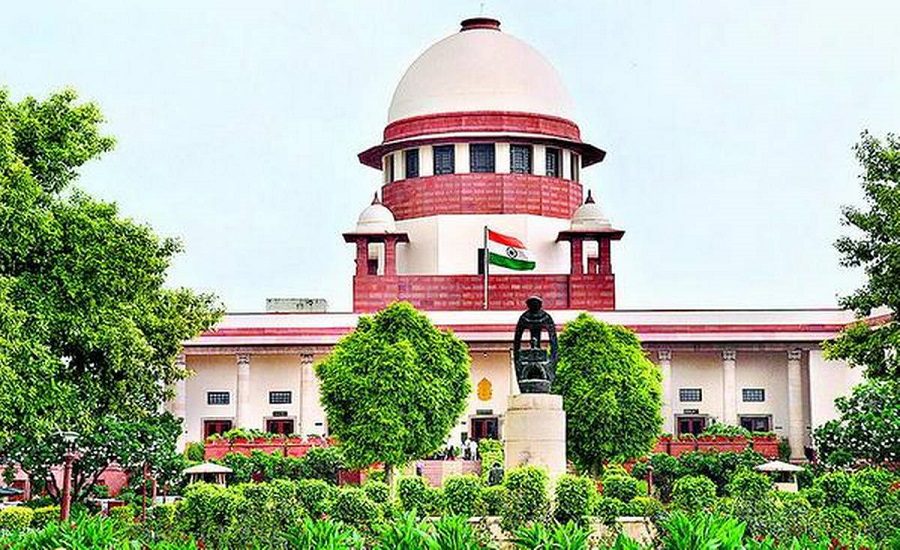
New Delhi: The Supreme Court of India on acid attacks has raised serious concerns over the continuing incidents of acid attacks in the country. On October 27, 2026, the Court questioned the Central Government over the failure of existing guidelines to control the illegal sale of acid and protect survivors.
A bench led by Chief Justice of India Surya Kant, along with Justice Joymalya Bagchi and Justice V. Mahadevan, heard the matter concerning acid attack survivors, rehabilitation, and the regulation of acid sales. The Court stressed that stronger action and better implementation are needed to prevent these crimes.
Why Did The Supreme Court Question The Centre on Acid Attack Cases
The Supreme Court expressed concern that acid attacks continue despite guidelines intended to control the sale of acid. The judges said that the continued incidents raise questions about whether the existing measures are achieving their purpose.
Read also: CJI Surya Kant Reveals The Biggest Challenge Of Bringing AI Into Courts
The Court made it clear that issuing guidelines is not enough. Governments must also ensure that the rules are properly followed and that those responsible are held accountable. The bench questioned the effectiveness of the current system and called for a fresh review of the measures used to prevent acid attacks.
Supreme Court Questions Implementation Of Acid Sale Guidelines
The Court observed that the Central Government must take responsibility for ensuring that its guidelines are properly implemented by the States.
Chief Justice Surya Kant stressed that the Centre cannot simply issue instructions and leave the matter there. It must also check whether State governments and enforcement agencies are following them.
The Court recognised that law and order is mainly a State subject. However, it said the Centre also has a responsibility to ensure that its guidelines work effectively. The judges emphasised that stronger coordination between the Centre and the States is necessary to prevent acid attacks.
Justice Joymalya Bagchi Questions Over-The-Counter Acid Sales
Justice Joymalya Bagchi questioned whether acid should be available for ordinary retail sale at all.
He pointed out that several substitutes are available today at affordable prices. The Court questioned why acid should remain freely available in the open market when safer alternatives may serve the same purpose.
The bench also noted that industrial purchases are different from ordinary retail sales. Industrial users may require acid for legitimate work, but such use can be regulated through a separate system.
The Court asked the Centre to identify the purposes for which retail acid sales were originally permitted. It also suggested that experts examine whether substitutes could replace acid in common uses.
Acid Attack Cases: Supreme Court Suggests Stricter Controls On Acid Sales
The Court indicated that a stricter system could be introduced wherever acid is genuinely necessary.
Such a system could include stronger checks on buyers, proper records of sales, and restrictions on retail outlets. These measures would aim to prevent acid from reaching people who may use it to commit violent crimes.
The Court did not suggest that legitimate industrial use should automatically be stopped. Instead, it stressed the need to distinguish genuine requirements from sales that create risks to public safety.
The Union Government told the Court that detailed guidelines had already been circulated to the States. However, it acknowledged that implementation remained weak.
Additional Solicitor General Archana Pathak Dave informed the bench that the Centre would seek instructions on whether a complete ban or stricter restrictions, including buyer records and limits on wholesale outlets, should be considered.
Supreme Court Seeks Data On Rising Acid Attack Cases
The Court also sought information on whether acid attacks have increased over time. The judges indicated that reliable data is necessary to understand whether current policies are working. If incidents continue to rise, the existing system may need major changes.
The bench stressed that authorities must examine the actual results of their policies rather than relying only on written guidelines. This approach could help the government identify gaps in enforcement and take more effective steps to prevent future attacks.
Court Focuses On Rehabilitation Of Acid Attack Survivors
Along with preventing acid attacks, the Supreme Court highlighted the need to support survivors. Acid attacks can cause severe physical injuries, long-term medical needs, emotional distress, and difficulties in returning to everyday life. Survivors may require medical treatment, counselling, financial assistance, and social support.
The Court directed that a survivor-centred rehabilitation framework, prepared by an intervening non-governmental organisation, be submitted to the National Legal Services Authority (NALSA) for examination.
The bench also called for wider consultation involving relevant stakeholders. The aim is to ensure that survivors receive meaningful assistance rather than being left to deal with the consequences on their own.
What Is The Role Of The National Legal Services Authority
The National Legal Services Authority (NALSA) works to improve access to legal services, particularly for people who need support to protect their rights. In this case, NALSA has been asked to examine a proposed rehabilitation framework for acid attack survivors.
A stronger rehabilitation system could help survivors access legal assistance, medical support, compensation-related guidance, and other services available under applicable schemes. The Court’s focus shows that preventing acid attacks and supporting survivors must go together.
Read also: CJI Surya Kant Remarks Row: SCBA Files Contempt Petition Against Wagle, Raut
FAQs
The Court discussed the possibility of a complete ban or stricter restrictions on acid sales. The hearing report does not establish that a complete ban was finally ordered.
The Supreme Court criticised the Centre because acid attacks continue despite existing guidelines to control acid sales. It stressed that stronger enforcement and better coordination with State governments are needed.
The Court directed that a proposed survivor-centred rehabilitation framework be examined by NALSA. The aim is to improve support for survivors and address their long-term needs.