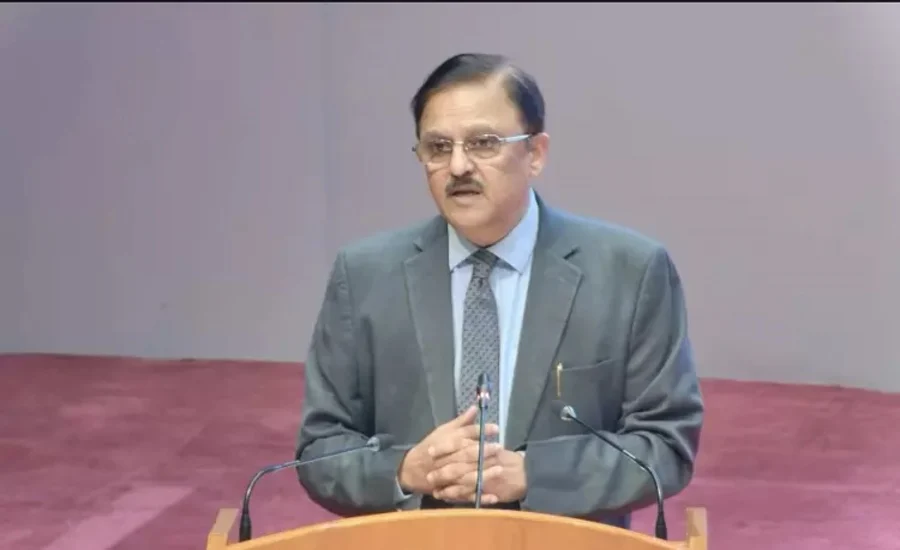
New Delhi: Former Supreme Court judge Justice Abhay S Oka has called for a transparent roster system in the Supreme Court of India to prevent manual intervention in case allocation. Speaking at a seminar on judicial accountability in New Delhi, he said that a clear system could make the process fairer, more predictable and more accountable.
Justice Oka also highlighted delays in listing new cases, the need to follow judicial precedents, transparency in judicial appointments and the government’s responsibility to act on collegium recommendations.
Details of Supreme Court Roster System Row
Justice Oka said that the Supreme Court needs a proper roster that clearly identifies which bench will hear each category of case. He expressed concern that the existing subject-wise roster could leave room for uncertainty in case allocation.
Read also: Why Justice Abhay Oka Opposes Lawyers Discussing Their Own Ongoing Cases Publicly
According to him, some categories of cases are assigned to multiple benches. This can make it difficult for lawyers to know which bench will hear a particular matter. He referred to the Supreme Court roster effective October 26, 2026, and questioned how cases are assigned when the same category appears under several benches.
Why A Transparent Roster System Is Important
A roster is a system that assigns different types of cases to particular benches of judges. A clear and predictable roster helps lawyers and litigants understand how cases are distributed.
Justice Oka argued that a proper system should reduce the possibility of manual intervention in listing cases. He said that case allocation should follow clear rules rather than depend on individual decisions in specific matters.
He also expressed concern that too much administrative power was concentrated in the Chief Justice of India (CJI). In his view, stronger institutional procedures could improve accountability within the Supreme Court.
Supreme Court Roster System Row: Justice Oka Recommendations
Justice Oka identified the listing of newly filed cases as another major concern for litigants across India. He said that getting a first hearing can be difficult, even after a case has been filed.
He suggested that fresh cases should be listed automatically within a day or another clearly defined period. Such a system could help litigants know when their cases are likely to be taken up.
He also raised concerns about cause lists, which show the cases scheduled for hearing. According to him, when fewer cases are listed than the number given dates, litigants may suffer and uncertainty can increase.
Case Listing Must Follow Clear Rules
Justice Oka said that case listing should be transparent and predictable. He recalled that he had previously clarified that the Registry should not remove a matter from the list when a judicial order directs that it be listed.
The Registry performs administrative work for the court, including tasks related to case listing. Clear rules can help ensure that administrative decisions do not unfairly affect litigants.
He also highlighted differences in listing procedures across High Courts. A more consistent and accountable process could help people seeking justice understand what happens after filing a case.
Judicial Precedents Must Be Followed
Justice Oka also stressed that courts should consistently follow judicial precedents. A precedent is an earlier court decision that guides how similar legal questions should be decided.
He expressed concern about instances where benches of the same level do not follow decisions delivered by other benches of equal strength.
He further suggested that review and curative petitions should be considered only in rare cases, in keeping with their exceptional purpose. These legal remedies allow courts to reconsider certain decisions under limited conditions.
Collegium System Must Be Transparent
On judicial appointments, Justice Oka said that he continued to support the collegium system. He argued that it should not be replaced unless a better alternative is developed.
The collegium is the system through which senior judges recommend candidates for appointment to higher courts. Justice Oka said that transparency should be built into the process itself.
He also warned that publishing detailed reasons for every recommendation or rejection could raise privacy concerns. In his view, accountability and privacy must both be considered while improving the system.
Government Must Act On Collegium Recommendations
Justice Oka said that accountability should not be limited to the judiciary. The government must also be answerable when recommendations for judicial appointments remain pending for long periods.
He called for timely action on collegium recommendations and referred to concerns about delays in processing judicial appointments.
He also mentioned a pending contempt petition filed by the Bengaluru Advocates’ Association concerning the issue. He questioned whether enough was being done to ensure that the matter received attention.
Constructive Criticism Of Court Judgments Should Be Encouraged
Justice Oka said that citizens have the right to criticise constitutional court judgments when their criticism is reasoned and fair. He stressed that disagreement with a judgment should not automatically lead to allegations about a judge’s motives.
He said that constructive debate can help improve the quality of judicial decisions. At the same time, criticism should remain objective and should not make unsupported claims about judges.
He also noted that judges who deliver bold judgments may face complaints. A sound accountability system should address genuine concerns without discouraging judges from making independent decisions.
Read also: Who Is Justice Abhay Oka? Former SC Judge Heads Indian Law Society
FAQs
Automatic listing within a fixed period could help litigants receive their first hearing more predictably and reduce uncertainty after filing a case.
Justice Abhay S Oka said that the Supreme Court needs a proper and transparent roster system to reduce manual intervention in case allocation and make the process more accountable.
No. His statement calls for improvements to the system. It does not, by itself, mean that the Supreme Court has adopted a new roster or changed its existing case-allocation rules.