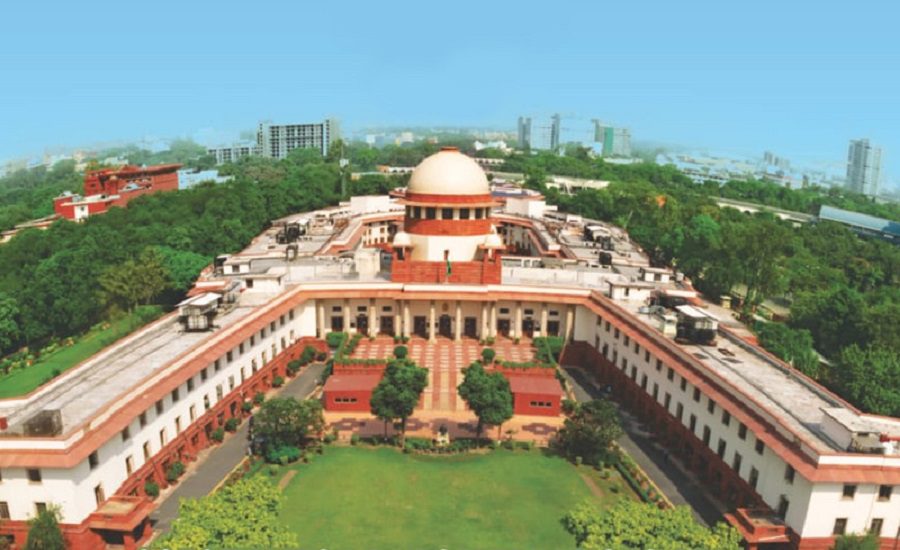
New Delhi: The NCERT social science chapter controversy has finally come to an end after the Supreme Court formally closed its suo motu case. The case was related to a Class 8 NCERT Social Science textbook chapter that discussed “corruption in the judiciary” and other challenges faced by the judicial system. The Supreme Court clarified certain observations made earlier and disposed of the proceedings after hearing the matter.
The decision marks the conclusion of a legal controversy that sparked nationwide debate on academic freedom, curriculum development, and the dignity of the judiciary. The matter had attracted significant public attention since February 2026.
NCERT Social Science Chapter Controversy: Why Did The Supreme Court Take Suo Motu Cognisance
The controversy began after reports highlighted content in the NCERT Class 8 Social Science textbook titled Exploring Society: India And Beyond (Class 8, Vol. 2). The chapter, “The Role Of The Judiciary In Our Society,” included a section discussing corruption in the judiciary, judicial delays, shortage of judges, complex legal procedures, and infrastructure challenges.
Read also: NCERT Class 9 Political Science 2026: Major Judiciary Changes Explained Simply
The Supreme Court took suo motu cognisance of the issue, expressing concern that the content could undermine the dignity and credibility of the judicial institution.
NCERT Social Science Chapter Controversy: What Actions Were Taken Earlier
During the initial hearings, the Supreme Court ordered a complete halt on the production, distribution, and circulation of the textbook. Following the court’s observations, NCERT withdrew the book from the market and issued an unconditional apology.
Criticism Of Academicians
The court’s attention later shifted to three academicians associated with drafting the chapter. The experts included Professor Michel Danino, Suparna Diwakar, and Alok Prasanna Kumar. Earlier judicial observations against them generated widespread debate within academic and legal circles.
Supreme Court Softened Earlier Remarks
In May 2026, the Supreme Court decided to remove certain harsh observations made against the academicians. The court clarified that its concerns were directed at the presentation of the judiciary in the textbook rather than the personal integrity of the scholars involved.
What Happened During The Final Hearing
At the final hearing, Senior Advocate Arvind Datar requested further clarification regarding observations recorded in the court’s May 22 order. He argued that certain submissions made on behalf of NCERT should not be interpreted as findings against the academicians. The concern centered on procedural aspects of curriculum approval and committee review.
Court Issued Important Clarification
The Supreme Court clarified that the statements referred to during earlier proceedings were submissions made on behalf of NCERT. The Bench emphasized that those statements were not judicial findings, observations, or formal conclusions of the Court itself. This clarification became a key reason for formally closing the matter.
Bench That Heard The Matter
The case was heard by a Bench comprising:
- Chief Justice Of India Surya Kant
- Justice Joymalya Bagchi
- Justice V Mohana
The Bench briefly heard the matter, clarified parts of its previous order, and formally disposed of the case.
Read also: Why Did the Supreme Court Change Its Stand in the NCERT Case? Big Relief for 3 Academics
FAQs
Yes. NCERT withdrew the textbook from circulation and issued an unconditional apology after objections were raised by the Supreme Court.
The Court took suo motu cognisance after a Class 8 NCERT textbook included a section discussing corruption in the judiciary and other challenges facing the judicial system. The Court felt the content required examination.
The Court clarified that certain statements recorded earlier were submissions made on behalf of NCERT and not judicial findings. After issuing this clarification, the Bench formally disposed of the proceedings.