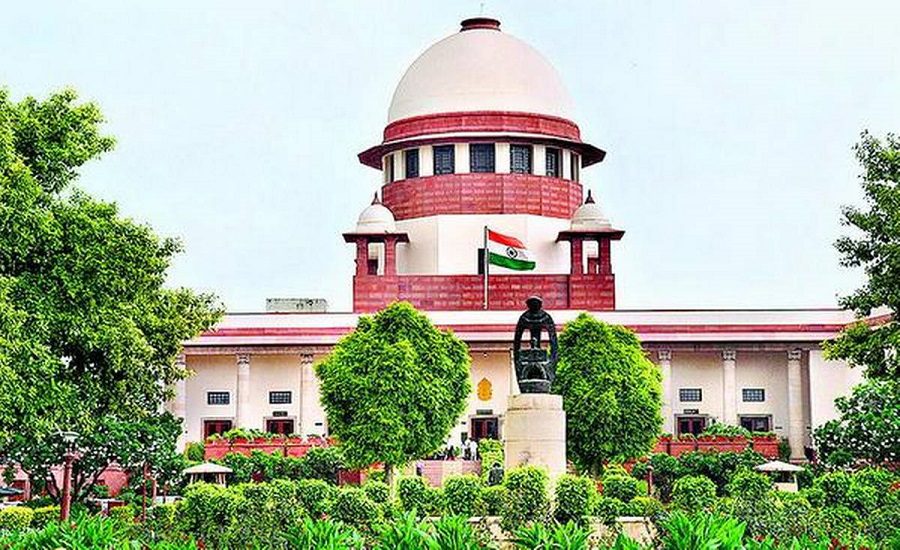
Jaipur: The Supreme Court on Rajasthan river pollution has raised serious concern over reports of untreated industrial waste entering rivers and other water bodies across the state. The Court has asked the Rajasthan government to investigate the allegations, take stronger action against polluters and explain what it is doing to stop further environmental damage.
The directions came in the ongoing case concerning pollution in the Jojari-Bandi-Luni river system. A bench of Justices Vikram Nath and Sandeep Mehta passed the directions while examining reports on industrial pollution and environmental damage in Rajasthan.
Supreme Court Directives on Jojari River Pollution Case
The Supreme Court expressed concern that reports of pollution are coming from different parts of Rajasthan, not just one location. The Court said that if these allegations are found to be true, they could indicate a larger failure in enforcing environmental laws.
The issue includes possible discharge of untreated industrial effluents into rivers, reservoirs and other water bodies. Such pollution can affect groundwater, farmland, wildlife, public health and local livelihoods.
Supreme Court Seeks Detailed Response from Rajasthan Government
The Supreme Court directed the Rajasthan government to file a comprehensive affidavit after properly checking the pollution allegations.
The state has been asked to explain the actual situation, the role of responsible authorities and what action has already been taken. The government must also explain whether responsibility has been fixed on officials or industries involved. It must provide both short-term and long-term measures to control pollution and prevent similar incidents in the future.
Jojari River Pollution Case: Reports Raise Fresh Concerns over Industrial Pollution
During the hearing, the Court considered reports about environmental problems in different areas of Rajasthan. One report alleged that water in a pond near the Jojari River at Tanawada had turned pink because of industrial contamination.
The polluted water was reportedly unsafe for human use and livestock consumption. Another report alleged that around 2,500 industrial units were operating in the Sanganer-Dravyavati-Nevta region, but only 143 units had environmental clearances. The report further alleged that untreated industrial waste was being discharged into water bodies. These are allegations placed before the Court, and the Rajasthan government has been asked to verify them.
Industrial Effluents Reportedly Travelled 56 km to Morel Dam
Another report raised concerns about industrial waste coming from the Sanganer-Sitapura industrial belt. It alleged that industrial effluents had travelled nearly 56 kilometres to the Morel Dam.
The pollution reportedly contaminated water resources, damaged agricultural land and affected several villages. The Supreme Court considered these reports serious enough to require immediate examination by Rajasthan authorities.
Why is the Supreme Court concerned?
The Court noted that pollution complaints are coming from different geographical areas of Rajasthan. This raised concern that the problem may not be limited to a few individual incidents.
Instead, it could point towards a wider or systemic failure in preventing industrial pollution and enforcing environmental laws.
The Court therefore asked competent authorities in Rajasthan to immediately examine the allegations and submit a comprehensive response.
Supreme Court Asks Rajasthan to Consider Stronger Criminal Charges
The Supreme Court also questioned the way environmental offences linked to untreated industrial waste were being prosecuted. It asked why certain stronger provisions under the Bharatiya Nyaya Sanhita (BNS), 2023 and the Prevention of Damage to Public Property Act, 1984 had not been invoked.
The Court referred to Section 272 of the BNS, which deals with a malignant act likely to spread infection of a disease dangerous to life. It also referred to Sections 326(a) and 326(c) relating to certain forms of mischief involving irrigation works or public drainage.
The Court observed that illegal discharge of untreated industrial effluents can damage water bodies, government land, livelihoods and natural habitats. Such pollution can also have serious consequences for human life.
The state was therefore directed to start the process of invoking applicable offences in pending as well as proposed prosecutions.
High-Level Committee Flags Problems in Riverbeds and Floodplains
The Court was also examining the Second Status Report of the High-Level Ecosystem Oversight Committee. The committee raised concerns about the lack of proper demarcation of High Flood Lines and buffer zones.
According to the report, this has resulted in industrial development and other activities taking place within some riverbeds and floodplains. This is important because construction and industrial activity in such sensitive areas can increase environmental risks and affect the natural flow of rivers.
Concerns Raised Over Industrial Projects
The committee also raised concerns about the proposed RIICO Industrial Area at Kakani and Ambey Valley Industrial Park. It pointed to prima facie irregularities and possible deviations from legal requirements.
The committee further recommended strengthening the Rajasthan River Basin and Water Resources Planning Authority by reviewing the existing legal framework governing it.
Jojari River Pollution Reportedly Affecting Wildlife
The environmental problem is not limited to water quality. The High-Level Committee told the Court that wildlife populations around Melba, Dhawa and Jhanwar villages had declined.
According to the report, contamination from effluent-laden water flowing through the Jojari River was one of the reasons for this decline. The Court accepted the committee’s recommendation concerning restoration of local ecosystems.
It directed the state to speed up the transfer of identified land parcels in Melba and Modathali villages to the Forest Department. These areas are expected to be developed and protected as forest and grassland ecosystems.
Supreme Court Issues Directions for Sangariya CETP
The Court also dealt with the Common Effluent Treatment Plant (CETP) at Sangariya. It directed the Rajasthan State Pollution Control Board to prepare and implement a technical action plan.
The plan must deal with the treatment and safe disposal of accumulated untreated effluent. This work will be carried out under the direct supervision of the High-Level Committee.
What about ‘White Category’ industries
The Supreme Court provided a possible route for industries claiming to fall under the “White Category.”
Such industries can approach the High-Level Ecosystem Oversight Committee. The committee can physically inspect the industrial unit.
If the inspection shows that the unit is not releasing industrial effluents or contributing to pollution, the committee may allow the premises to be de-sealed. Operations may then resume subject to appropriate conditions.
Jojari River Pollution Case: Rajasthan Chief Secretary Made Responsible for Compliance
The Supreme Court has placed direct responsibility on the Rajasthan Chief Secretary to ensure that its previous and latest directions are followed. The Chief Secretary has also been asked to remain present through virtual mode during the next hearing. The matter is scheduled to be heard again on August 4, 2026.
What is the Jojari River Pollution Case
The proceedings arise from a suo motu case taken up by the Supreme Court over serious pollution in Rajasthan’s Jojari River.
The Supreme Court took cognisance of the issue after a documentary highlighted large-scale industrial pollution in the Jojari River and its reported impact on nearly two million people. The Court later constituted a High-Level Ecosystem Oversight Committee.
The committee is headed by former Rajasthan High Court judge Justice Sangeet Lodha. Its work includes preparing a comprehensive plan for the restoration and rejuvenation of the Jojari-Bandi-Luni river system.