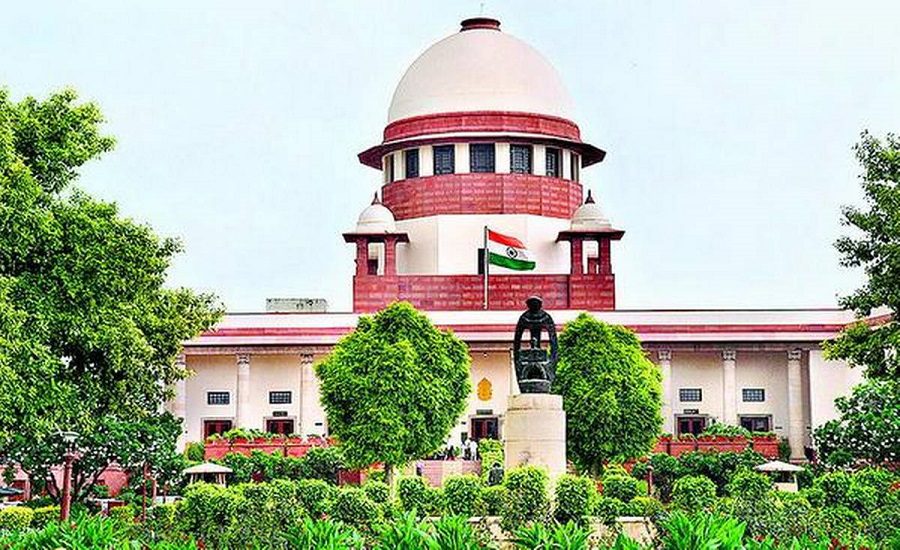
New Delhi: The Supreme Court of India has raised serious concerns over procedural irregularities in the parliamentary impeachment process against Allahabad High Court Judge Justice Yashwant Varma, issuing notices to the Lok Sabha Speaker and the Secretariats of both Houses of Parliament — the Lok Sabha and the Rajya Sabha.
The Court’s action came on December 16, 2025, when a two-judge Bench led by Justice Dipankar Datta examined a petition filed by Justice Varma challenging the legality of how impeachment proceedings were initiated against him under the Judges (Inquiry) Act, 1968.
The development marks a pivotal moment in the ongoing controversy involving a high-profile judicial impeachment process that has attracted political, legal, and constitutional scrutiny.
Background of Yashwant Varma Impeachment Proceedings
Justice Yashwant Varma, a senior judge of the Allahabad High Court previously posted at the Delhi High Court, became embroiled in controversy after a fire broke out at his official residence at 30 Tughlaq Crescent, New Delhi, on March 14, 2025.
Read also: Justice Yashwant Varma Got Final 6 Weeks Deadline in High-Profile Half-Burnt Cash Controversy
Firefighters and police reportedly discovered large amounts of partially burnt and unaccounted cash inside a storeroom. Visuals showing bundles of currency being consumed by flames quickly circulated in the media, triggering public outrage and allegations of corruption.
Justice Varma has categorically denied knowledge of or involvement with the cash found at his residence, asserting that the situation was part of a conspiracy to tarnish his reputation.
Following the incident, an in-house committee of High Court judges appointed by then Chief Justice of India Sanjiv Khanna conducted a probe, submitted a report by May 4, 2025, and recommended disciplinary action. When Justice Varma declined to resign, the matter was forwarded to the President of India and the Prime Minister for initiation of constitutional removal proceedings.
The Parliamentary Phase: How the Impeachment Process Unfolded
Under the Judges (Inquiry) Act of 1968 and Articles 124(4) and 218 of the Indian Constitution, a judge of a High Court or Supreme Court can only be removed by the President if both the Lok Sabha and Rajya Sabha pass an impeachment motion by a two-thirds majority, on grounds of misbehaviour or incapacity.
In August 2025, the Lok Sabha Speaker, Om Birla, approved a motion supported by several MPs that sought the removal of Justice Varma. Subsequently, the Speaker constituted a three-member inquiry committee under Section 3 of the Judges (Inquiry) Act to examine the allegations.
The panel members included:
- Justice Aravind Kumar (Supreme Court),
- Chief Justice Manindra Mohan Shrivastava (Madras High Court),
- Senior Advocate B. Vasudeva Acharya.
The committee is reported to have sought Justice Varma’s written responses and extended deadlines for hearings into early 2026.
Justice Varma’s Challenge: Allegation of Procedural Violations
At the heart of the Supreme Court petition is Justice Varma’s contention that the impeachment procedure violated the statutory requirements of the Judges (Inquiry) Act.
According to the plea:
- Impeachment notices were moved in both Houses of Parliament on the same day — a Lok Sabha motion and a separate Rajya Sabha notice.
- The proviso to Section 3(2) of the Judges (Inquiry) Act specifies that when motions are given on the same day in both Houses, no inquiry committee shall be constituted unless the motion is admitted in both Houses, and only by joint action of the Lok Sabha Speaker and the Rajya Sabha Chairman.
- Justice Varma argues that the Lok Sabha Speaker acted unilaterally by constituting the committee on August 12, 2025, without waiting for the admission of the Rajya Sabha motion nor consulting the Rajya Sabha Chairman, as mandated under the law.
In his plea, Justice Varma also highlighted that he has yet to receive authenticated copies of the parliamentary motions and consequential orders, further complicating his ability to respond fully.
Supreme Court Hearing: Notice to Parliament and Preliminary Observations
During the December 16 hearing, the Supreme Court bench — comprising Justices Dipankar Datta and Augustine George Masih — expressed prima facie concern over procedural lapses in the impeachment process.
The Court questioned how such statutory non-compliance could occur despite the presence of parliament’s legal advisers and experienced legislators. “So many MPs and legal experts — but no one pointed this out?” Justice Datta remarked, highlighting the gravity of the procedural oversight.
In response, the Supreme Court issued notices to the Lok Sabha Speaker and to the Secretariats of both the Lok Sabha and Rajya Sabha, seeking their detailed replies. The Court has indicated that the matter will likely be heard in depth during the first week of January 2026.
This judicial action reflects the apex court’s willingness to review the legality of actions taken by Parliament, particularly where constitutional and statutory safeguards are arguably at risk.
Read also: Big Move in Justice Yashwant Varma Cash Row: Advocate Karan Umesh Salvi Joins Inquiry Team